
A new way to build your finance function

By Rosemarie Trabuco – RSM Malta Lead Senior, Outsourcing

Finance functions today are operating in an increasingly complex environment. Regulatory expectations continue to evolve, access to skilled talent remains constrained, and finance teams are expected to deliver not only accurate reporting but also strategic insight that supports business growth.

Across Malta, many organisations are recognising that the traditional fully in-house model may no longer provide the flexibility, resilience, or specialist expertise required in a modern business landscape.

While outsourcing can address certain operational needs, it may not always offer the level of integration or responsiveness that organisations require. As a result, a more balanced and adaptable approach is gaining momentum: the hybrid finance model.

Why internal finance teams are under increasing pressure

Internal finance teams bring valuable institutional knowledge and play a critical role in supporting day-to-day decision-making. However, many organisations are finding that their teams are increasingly stretched. Common challenges include:

  • Difficulties in attracting and retaining qualified finance professionals
  • Growing technical complexity across financial reporting, tax compliance, and regulatory requirements
  • Increased reliance on a small number of key individuals, creating operational risk and reduced continuity

Even well-structured teams can struggle to keep pace as organisations expand, enter new markets, or face new compliance demands. This can limit the finance function’s ability to focus on higher-value, forward-looking activities.

Why outsourcing alone may not fully address the need

Outsourcing can provide efficiency, scalability, and access to specialist expertise. However, a fully outsourced model may sometimes create distance between finance operations and the organisation’s strategic priorities. Businesses may experience reduced visibility, slower communication, or a lack of alignment with internal processes and culture.

For finance to function as a true strategic partner to leadership, it must remain closely connected to the organisation’s operations while still benefiting from specialist capabilities.

The hybrid finance model: combining control with capability

The hybrid model offers a practical and effective solution by combining the strengths of internal teams with the expertise and scalability of an external advisory partner such as RSM Malta.

Under this approach, internal finance personnel continue to manage core operational activities and provide business-critical insight, while RSM Malta supports the organisation with specialist technical expertise, additional capacity during peak periods, and ongoing advisory support.

This model enables organisations to:

  • Reduce dependency on individual team members and improve continuity
  • Strengthen governance, controls, and reporting quality
  • Scale finance capabilities in line with business growth, without the delays associated with recruitment
  • Access specialist expertise across accounting, compliance, reporting, and finance transformation when needed
  • Importantly, the hybrid approach preserves internal control and visibility while enhancing the overall strength and resilience of the finance function.

Building a finance function that supports long-term growth

Forward-looking organisations in Malta are increasingly adopting hybrid finance structures as a way to future-proof their operations. By combining internal knowledge with external advisory support, businesses can build finance functions that are more adaptable, more robust, and better positioned to support strategic decision-making.

At RSM Malta, we work closely with organisations to strengthen their finance functions through flexible, tailored hybrid support. Whether supplementing internal teams, providing technical expertise, or supporting finance transformation initiatives, our goal is to help businesses build finance capabilities that enable sustainable growth. If your organisation is reviewing how best to structure its finance function, RSM Malta can help you design a hybrid approach that enhances resilience, improves efficiency, and supports your long-term strategic objectives.
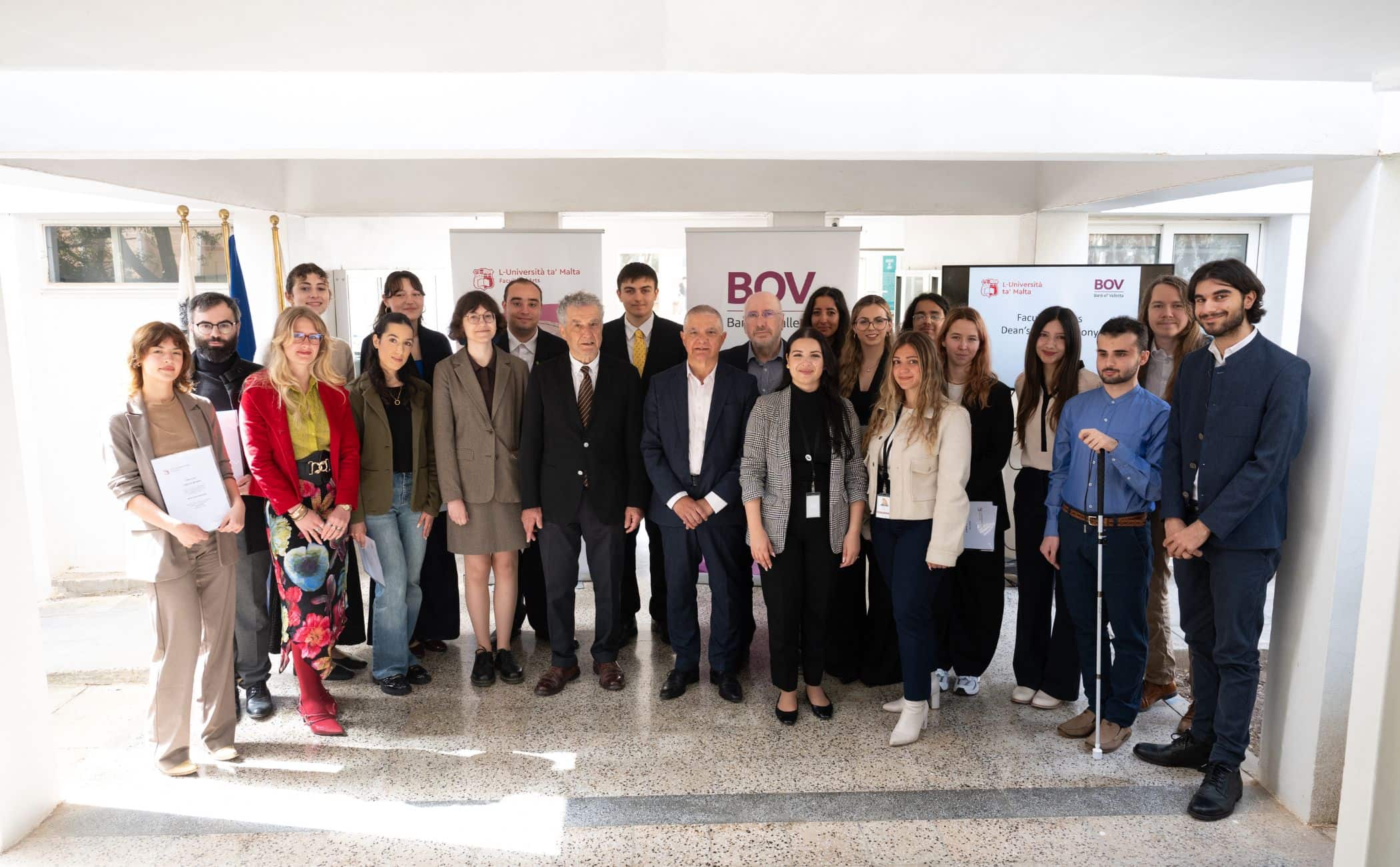
18 students make it to the Faculty of Arts Dean’s List 2026

Eighteen students were inducted to the Dean’s List of the Faculty of Arts at the University of Malta, which Bank of Valletta has been proudly sponsoring since its inception 30 years ago. This award recognises students who achieved remarkable grades, including ‘A’ grades in at least 80 credits, during the first two years of their course. The students were presented with a commemorative certificate and a monetary grant by the Bank.

Congratulating the students on behalf of Bank of Valletta, Charles Azzopardi, Head of CSR, Events & Business Alliances, said that it is an honour for the Bank to have supported this award ceremony continuously since its beginning. He added, “Our long‑standing support of the Dean’s List Awards reflects the Bank’s continued commitment to education and excellence. Through initiatives such as this sponsorship, the Bank continues to contribute meaningfully to the communities we serve.”

Presenting the students, Professor Dominic Fenech, Dean of the Faculty of Arts, explained how the demanding criteria meant that only truly outstanding students could make it into the list. Noting that students were not competing with each other, but satisfying a set of objective criteria, he observed that the number of students qualified to join the List had grown over the years, which was an indication of the quality of the Faculty’s students. He also noted that the geographical distribution of the students’ addresses indicated that the best students did not necessarily come from the more reputedly prosperous areas.

The students qualified to join the Dean’s List 2026 are:

  • David Attard – B.A. English and Maltese
  • Lucienne Romina Binot – B.A. Communication Studies and Psychology
  • Hale Bonello – B.A. French and German
  • Estella Camilleri – B.A. Psychology and Sociology
  • Judy Cordina – B.A. Honours Philosophy with Geography
  • Samuel Cedric Farrugia – B.A. Honours European and Global History with International Relations
  • Nina Galea – B.A. Honours History of Art with Psychology
  • Gaia Grima – B.A. Honours Fine Arts with History of Art
  • William Warren Levy – B.A. Honours European and Global History with International Relations
  • Catherine Limbada – B.A. Psychology and Sociology
  • Nathan Anthony Pace – B.A. Honours Maltese with Linguistics
  • Daria Ponomarova – B.A. Honours International Relations Student with Communication Studies
  • Marco Porsella Flores – B.A. Honours History with Humanities
  • Shaun Michael Portelli – B.A. Honours Music Studies with French
  • Matthew Pulis – B.A. Honours Philosophy with Psychology
  • Anneleize Emily Strauss – B.A. Honours International Relations with Communication Studies
  • Adam John Vassallo – B.A. Honours European and Global History with International Relations
  • Maria Wróblewska – B.A. Honours History of Art with Psychology

HSBC Malta Foundation Sponsors “Katerina the Honey Bee” Song Release

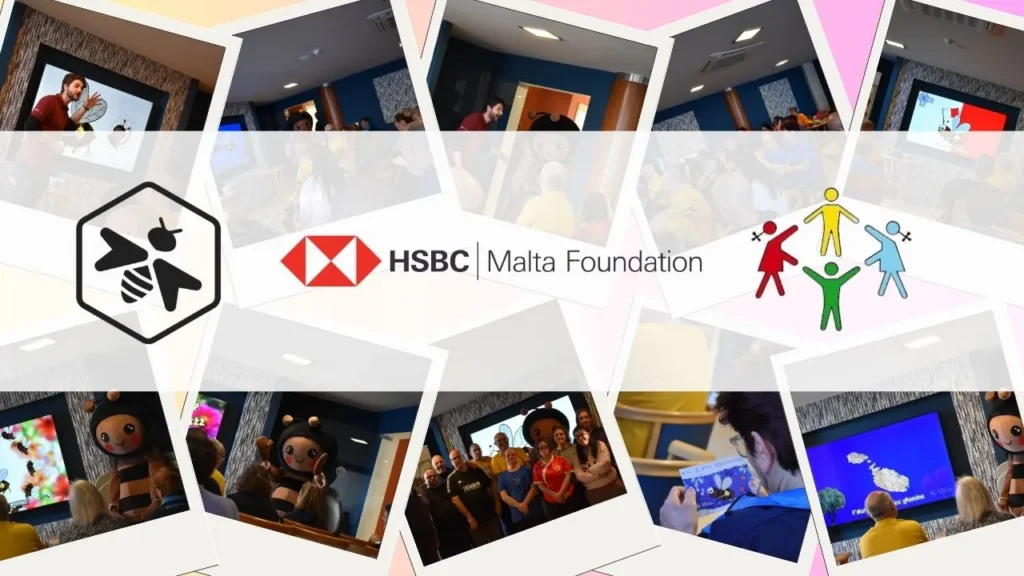
The HSBC Malta Foundation, in collaboration with the Foundation for Conservation of the Maltese Honey Bee, is pleased to announce the release of Katerina the Honey Bee (Bizz Bizz Bizz), the English adaptation of the much-loved Maltese song In-Naħla Katerina.

Sponsored by the HSBC Malta Foundation, this new version builds on the success of the original release and continues to promote environmental awareness about Malta’s National Insect, the Maltese Honey Bee, which is currently on the verge of extinction. The song was officially launched on 21 March 2026 to coincide with World Down Syndrome Day, during a special event.

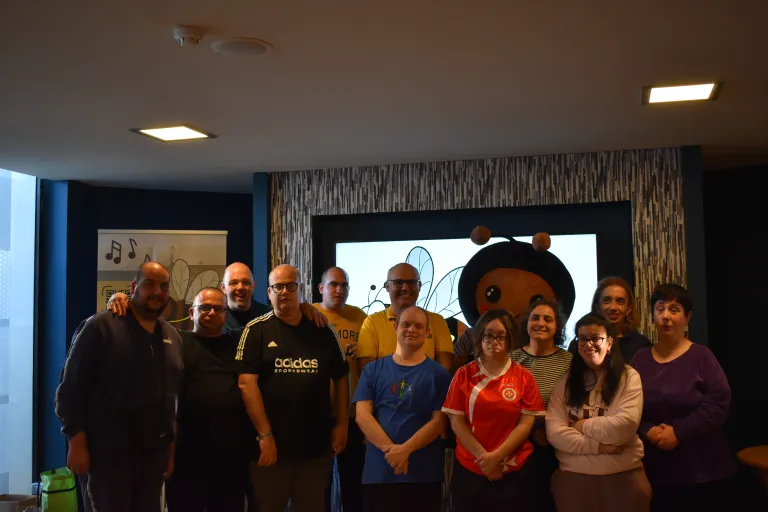
On this special occasion, the HSBC Malta Foundation and the KNM Foundation joined forces with the non-governmental organisation S.T.A.N.D. (Striving Towards Ability Not Disability), together with its beloved mascot Katerina, during a weekend break activity. The event created a meaningful and enriching experience for all participants, blending education, music, and inclusion.

Glenn Bugeja, representing the HSBC Malta Foundation, stated: “The activity held special significance as it took place on World Down Syndrome Day, highlighting the importance of inclusion, respect, and equal opportunities. It was a beautiful reminder that awareness initiatives can bridge communities and celebrate diversity in meaningful ways. At the same time, this activity served to raise awareness about our fragile environment and the importance of protecting the local honey bee.”

Dylan Farrugia, President of the KNM Foundation, explained: “Through this initiative, the KNM Foundation continues its mission of raising awareness in an accessible and engaging manner, reaching audiences of all ages and abilities. I would like to thank the HSBC Malta Foundation for believing in our mission to conserve this unique insect. Their support enables us to reach wider audiences and further strengthen awareness about the Maltese Honey Bee.”

In bringing together music, education, and inclusion, this initiative highlights how collaborative efforts can make a meaningful impact. By raising awareness about both social inclusion and environmental protection, the new song serves as a powerful reminder of the importance of safeguarding the Maltese Honey Bee for future generations, while also helping to reach international audiences and further bridge communities through a shared message of inclusion and sustainability.

HSBC Malta launches eight new LifeCycle Funds to support long-term retirement planning

HSBC Malta has launched eight new HSBC Life Malta (HLM) LifeCycle Funds within its pension offering across the Retirement Pension Plan – Unit Linked and the Employee Pension Plan. The launch strengthens HSBC Malta’s retirement proposition and supports customers in building long-term financial security.

HLM LifeCycle Funds are designed to make retirement planning easier by linking the investment approach to a customer’s expected retirement date. Each fund aligns to a target retirement period, typically in five-year steps. The funds follow a defined “glidepath”, meaning the asset mix automatically evolves over time, starting with a stronger focus on growth and gradually shifting towards more conservative investments as retirement approaches, thus helping to balance growth potential and risk throughout the customer’s journey.

For customers, the key benefit is simplicity. Rather than actively managing investments, customers can select a fund that matches their retirement timeframe, with the reassurance that risk is automatically adjusted as they get closer to their retirement. This supports disciplined long-term savings and is particularly helpful for customers who prefer a professionally managed option.

Josef Camilleri, Head of Products and Distribution at HSBC Life Malta said, “LifeCycle Funds make retirement investing simpler for customers, all they need to do is choose a target retirement timeframe and the fund automatically adjusts risk over time, helping customers stay on track for long-term financial security.”

Konrad Borg Myatt, Head of Wealth and Customer Solutions at HSBC Bank commented, “These funds provide an additional way to support more tailored retirement conversations. As part of the suitability process, advisors can recommend the most appropriate HLM fund based on the person’s circumstances, time horizon, and risk profile.” For more information, customers are invited to visit any HSBC Malta branch and speak to a member of the team or click here.

BOV Steps Up Support for Malta’s High-Flying Aviation Industry

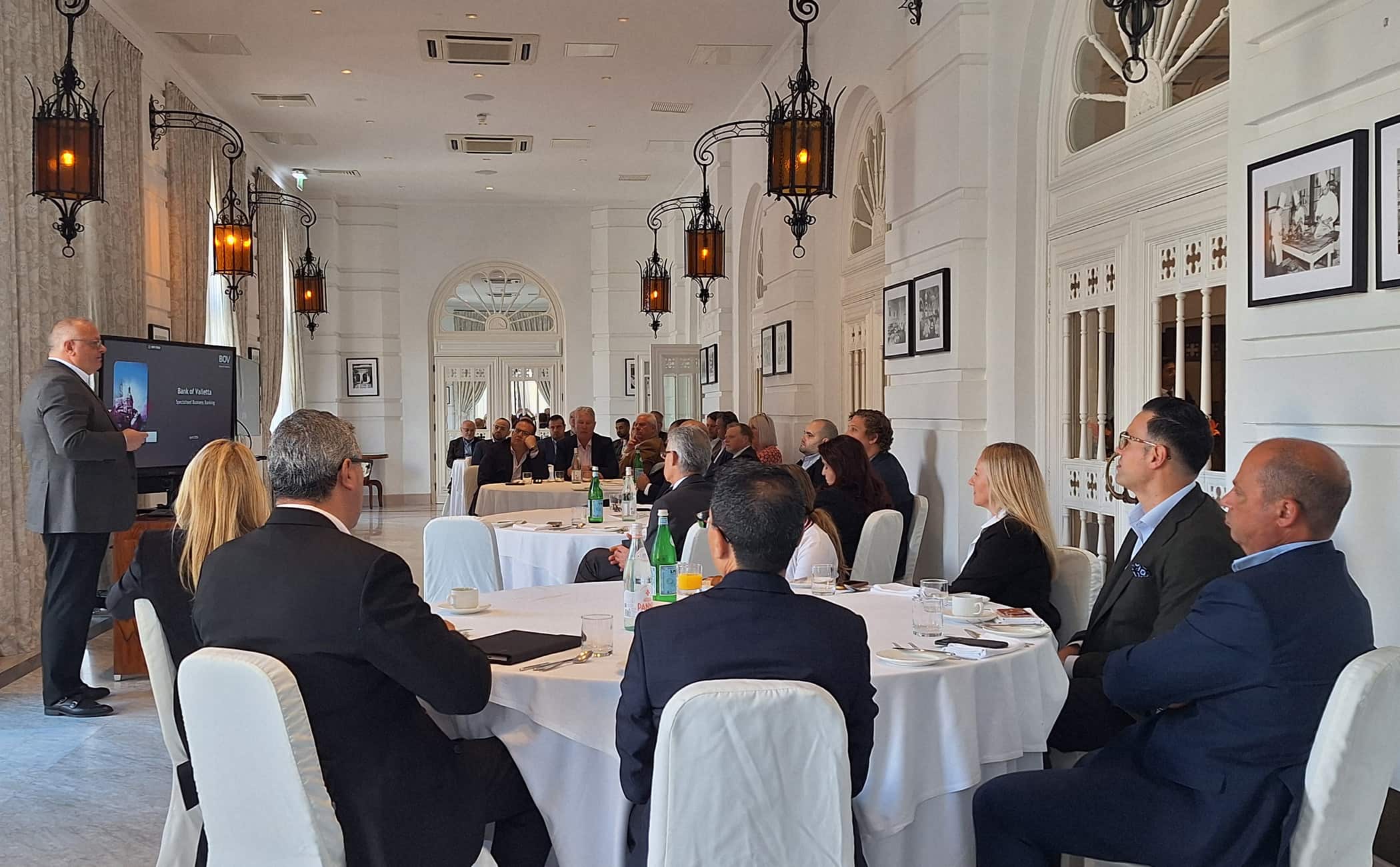
Aviation Malta and Bank of Valletta (BOV) co-hosted a high-level business breakfast at The Phoenicia Malta, bringing together industry leaders, investors, and corporate stakeholders to explore Malta’s competitive advantages and the evolving landscape of specialised business banking.

Aviation Malta was set up in 2019, and plays a key role in the sector’s growth and development, helping Malta emerge as a popular hub for aviation and business.

The event was opened by Kenneth Farrugia, Chief Executive Officer of BOV, who set the tone for the morning by highlighting Malta’s continued economic resilience, the important role of the aviation sector within the national economy, and the bank’s commitment to supporting business growth through tailored financial solutions.

A presentation was delivered by Aldo Scardino, responsible for BOV’s international corporate banking function as well as Specialised Business Banking, who outlined the strategic objectives underpinning the Bank’s specialised business banking proposition.

The session focused on four key pillars:

  • Positioning Malta as a Business Destination: Attendees were presented with an overview of Malta’s strong economic fundamentals, strategic geographic location, and stable regulatory framework, reinforcing its attractiveness for international investment and business expansion.
  • Banking System and Regulatory Environment: Participants gained insights into Malta’s well-capitalised and highly regulated banking sector, operating within the European Central Bank framework, ensuring stability, transparency, and compliance with international standards.
  • Why Bank of Valletta: The presentation highlighted BOV’s role as Malta’s leading banking institution, emphasising its robust financial performance, strong capital position, and long-standing market leadership as a trusted partner for businesses.
  • BOV as a Strategic Banking Partner: The session concluded with a focus on how BOV supports businesses through specialised banking services, sector expertise, and a relationship-driven approach designed to meet the evolving needs of both local and international clients in the aviation industry.

Kenneth Farrugia highlighted aviation’s key role in Malta’s economic resilience and growth, noting Bank of Valletta’s commitment to supporting the sector with targeted financial solutions. He emphasised that Malta’s location offers opportunities in both aviation and maritime, which can be unlocked through collaboration. Farrugia concluded that coordinated development, as seen in financial services, would benefit all stakeholders.

Aldo Scardino noted that Malta is a strong, credible jurisdiction that competes well with top EU financial centres. He emphasised Bank of Valletta’s conservative, well-capitalised, and highly liquid business model, which supports long-term stability for international clients. Mr Scardino added that the bank views corporate service providers as key long-term partners in serving mutual clients.

The business breakfast forms part of ongoing collaborative efforts between Aviation Malta and Bank of Valletta to promote Malta as a premier hub for international business and investment, while strengthening engagement with key industry stakeholders.

BOV brings its employees’ families closer through culture with Toi Toi Movie Magic at Teatru Manoel

A dedicated performance for the children of Bank employees underscores BOV’s commitment to holistic employee well-being and work-life balance, supported through the BOV Foundation and the Bank’s long-standing patronage of the arts.

“At Bank of Valletta, we believe in holistic well-being, that includes the time and space to be present for family, to connect with one another, and to create positive experiences beyond the workplace,” said Ernest Agius, Chief Operations Officer at BOV and Deputy Chair of the BOV Foundation. “Through the BOV Foundation and our long-standing patronage of the arts, we are proud to support initiatives like TOI TOI that enrich our community, while also reinforcing the kind of workplace culture that helps our people thrive.”

The performance formed part of TOI TOI’s Easter run, staged between the 4th and 6th April, and was hosted at Teatru Manoel as a dedicated family event for Bank employees.

The event formed part of the Bank’s wider community and culture agenda, championed through the BOV Foundation, which supports initiatives that strengthen quality of life and enrich the communities the Bank serves. By bringing families together in a shared cultural experience, the Bank continues to promote a more inclusive workplace culture, one that recognises employees not only as professionals, but also as parents and caregivers.

Held at the Manoel Theatre in Valletta, the TOI TOI Easter Concert Movie Magic, the sixth edition of TOI TOI’s annual family event, featured an engaging selection of film music performed live, creating an accessible introduction to theatre and orchestral performance for younger audiences.

The programme included music from E.T., Star Wars, Avengers, Shrek and Harry Potter, as well as singalong moments inspired by popular titles from Disney, Netflix, Universal and Pixar. The concert featured the TOI TOI orchestral ensemble and a cast of young singers, joined by special guests, delivering a family-friendly performance that encourages children to engage with the performing arts and builds confidence through live cultural experiences.

The production featured music direction by Tom Newall and choreography by Warren Bonello. It was written and directed by Kate Fenech Field, with contributions from emerging directors Faye Mallia and Nicole Sciberras, reflecting TOI TOI’s commitment to developing artistic talent on stage and behind the scenes.

Since 2000, Bank of Valletta has continuously supported the theatre’s annual operatic production, reinforcing its role as a patron of the arts and contributing to a vibrant cultural calendar that creates opportunities for local artists to perform alongside established international talent.

The Malta Chamber Hails Tourism Regulations as First Step Towards Quality Leap

New Quality Standards Will Help Elevate the Island’s Brand

The Malta Chamber of Commerce, Enterprise and Industry welcomes the Tourism Accommodation Regulations 2026 as a meaningful first step towards enhancing the quality of the visitor experience while also supporting a more harmonious integration of tourism that minimises disruption to local communities.

The Malta Chamber notes the positive consolidation of four separate legislative instruments into one coherent framework. The Malta Chamber also welcomes the new approach requiring the Malta Tourism Authority to assess not only technical compliance but also how proposals add value, enhance visitor experiences, and align with national climate and sustainability goals – this marks a positive structural shift in licensing decisions.

Distinct accommodation labels and categories are another win. Malta’s tourism market is diverse, with typologies serving varied segments, expectations, and value propositions. This differentiated approach aligns regulation with market realities and elevates quality standards across the board. Mandatory eco-certification for collective accommodations makes sustainability a core requirement, not just a marketing tool.

The curbing of the two-extra-floors policy allowance for hotels is also acknowledged. Here, The Malta Chamber stresses the need for a renewed Strategic Plan for the Environment and Development (SPED) which is Malta’s key framework for land use, development, and environmental management. An updated SPED should seek to align all planning policies and related legislation, and ensure that development embraces our history, culture and natural environment, thereby creating urban, suburban, brownfield, rural and coastal landscapes which reflect our uniqueness, ultimately translating into a true value model.
The regulations introduce stronger tools for short-term rentals: harsher penalties for unlicensed operations, clearer host responsibilities, and licensing-linked waste management. These tackle issues communities, operators, and stakeholders have flagged for years.

All this aligns with Rediscover to Align document which The Malta Chamber published recently with 115 recommendations. It promotes value, sustainability, authenticity, and policy coordination over volume-driven growth.

That said, accommodation reform is just one link in tourism’s long chain. Real value demands action also on spatial planning, transport, workforce conditions, tourism operator licencing, more regulatory coordination across authorities, and more effective business support.

The Malta Chamber urges Government to view these regulations not as the finish line, but as the start of broader reforms – seize this momentum, implement the remaining ideas of Rediscover to Align and Malta will offer higher value, resilience, superior visitor experiences, and better quality of life for residents.

BOV honoured to be an ICA compliance award finalist

Bank of Valletta is delighted to be shortlisted for an ICA Compliance Award for Financial Crime Prevention Project of the Year. The ICA Compliance Awards celebrate the outstanding achievements, collaboration, and innovation of the compliance and financial crime prevention teams across the globe.

Following a thorough judging process, Bank of Valletta was shortlisted, ahead of the official awards ceremony to be held on 25th June 2026.

The Financial Crime Prevention Project of the Year entry detailed the outstanding work of the Bank, showcasing its transaction monitoring transformation project and reflecting the material enhancements achieved in terms of strengthened controls, effectiveness, and the tangible benefits realised following the changeover.

Kenneth Farrugia, BOV Chief Executive Officer, welcomed the announcement that the Bank has been shortlisted as a finalist for this award. Commenting on the nomination, Mr Farrugia said: “This recognition is a strong affirmation of the Bank’s unwavering commitment to the highest standards of compliance, integrity and responsible banking. While our front-line teams remain fully focused on delivering core banking services, supported by dedicated specialist units, we attach equal importance to safeguarding the Bank’s reputation and protecting its brand. A robust and resolute approach to combating financial crime, alongside full compliance with an increasingly demanding regulatory environment at both local and international levels, remains central to our long-term sustainability. This commitment underpins the trust placed in us by our customers, shareholders, correspondent banks and international credit rating agencies.”

Ryan Caruana, BOV Group Chief Anti-Financial Crime Officer & MLRO, commented, “Bank of Valletta’s shortlisting as a finalist at the ICA Awards for Financial Crime Prevention Project of the Year recognises the Bank’s strong journey in enhancing and modernising its financial crime prevention framework. This achievement provides important external validation by the International Compliance Association of the Bank’s ongoing commitment to effective, robust financial crime controls.”

ICA’s President, Pekka Dare commented: “On behalf of ICA, I would like to personally thank everyone who entered the ICA Compliance Awards Europe. It gives me great pleasure to congratulate Bank of Valletta on being shortlisted as a finalist in the category of Financial Crime Prevention Project of the Year. All of the entrants represent the very best of what our industry has to offer, and I am looking forward to welcoming all our finalists to the awards ceremony on 25 June in London.”

The judging panel was made up of a diverse range of highly influential and respected figures within the compliance and financial crime prevention community. This includes: Lisa Bennett, Legal Compliance Director, Mastercard; Shyam Kotecha, Chief Compliance Officer, MLRO & Director, M T Finance; Jon Duffy, Senior Vice President, Corporate Assurance & Regulatory Affairs, Genting Casinos UK; Caroline Braddock, Ethics and Compliance Officer, Rolls-Royce; Anthony Davies, Senior Compliance Manager, AXA Health and more.

The Malta Chamber meets Ombudsman to discuss AI regulation and future of work

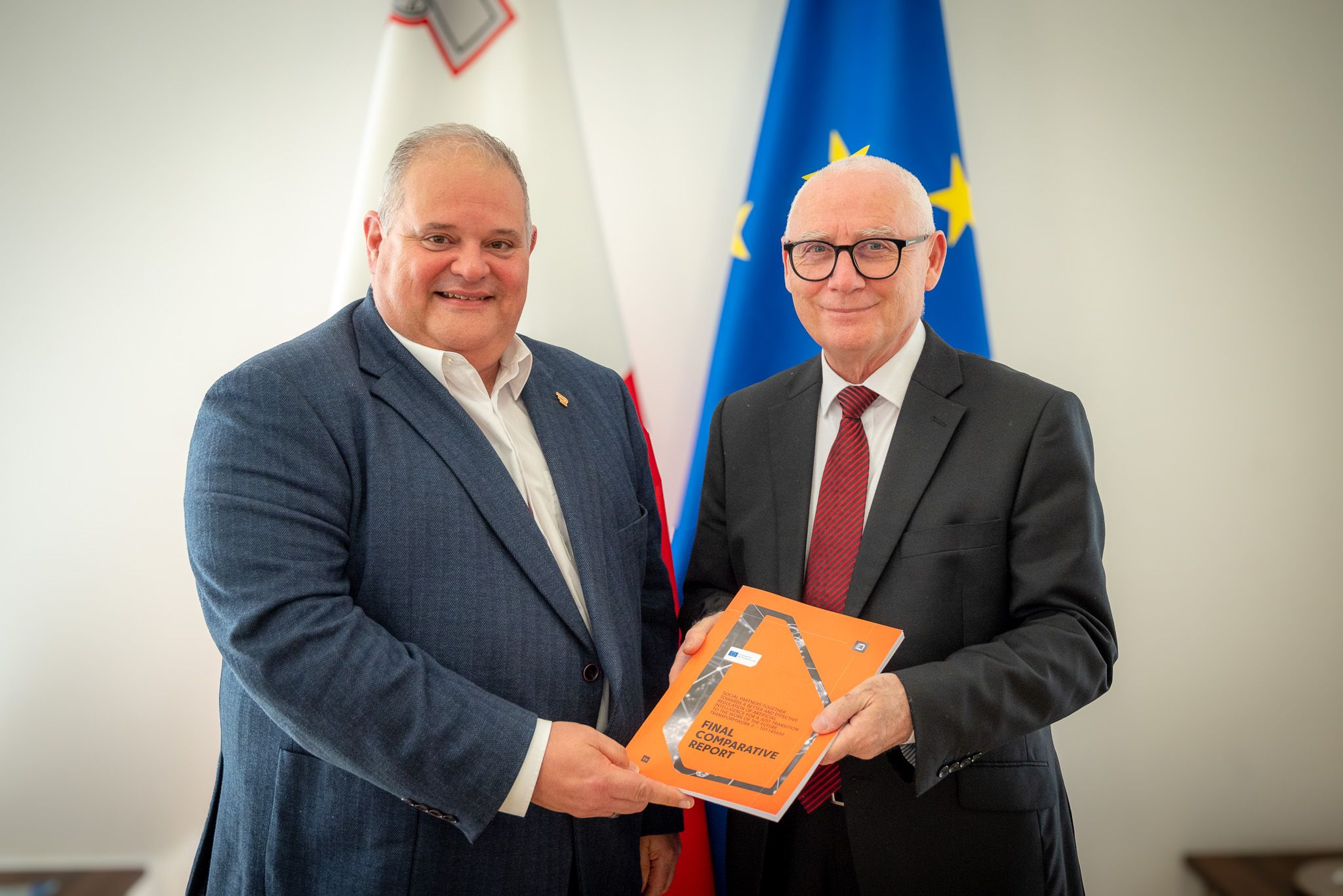
A delegation from The Malta Chamber, led by President William Spiteri Bailey, met with the Parliamentary Ombudsman, Judge Joseph Zammit McKeon, to discuss the findings of the TransFormWork 2 Final Comparative Report, which examines the impact of artificial intelligence on the workplace across seven EU countries.

The report, developed as part of the TransFormWork 2 project, analyses how artificial intelligence and algorithmic management are reshaping employment relations, working conditions, and regulatory frameworks in Bulgaria, Cyprus, Ireland, Italy, Malta, Poland, and Romania. It highlights both opportunities and risks, including concerns related to transparency, worker involvement, and psychosocial pressures, while also identifying good practices such as training initiatives and ethical AI frameworks. The report supports the development of fair regulation and responsible deployment of AI systems, grounded in the Human in Control principle.

The President of The Malta Chamber, William Spiteri Bailey said, “The TransFormWork 2 project, a collaborative effort across seven EU nations, focused on the profound impact of Artificial Intelligence and algorithmic management on the evolving landscape of work. By prioritising the human-in-control principle, the initiative sought to identify proactive strategies for upskilling and reskilling the workforce to meet future labour demands. Ultimately, the project highlighted that while digital transformation reshapes workplace dynamics, responsible implementation can unlock significant opportunities, foster innovative organizational structures, and enhance working conditions for both employers and employees.”

During the meeting, the Ombudsman thanked The Malta Chamber for inviting him to contribute to two key events organised as part of the project. He reiterated that artificial intelligence must remain subject to the rule of law and comply with human rights standards, particularly in relation to privacy, data protection, and non-discrimination.

He emphasised that AI systems must not lead to unfair or opaque decision making and that adequate safeguards, transparency, and accountability mechanisms are essential. He also referred to relevant European legal frameworks and case law, highlighting the risks posed by unchecked use of algorithmic systems and the importance of ensuring that technological development respects human dignity and fundamental rights.

The meeting emphasised the importance of responsible AI use, the need to maintain human oversight, and the role of education in preparing the workforce for the rapid development of artificial intelligence.

The meeting was also attended by The Malta Chamber CEO, Dr Marthese Portelli, the Head of Media and Communications Strategy at The Malta Chamber, Rachel Bondi Attard Bondi, and the Policy and Projects Coordinator at The Malta Chamber, Fabio Bajada, as well as Mr Jurgen Cassar, Head of Communications and Research at the Office of the Ombudsman.