20 January, 2025

The Malta Chamber Welcomes Labour Migration Policy as a Positive Development


Transparency, Efficiency and Enforcement are Key

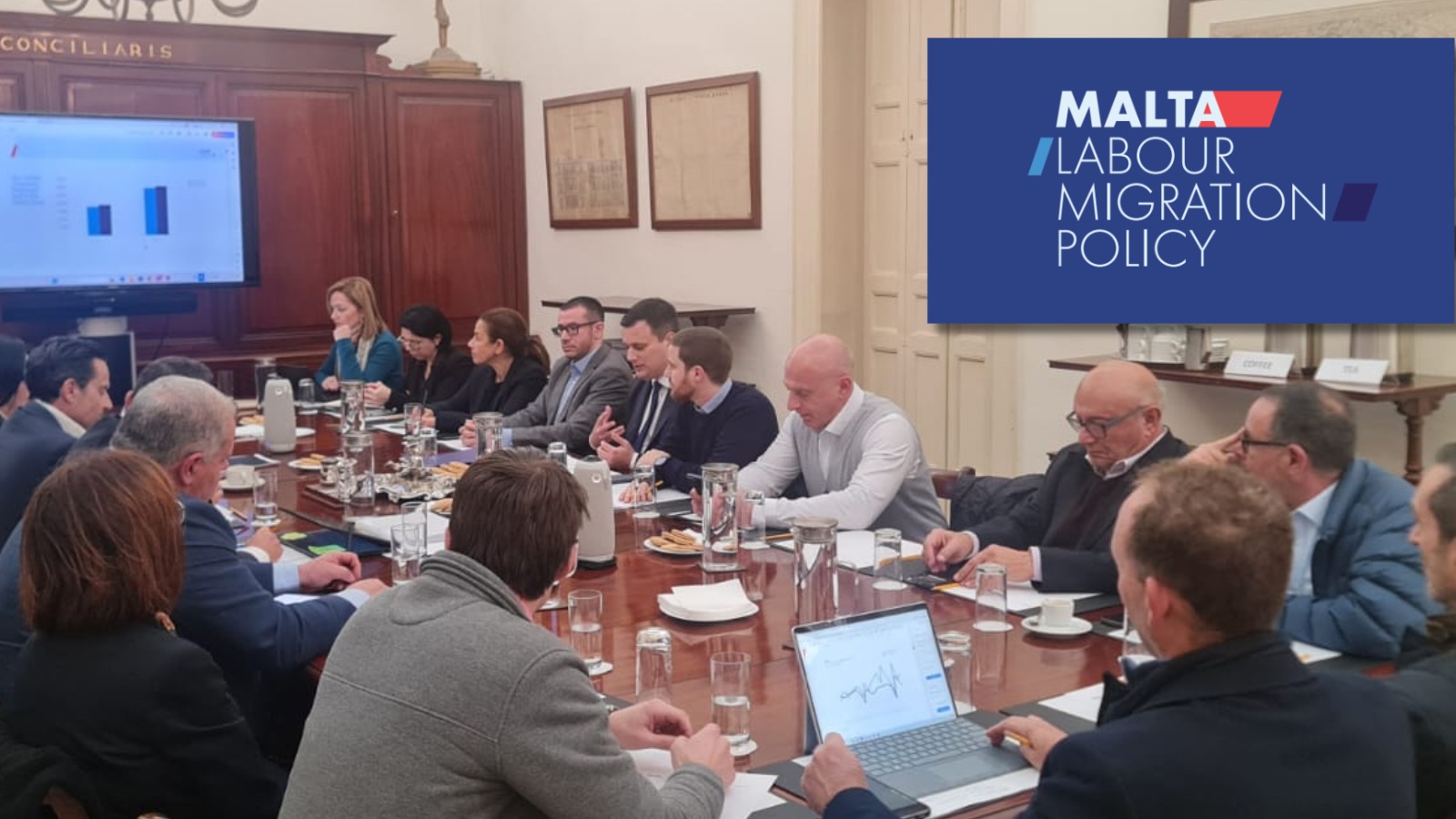
The Malta Chamber acknowledges the recently launched Labour Migration Policy as a significant step forward in addressing Malta’s workforce challenges. The policy includes several recommendations that align with The Malta Chamber’s vision for sustainable economic development. For the policy to be effective the labour market must be strengthened through a reduction in public sector employment, more incentives for upskilling and reskilling, and more support for investment in digitalisation to improve productivity. All policies need to be aligned and fully integrated into the Malta Vision 2050, to ensure a holistic and long-term strategy for the nation’s workforce and sustainable economic growth.

While The Malta Chamber agrees with many aspects of the policy, there are certain recommendations that require clarification and adjustment to ensure their effective implementation. These include:

  1. Minimum Termination Rates Per Firm: The recommendation concerning minimum termination rates per firm requires more clarity regarding the determination of employer workforce size. For example, it is not clear how termination rates will be calculated in the case of companies operating under a group structure. Another example that requires further clarity is with respect to termination during the probation period as well as terminations prior to the expiry of a fixed term contract, whether it is a termination by the employer or a resignation by an employee. The seasonality experienced by certain sectors must also be taken into consideration – a one-size fits all approach is not possible. One must also carefully identify those other sectors and specializations which, like healthcare (as duly mentioned in the policy), constantly experience significant and persistent shortages – these need to be pulled out of the one-size fits all approach.
  2. Eligibility for Additional TCNs Based on Workforce Percentage: The policy indicates that employers’ eligibility to apply for additional Third Country Nationals (TCNs) should be determined by a fixed percentage of their workforce. The Malta Chamber seeks clarification on whether this workforce size includes only direct employees or if it also encompasses subcontracted workers through temping or outsourcing agencies. Furthermore, it is understood that temping agencies and outsourcing agencies will be subject to the same criteria applicable to all the companies which do not fall under any special category or exemption. More details on how this criterion will be applied specifically to temping agencies and outsourcing agencies is required.
  3. Seasonal Work Permits: The Malta Chamber suggests introducing seasonal work permits with multi-season renewal options. This would be beneficial to both companies and employees. Companies would benefit because recruitment overheads would decrease whereas employees would benefit from employment security and longer-term employment.
  4. Prioritizing Maltese and EU Nationals: While The Malta Chamber supports the recommendation that employers prioritize hiring Maltese and EU nationals before considering TCNs, one must also acknowledge that, as already highlighted above, certain industries face persistent shortages of local and EU workers. The Malta Chamber recommends revisiting the proposed bands to address this reality While a specific threshold or target is necessary to ensure fairness and balance, the approach must remain flexible enough to account for industry-specific challenges and workforce availability.
  5. Study to Determine Market Wage Rates: Transparency is important when conducting a study to determine wage rates. The results of such studies, along with the methodologies used, should be made public to guide market operators effectively. Additionally, The Malta Chamber suggests assessing wage adequacy with respect to the output expected, as well as to identify, analyse and address other externalities which eat away at the take home pay, such as the high rental prices, regardless of the type of occupation.
  6. Authorities establish tailored MOUs with other countries: The Malta Chamber supports the establishment of Memoranda of Understanding (MOUs) with other countries to facilitate labour migration. This initiative should benefit those companies that operate ethically and have a proven track record of doing so – this should also be applicable to recruitment, temping and outsourcing agencies. Exploitative practices in this sector are the result of years of lack of inadequate regulation regulating outsourcing and temping. Professional private recruiters have consistently highlighted the need for regulation and have been proactive in sourcing top talent ethically. Temping and outsourcing agencies have only started being regulated very recently, after repeated requests by The Malta Chamber to address the issue.

Transparency Efficiency and Enforcement are Key

The Malta Chamber believes that the success of the Labour Migration Policy depends on three crucial components: transparency in recruitment and data, along with efficiency and enforcement. Without these measures, and unless it is integrated into Malta Vision 2050, the policy will not achieve its full potential. The Malta Chamber insists that any abusive behaviour from both employers and employees should be addressed and brought to justice without any delay.

The Malta Chamber remains committed to working with Government and all stakeholders to ensure that the Labour Migration Policy achieves its objectives, supporting a sustainable and inclusive economic future for Malta.

All News

View All

17 April, 2026

The Malta Chamber Hails Tourism Regulations as First Step Towards Qual...

...

Learn More
10 April, 2026

The Malta Chamber and EMCS Sign Silver Collaboration Agreement...

...

Learn More
31 March, 2026

Employers’ Associations criticise deal connecting cannabis authority...

...

Learn More
30 March, 2026

TransFormWork 2 Project Concludes with Final Conference in Sofia...

...

Learn More

All News

View All

Chamber News

17 April, 2026

The Malta Chamber Hails Tourism Regulations as First Step Towards Qual...

...

Learn More

Chamber News

13 April, 2026

The Malta Chamber meets Ombudsman to discuss AI regulation and future ...

...

Learn More

Chamber News

10 April, 2026

The Malta Chamber and EMCS Sign Silver Collaboration Agreement...

...

Learn More

Chamber News

31 March, 2026

Employers’ Associations criticise deal connecting cannabis authority...

...

Learn More

upcoming events

View All

Upcoming Events

12 May, 2026

Engaging Workers Covered by the Skills Card System

...

Learn More

Upcoming Events

13 May, 2026

Commercial Leases Explained: What Landlords and Tenants Need to Know

...

Learn More

Upcoming Events

14 May, 2026

Know Your Numbers - A Financial Literacy Workshop for Entrepreneurs

...

Learn More

Upcoming Events

28 May, 2026

The "Ins & Outs" of VAT in the Fintech Sector

...

Learn More

upcoming events

View All

12 May
upcoming event 12 May, 2026, 08:30 AM

Engaging Workers Covered by the Skills Card System

Learn More
13 May
upcoming event 13 May, 2026, 08:30 AM

Commercial Leases Explained: What Landlords and Tenants Need to Know

Learn More
14 May
upcoming event 14 May, 2026, 06:00 PM

Know Your Numbers - A Financial Literacy Workshop for Entrepreneurs

Learn More
28 May
upcoming event 28 May, 2026, 08:30 AM

The "Ins & Outs" of VAT in the Fintech Sector

Learn More