
15 October, 2026

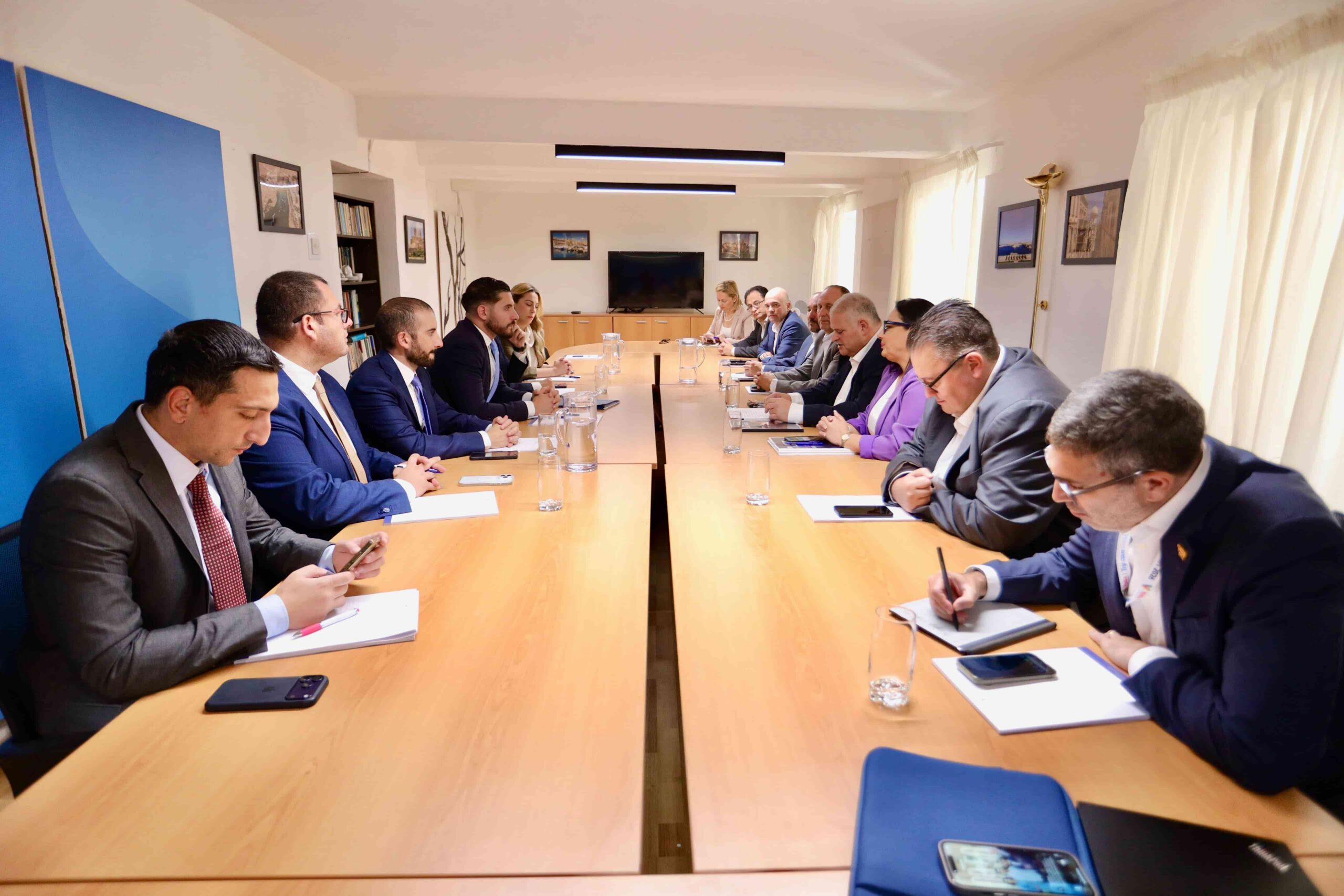
Photo: DOI
Clearer Direction Needed on Productivity, Business Competitiveness, Infrastructure, and Long-Term Transformation
The Malta Chamber of Commerce, Enterprise and Industry notes that Budget 2027 is one that helps families and increases pensions but falls short from outlining clearly how it will be transforming Maltese economy and address productivity effectively.
The Malta Chamber is in favour of the increase in eco-tax contributions on tourists as well as the other tourism-related fees, as long as the income is used to improve the overall touristic product and reinvestment in the localities, which is needed to achieve the much-needed increase in average real expenditure per tourist. The Malta Chamber also welcomes the exemption for English-language students’ accommodation, recognising the distinct contribution of educational tourism.
Whilst The Malta Chamber welcomes the assistance in reduced income tax for families and the increase in pensions, The Malta Chamber feels that corporate tax should have been reduced to 25% for all business, and to an even lower rate for those that are fully compliant on their legal obligations.
With respect to productivity, The Malta Chamber notes the increase in fees for work permits of foreign workers, as a disincentive for businesses to rely on adding foreign workers. However, The Malta Chamber notes that there is lack of clarity on incentive schemes for business to digitalise further – this is particularly relevant because not all the schemes promised in the 2026 budget were rolled-out. The Malta Chamber feels that the increase in work permitting fees is being seen more as revenue generation for government rather an economic policy tool. The Malta Chamber reminds everyone that between 2015 and 2025, Malta’s gross value added increased by 81.9% – only 3.1% is attributable to productivity gains whereas a staggering 68.9% was attributable to employment growth and only 9.9% was based on shifts towards higher-value sectors. Furthermore, this year, compensation per employee is projected to rise by 4.4% while labour productivity is envisaged to grow by just 0.1%. This is a trend that businesses cannot sustain for long and it erodes both Malta’s competitiveness and attractiveness. This is why The Malta Chamber was expecting to see more clarity and tangibility on incentives encouraging businesses to invest in productive capital, modernise how they operate, change their processes, modernize their systems and digitalize. These incentives are needed to counter-balance the reality of new financial burdens on TCNs which will likely be borne by the employers.
Government also has a role to play in improving productivity within the public service – as the biggest employer, Government should also seek to improve the efficiency of public services rather than employing additional people. The state’s own responsibility needs to be examined as well.
The Malta Chamber also notes with concern that the budget gave no indication of the Government’s plan to address traffic congestion. Congestion cost the economy an estimated €770 million in 2025, a figure projected to rise to €917 million by 2030. The Malta Chamber had proposed a list of incentives and disincentives to address the issue and bring about the much-needed transformation, including a mobility e-wallet that drives modal shift, more customer-oriented public transport routes, designated drop-off and pick-up areas for y-plates, smart un/loading and parking management, a rehash of the school transport system and logistics consolidation hubs. None of this was reflected.
On energy, The Malta Chamber believes that much more is required on the renewable energy front, grid reinforcement and energy resilience measures. Also, whilst it is understandable that one should keep subsidies when fuel prices skyrocket, one should have a plan on how to divert subsidy funds toward renewable energy sources when international energy and fuel prices require a smaller government subsidy.
The Malta Chamber would have also welcomed incentives directed towards internationalisation and a clear path forward on mitigation of connectivity-induced costs on industry.
The Malta Chamber also noted that the much-required reforms in education and skills, planning, public procurement, cross-sectoral enforcement, and cutting unnecessary bureaucracy across entities have not been addressed either.
This is the first budget of the new legislature, and it was the moment to lay out how the Government intends to tackle the country’s major challenges over the next five years. Whereas it is relatively strong and clear on the social side, it is very generic and lacks depth on how the structural challenges that are impacting productivity and competitiveness will be addressed.
...
...



...