HSBC Life Malta records over 95% Claims Paid for the fourth year running

Behind every life insurance claim is a person or a family facing an unexpected and often difficult moment. In 2025, HSBC Life Malta once again stood by its policyholders, paying out more than 95% of assessed claims for the fourth consecutive year, reinforcing its commitment to supporting customers when they need it most.

This result is not about a single year, but about an ongoing commitment to supporting customers at the moments when protection truly comes into play. It reflects a consistent approach to claims handling built on fairness, clarity and care.

Commenting on the company’s continued performance, HSBC Life Malta CEO Gregory Inglott highlighted 2025 was a very good year. Our existing customers continued to show their trust in our insurance company whilst new customers sought our solutions. I am very pleased we are able to continue repaying that trust. 

The 2025 claims experience spans individual protection solutions such as the Loan Protector Plan and the Personal Protector Plan, which support families with home loan and personal protection, as well as the Group Life Plan, which provides financial security to employees and their families through employer-sponsored cover.

Josef Camilleri, Head of Products & Distribution at HSBC Life Malta, emphasised that outcomes at claim stage are what ultimately define the value of life insurance.

“When people take out life insurance, they are preparing for situations they hope they will never face. Our responsibility is to respond with care, efficiency and fairness if those moments do arise. Life insurance is about peace of mind, knowing that support will be there if it is ever needed. A strong and consistent claims record helps turn that promise into something real for families and businesses.”

By continuing to deliver dependable claims outcomes year after year, HSBC Life Malta reaffirms its role as a trusted life insurance provider in Malta, focused not just on offering policies and products, but on people, and on being there when it matters most.

The Kaizen Culture Paradox: Seven Ideas That Redefine How Leaders Drive Improvement

Most organisations don’t struggle with continuous improvement because they lack ambition. They struggle because they try to simplify something that is inherently complex.

Kaizen is often introduced as a method, a toolkit, or a structured improvement program. Leaders are encouraged to adopt new practices, deploy new metrics, and roll out new initiatives—often with the best intentions. Yet over time, many of these efforts lose momentum. Improvement becomes episodic. Engagement fades. Results plateau.

This is not a failure of Kaizen. It is a failure to understand it.

At its core, Kaizen is built on a set of paradoxes that leaders must learn to hold simultaneously. These paradoxes are not contradictions to be resolved; they are tensions to be managed. The Kaizen Culture Paradox explores these ideas directly—and this upcoming event is designed to bring them to life through a keynote and live conversation with the author and the audience.

Practice Over Tools

One of the most common misconceptions about Kaizen is that it is driven by tools. In reality, tools are secondary. What sustains improvement over time is practice: the daily behaviours, routines, and habits that shape how people think about problems and act on them.

Organisations that focus too heavily on tools often see early enthusiasm followed by decline. Without consistent practice, tools become rituals—performed because they are required, not because they create learning. Kaizen cultures reverse this logic. They focus first on how people practice problem-solving, reflection, and experimentation. Tools then serve the practice, not the other way around.

Small Is Not the Only Kaizen

Kaizen is widely associated with small, incremental improvements—and rightly so. Small changes compound. They are practical, low-risk, and accessible to everyone. But small improvements alone are not enough.

Kaizen also supports larger shifts in direction, thinking, and capability. The paradox is that meaningful transformation rarely comes from dramatic interventions. Instead, it emerges when small improvements are aligned to a shared purpose and reinforced over time. Kaizen teaches organisations how to balance patience with ambition—building momentum without losing direction.

Efficiency Begins With Flow

Many organisations pursue efficiency by optimising individual tasks, departments, or metrics. Kaizen challenges this approach by shifting attention to flow—the movement of value from start to finish.
Local efficiency can improve isolated results while harming the system as a whole. Work queues grow. Handoffs slow down. Problems remain hidden between functions. By focusing on flow, Kaizen exposes constraints, delays, and waste that efficiency thinking alone often misses. Improvement begins not with working harder, but with enabling value to move smoothly through the organisation.

Standardize to Improve

Standardisation is often misunderstood as rigid control. In Kaizen, it serves a very different purpose.
Standards capture the current best-known way of working. They create stability, visibility, and a shared reference point. Without standards, there is no baseline for learning—only variation and opinion. The paradox is that standardisation does not limit improvement; it makes improvement possible.

In Kaizen cultures, standards are living agreements, not fixed rules. They are expected to change as learning occurs. Leaders play a critical role here: treating standards as temporary truths encourages experimentation, while treating them as permanent rules shuts learning down.

Kaizen Is More Than Operations

Although Kaizen has strong roots in operations, its impact extends far beyond the shop floor. Over time, it shapes leadership behaviour, decision-making, and organisational culture.
Kaizen influences how meetings are run, how problems are discussed, how performance is reviewed, and how people are developed. It affects how organisations respond to uncertainty and how they balance short-term pressure with long-term capability. Seen this way, Kaizen is not an operational initiative—it is an organisational mindset.

Kaizen Is a Meta-Strategy

Rather than competing with strategy, Kaizen enables it.

As a meta-strategy, Kaizen provides a consistent way to translate strategic intent into everyday action. It aligns execution with learning. Instead of relying on periodic transformation programs, organisations use Kaizen to adapt continuously—testing ideas, learning from results, and adjusting course.

This approach reduces dependence on large-scale change efforts and builds internal capability to improve from within. Strategy becomes something that evolves through practice, not something that is imposed and revisited only when performance declines.

Kaizen Is the Smartest Way to Run a Business

Taken together, these paradoxes point to a broader truth: Kaizen is not a technique for improvement—it is a way of running an organisation.

It builds resilience by developing people’s ability to see problems early and respond thoughtfully. It improves performance by focusing on systems rather than symptoms. And it sustains results by embedding learning into daily work.

This is why organisations that truly embrace Kaizen do not rely on constant reinvention. They improve steadily, adapt consistently, and compound gains over time.

An Invitation to Think Differently

This event brings these seven paradoxes together through a keynote presentation and an open conversation with the author and the audience. It is designed for leaders who want to move beyond surface-level adoption and explore what Kaizen really demands in practice.

Participants will gain:

– A clearer understanding of why many improvement efforts stall despite good intentions
– Insight into how the seven paradoxes show up in everyday leadership decisions
– A deeper appreciation of Kaizen as a cultural and strategic system
– The opportunity to engage directly, ask questions, and challenge assumptions

This is not a training session or a methodology overview. It is a leadership conversation about how improvement actually works—and why embracing paradox is essential to making it last.

Join us for this keynote and live conversation around The Kaizen Culture Paradox and rethink what continuous improvement means for your organisation.

If improvement is truly a priority, this is a conversation worth investing time in

Three BOV Visa winners heading to the Winter Olympic Games

Following the successful BOV Visa Spend and Win competition, Bank of Valletta today announced the three competition winners who will be travelling to Italy this month to experience the magic of the Olympic Winter Games Milano Cortina 2026. What started out as a simple daily gesture to use Visa cards for everyday spending has now turned into a once-in-a-lifetime experience for these customers, thanks to Visa.

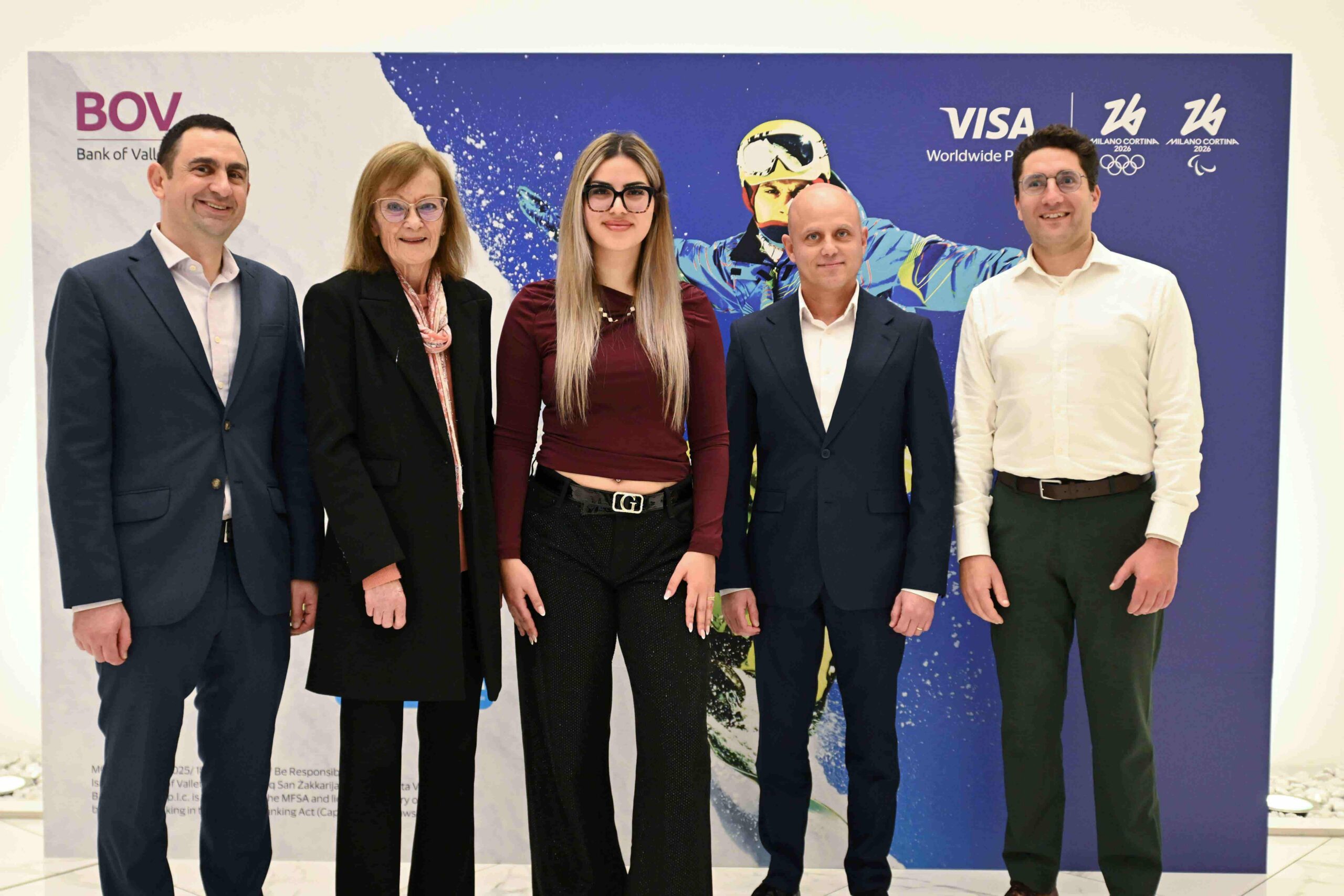
After weeks of anticipation, the winning BOV Visa Cardholders have been confirmed. Sylvana Zarb Darmanin has been awarded the first prize, securing an all-inclusive experience for two to the Olympic Winter Games Milano Cortina 2026. Frank Cassar has been named the second prize winner, while Ellissa Bouzguenda has claimed third prize. Prizes were handed out during a presentation event hosted by Chris Degabriele, Head of eBanking at the Bank. Present also for the occasion were representatives from Visa, and the Bank’s Marketing and Product Lifecycle Management team.

Speaking during the presentation, Chris Degabriele said, “This occasion is a wonderful reminder of how simple choices we make, like using a BOV Visa Card for everyday purchases, can lead to extraordinary rewards. This spend and win competition is an opportunity to celebrate the loyalty of our customers while reinforcing the value of opting for smart, secure, and convenient payment methods like digital and physical payments in an increasingly fast-paced world. Congratulations to all three winners and a word of thanks to Visa for a collaboration that continues to add real value to our customers.”

Launched in collaboration with Visa, the sweepstake focused on BOV Visa Cardholders who regularly use their BOV Visa cards or digital wallets to carry out daily purchases. These customers have registered their interest in participation and consequently then entered into a draw with the final rewards being a unique experience at the Olympic Winter Games Milano Cortina 2026. The prize packages include flights, accommodation, transfers, and access to the electric atmosphere of the Olympic Winter Games, where the world’s top athletes will compete on snow and ice across some of Italy’s most iconic alpine venues. From the thrill of the slopes to the spectacle of world-class competition, the winners are set to enjoy a sporting celebration like no other.

BOV employees clock 5,000+ volunteering hours in 2025

Launched in March 2024, Bank of Valletta’s volunteering programme continues to grow , reaching a new milestone in 2025. BOV employees contributed 5,000+ volunteering hours, with 645 employees taking part across 68 initiatives, marking a 47% increase in participation compared to 2024. They supported several NGOs working across social and environmental sectors.

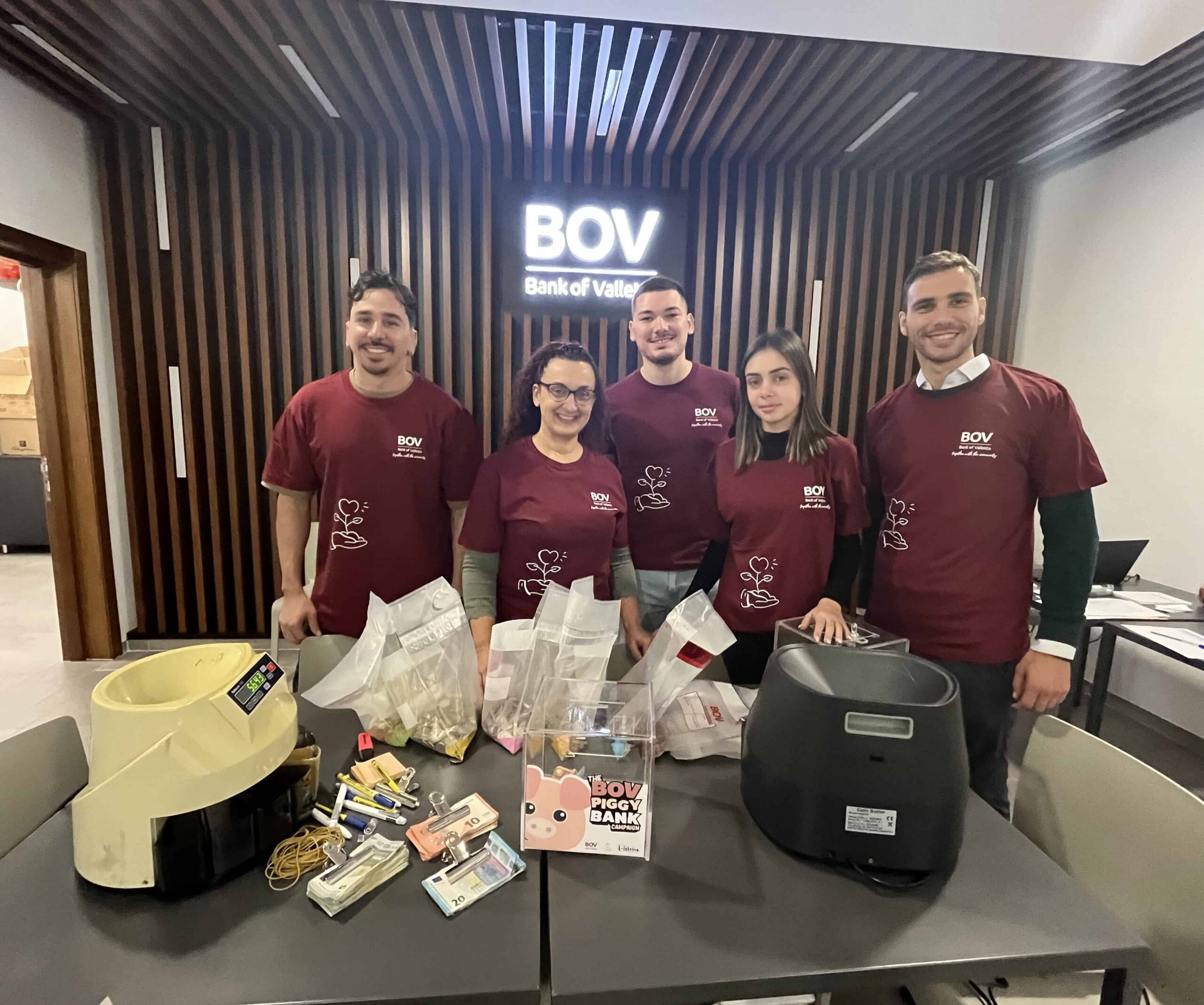
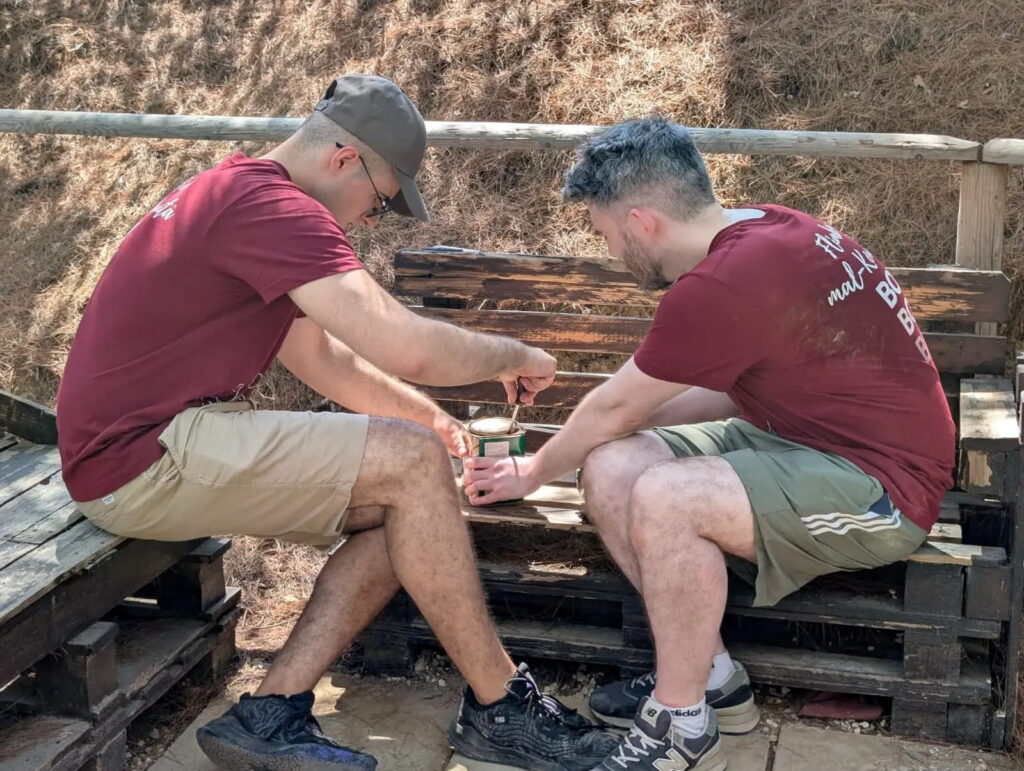
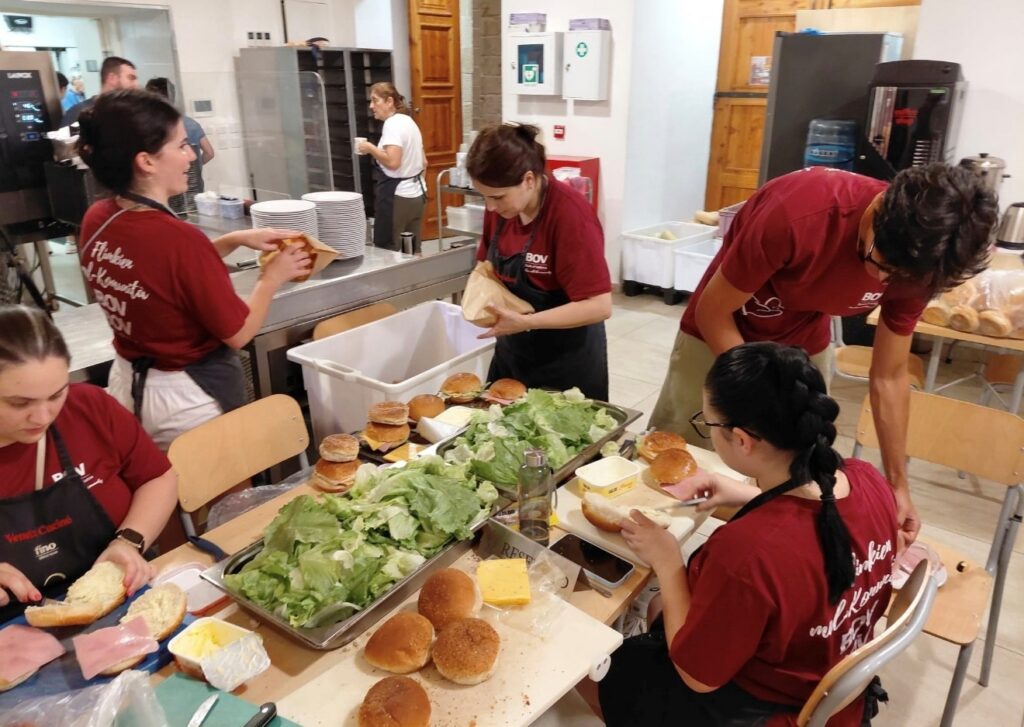
Across the programme, colleagues rolled up their sleeves for practical, hands-on support. In 2025, teams volunteered at the Soup Kitchen, helping with meal preparation and serving meals to guests. Others supported Caritas through practical maintenance work that improved shared outdoor spaces for residents. BOV volunteering also extended to long-standing national community initiatives, including the L-Istrina BOV Piggy Bank Campaign, where colleagues volunteer their time to support the coin counting process, helping bring the campaign to its final stages. Teams also contributed their support to NGOs like Puttinu Cares, reflecting the programme’s reach across different community needs.

These efforts form part of the Bank’s wider Corporate Social Responsibility programme, through which NGOs are invited to benefit from practical, hands-on support from Bank volunteers. Community partners have continued to respond strongly, welcoming support that helps advance their day-to-day work and mission.

Beyond the impact delivered in the community, the programme strengthens the Bank’s culture by bringing colleagues together across different functions and roles around a shared purpose, whilst promoting empathy, inclusion, and social responsibility.

Speaking about these initiatives, Ernest Agius, Chief Operations Officer, explained, “ESG becomes real when you can see it in action. Volunteering gives our colleagues the chance to step into the community and support organisations doing vital work every day. It builds relationships outside the Bank with our communities.”

Ray Debattista, Chief People & Culture Officer, added, “By creating space for colleagues to volunteer, we’re investing in social sustainability, whilst remaining true to our value of inclusion, and giving our people scope for personal growth. The continued rise in participation shows that our people want to be part of real impact, and that matters for the communities we serve and for the culture we are building.”

Looking ahead, the Bank will continue building on this momentum with community partners, supporting meaningful volunteering opportunities aligned with the Bank’s ESG priorities and delivering tangible value where it is needed most.

TradeMalta Drives International Collaboration at Gulfood 2026

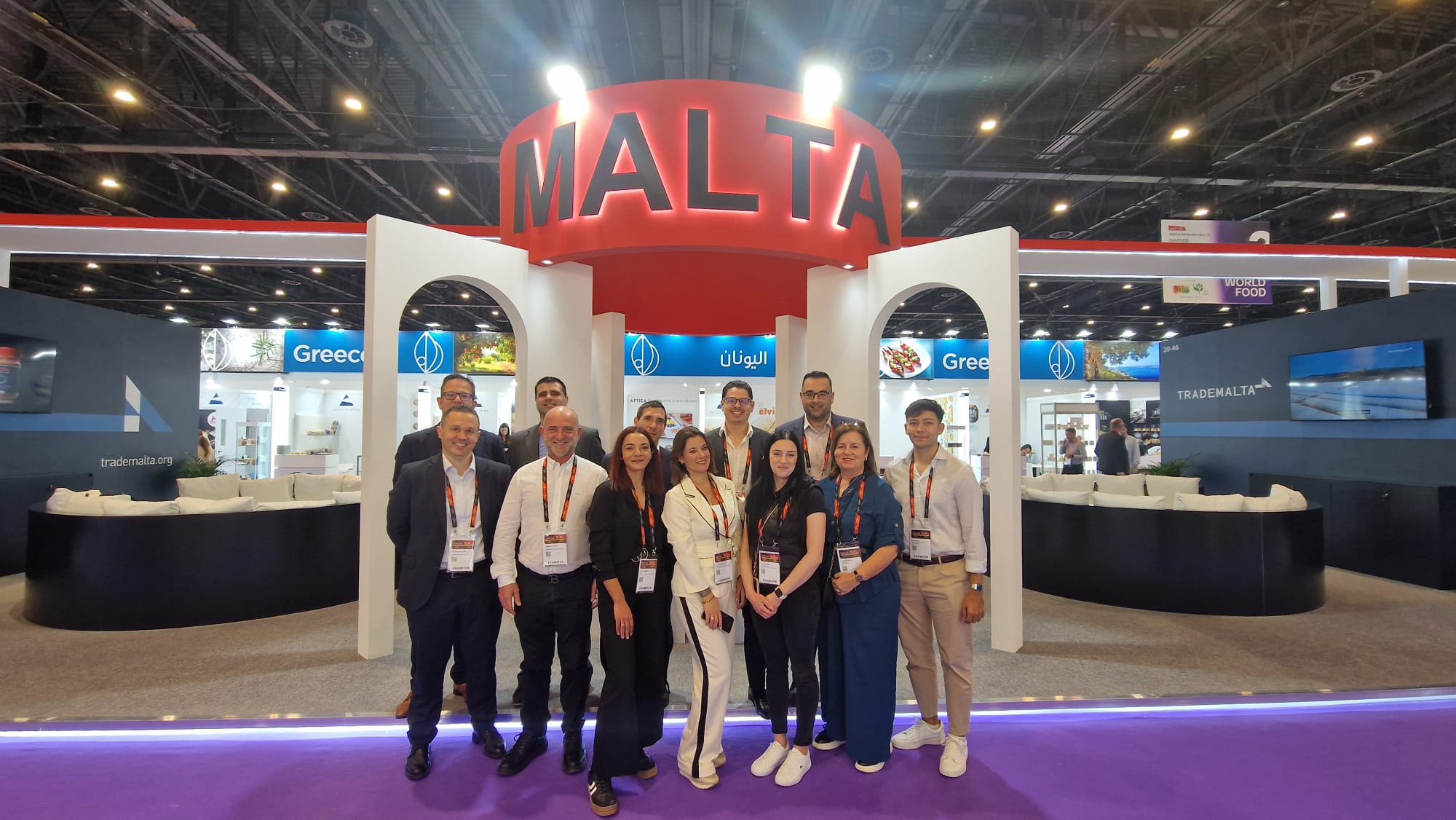
TradeMalta successfully organised the Malta Pavilion at Gulfood 2026, one of the world’s leading food and beverage trade exhibitions, held in Dubai between the 26 and the 30 January. This continues to reaffirm TradeMalta’s commitment to supporting Maltese companies in expanding their international footprint.

Malta was represented by seven companies operating within the food and beverage sector, showcasing a diverse portfolio of products including beer, soft drinks, energy drinks, snacks, biscuits, crackers, sauces, and condiments, as well as powdered mixes for cakes and custard.

The exhibition provided a valuable platform for Malta-based businesses to engage with international buyers and distributors, explore emerging industry trends, and identify new export markets.

TradeMalta’s role in such events encompasses pre-event preparation, funding support through its International Trade Promotion Incentive Schemes, supporting participants with best-practice promotional guidance at such events and active engagement during the event by facilitating networking opportunities and ensuring that exhibitors were well positioned to maximise the commercial potential of their participation.

Commenting on TradeMalta’s participation, Tania Brown, Chief Executive Officer of TradeMalta, said: “Gulfood 2026 continues to provide a strategic platform for Maltese food and beverage companies seeking to grow beyond our shores. TradeMalta’s active involvement in the preparation of such events and its officials’ presence on the ground during the event ensures that participating businesses are supported at every stage, enabling them to connect meaningfully with international partners and position their products competitively within global markets.”

Gulfood 2026 marked the 31st edition of the world’s largest annual food and beverage trade exhibition, bringing together over 8,500 exhibitors from 195 countries.

Visitors to the Malta Pavilion experienced first-hand the exceptional quality and innovation of Maltese products, reinforcing Malta’s position as a key player in the international food and beverage industry.

Carmen Walls, Senior Manager at TradeMalta, who led Malta’s participation at Gulfood, commented: “Our focus throughout the fair was to ensure that Maltese exhibitors could fully leverage the opportunities Gulfood offers. The level of interest shown in Maltese products and the quality of engagements held throughout the week reaffirm the value of Malta’s participation at such an important international event.”

TradeMalta’s participation at Gulfood 2026 forms part of its ongoing strategy to champion Malta-based enterprises internationally, facilitate sustainable export growth, and build long-term partnerships that support Malta’s economic development, in line with its mission to empower local businesses to expand internationally.

No Storm can Justify Excusing Illegal Operations & Illegal Structures

The Malta Chamber calls for stricter eligibility criteria

The Malta Chamber of Commerce, Enterprise and Industry has always advocated that laws and regulations must be respected and adhered to, and, has repeatedly called out for stricter monitoring and enforcement to ensure that violators do not get the upper hand over businesses that operate in full respect of laws and regulations. The Prime Minister’s statement that businesses operating in illegal structures will still be eligible for the storm reconstruction fund is worrying. Supporting businesses that are in breach of planning regulations, building regulations, and conditions or contractual obligations tied to public property runs directly counter to the principles of good governance, the rule of law, and ethical public policy. Public funding must reward compliance, not breaches of the law.

The Malta Chamber has consistently argued that those who operate legally, pay their taxes on time, and comply with planning and safety regulations must be recognised, protected, and incentivised, not placed in the same basket as those who flout the law. By using public funds to support businesses operating with illegalities, the Government sends a clear message that non compliance can be financially rewarded – this risks encouraging further disregard towards the law and instigates more flouting of planning and environmental rules.

Businesses that invest time and resources to obtain the required permits, meet safety standards, and operate within the law are now effectively being treated on the same footing as those who do not. This creates an unlevel playing field and a clear governance anomaly. A level playing field starts with respect for the law. Emergency funds must not legitimize illegality. Extending the storm fund to businesses who are operating with illegalities contradicts this established eligibility logic and weakens public confidence in the integrity of public funding.

The Malta Chamber calls on Government to exclude from the storm reconstruction fund those businesses operating with illegalities, in line with the principle that public money should support lawful and responsible operators. Public money – taxpayer’s money which workers and ethical businesses pay – cannot and must not be used to support, fund or reward illegal business operations.

The Malta Chamber keeps on reiterating that good governance cannot coexist with the rewarding of illegality. Upholding the rule of law and supporting ethical businesses is not only a matter of fairness; it is essential for Malta’s long term economic credibility and sustainable development.

Bank of Valletta opens new Investment Centre in tas-Sliema

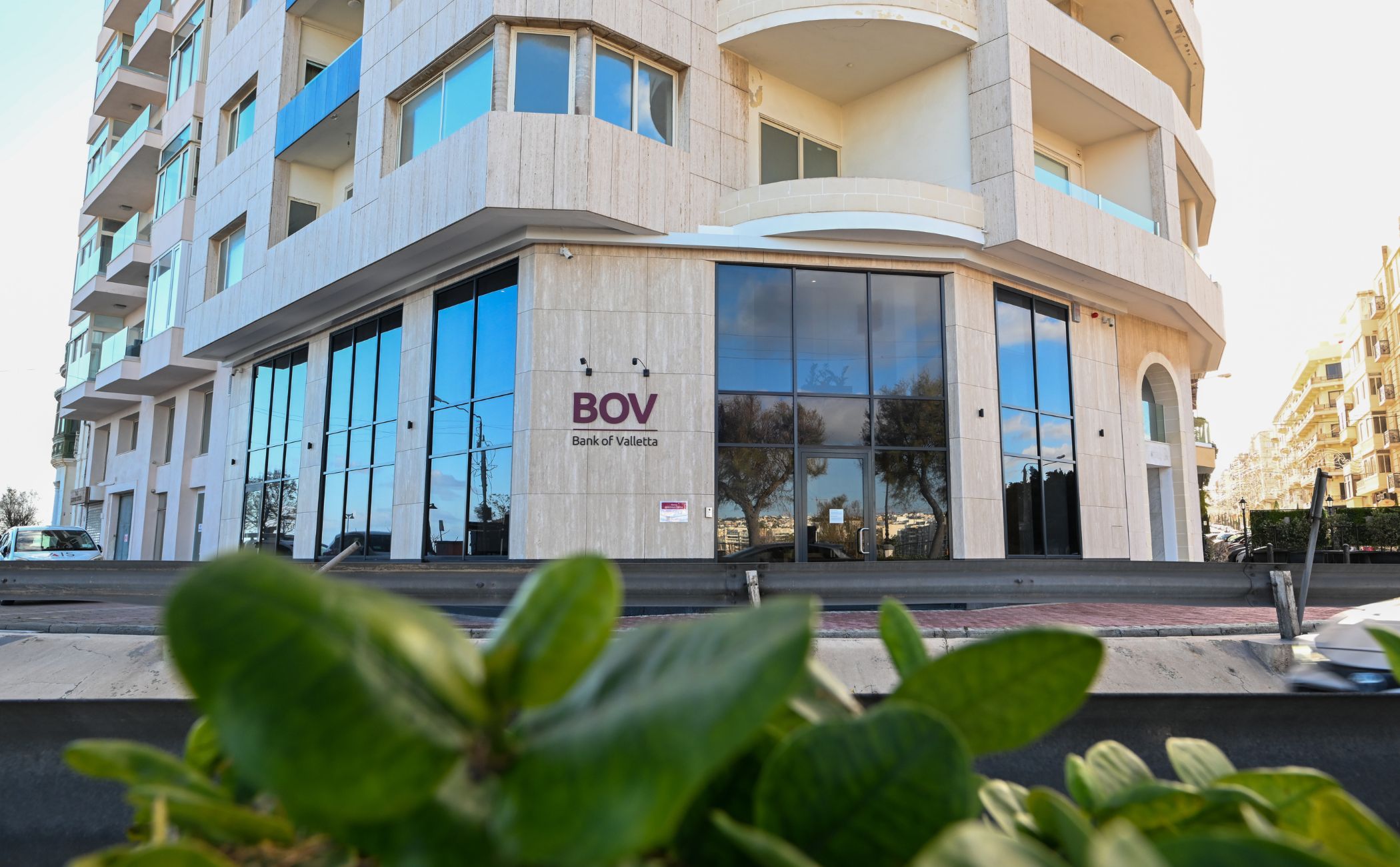
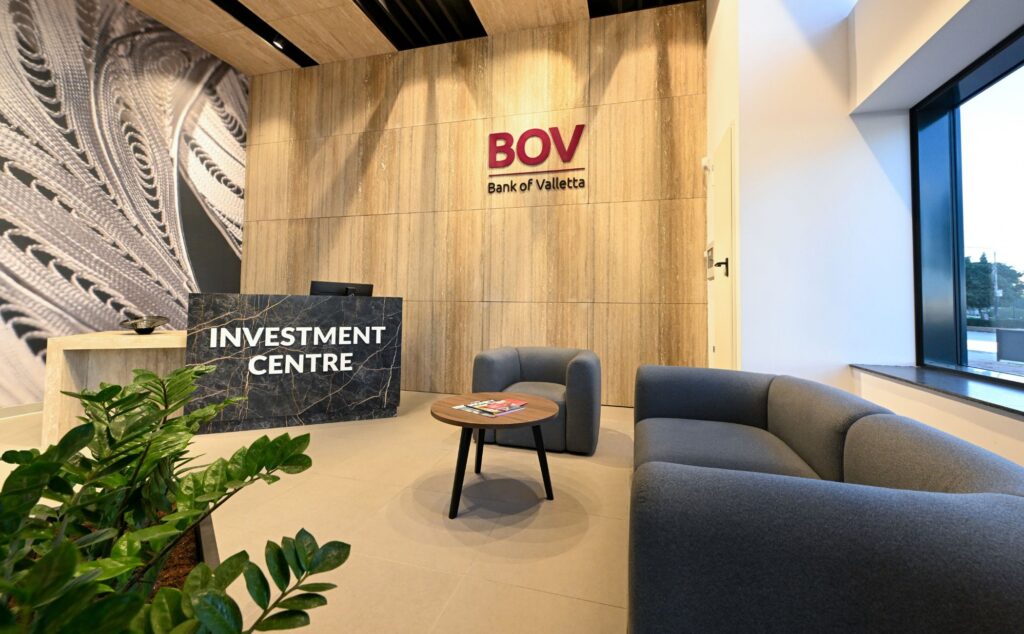
Bank of Valletta has officially inaugurated its new Investment Centre on Tower Road in Tas-Sliema. This new Centre, which has been relocated from Gżira, reflects the Bank’s ongoing commitment to improve its investment services and provide customers with a modern, accessible, and customer‑focused environment.

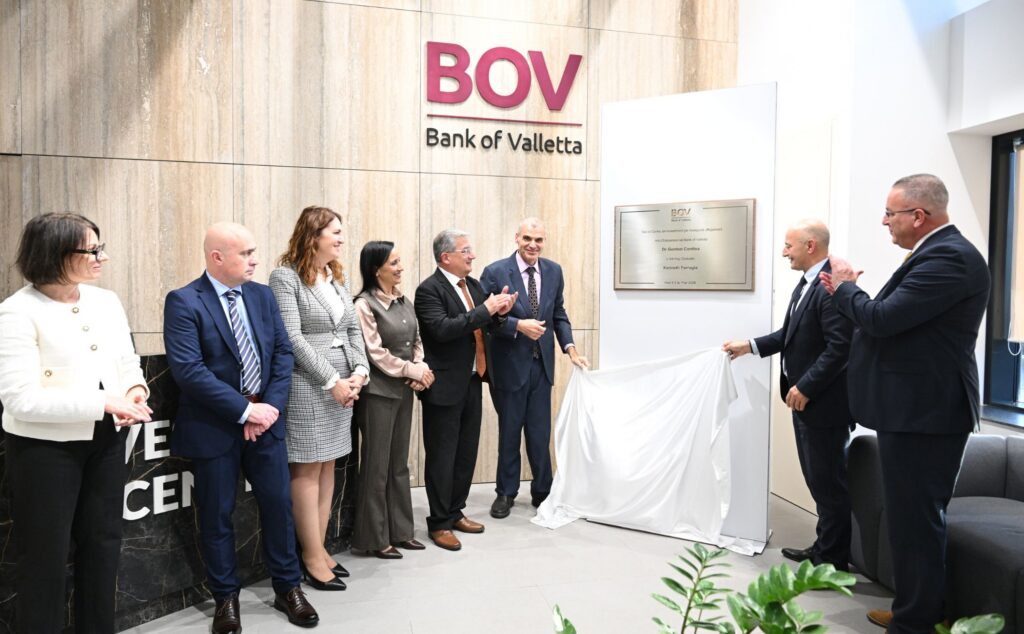
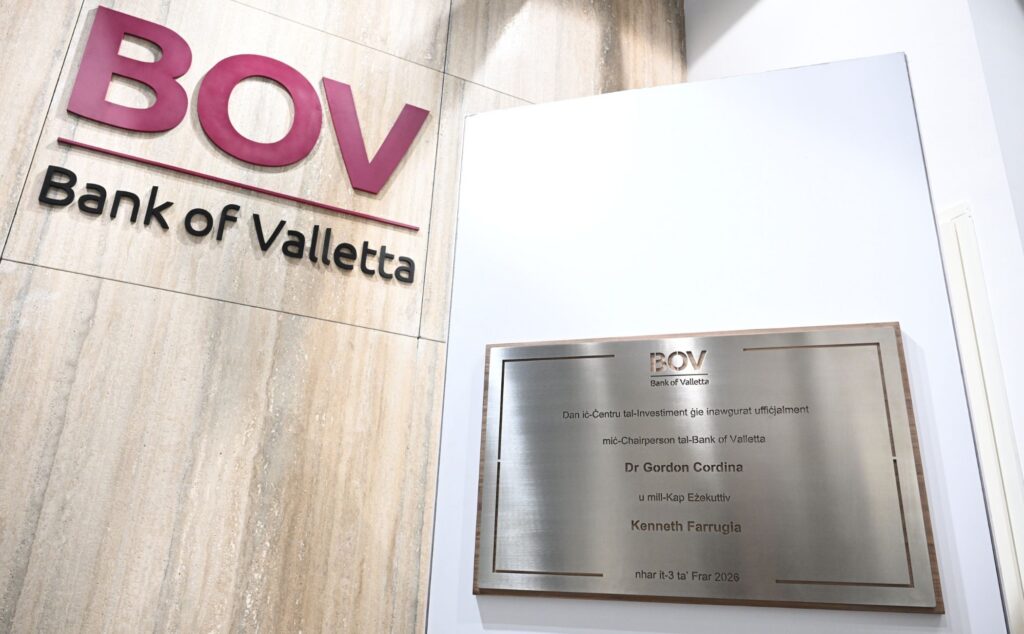
The new state-of-the-art premises were inaugurated during an official opening ceremony presided over by Bank of Valletta Chairperson Dr Gordon Cordina and Chief Executive Officer Kenneth Farrugia. In their remarks, both emphasised that, since their launch in 2012, BOV’s Investment Centres have been instrumental to the Bank’s growth and continued development. This approach reflects the Bank’s commitment to be customer-centric and to provide its customers with personal attention in a refreshed environment conducive to the highest level of personalised banking.

BOV CEO, Kenneth Farrugia, remarked, “The Sliema Investment Centre has been designed to provide an improved experience for customers seeking personalised investment advice and specialised financial solutions, including a growing suite of sustainable investment options that support long‑term value creation. In developing this new centre, we also gave careful consideration to the use of environmentally responsible materials, reflecting our commitment to operate in a more sustainable manner. We continue transforming our customer service experience to ensure we remain relevant to the requirements of our customers, irrespective of their lifecycle stage.”

Dr Gordon Cordina, BOV Chairperson, echoed the CEO’s remarks, adding that “2026 marks a foundational year that will shape the Bank for the coming years. Every decision the Bank makes today is an investment in a future where we’ll work to remain strong, relevant, and innovative.”

The Sliema Investment Centre, which serves around 8,000 customers, was inaugurated in the presence of Chief Personal and Wealth Officer Simon Azzopardi, Chief Operations Officer Ernest Agius, the Manager of the Sliema Investment Centre Sharon Pollacco and the Head of Prestige Client Network Roberta Bellizzi.

Besides the Sliema Investment Centre, Bank of Valletta operates four other Investment Centres located in Bir id-Deheb, Mosta, Gozo and Ħal Qormi. The Qormi Investment Centre has been temporarily relocated to Marsa due to refurbishment works. Every Centre is staffed by a dedicated team of qualified investment advisers, supported by a specialised team within Wealth Management, ensuring they receive timely market insights and trend analysis to deliver informed, strategic advice to clients.

HSBC Malta Launches 2026 Start of Year Campaign to Support Customers with Wealth, Lending and Insurance Offers

HSBC Bank Malta has launched its 2026 Start of Year Campaign, a coordinated series of customer focused initiatives aimed at delivering enhanced value to customers. Running until 30 April 2026, the campaign spans Wealth, Personal lending and Insurance, with the objective of maintaining a strong and responsible market presence while supporting customers through competitive offers on their personal banking, Wealth and Insurance needs.

“Our priority remains clear, supporting our customers, strengthening relationships, and delivering value in a sustainable and responsible way,” said Muriel Rutland, Head of International Wealth and Premier Banking at HSBC Bank Malta. “This campaign is a testament to our commitment to doing that in ways that are both practical and meaningful for our customers.”

Wealth Investments Offer
A headline initiative is the 0% initial fee offer on all mutual fund investments, available through HSBC’s Accredited Financial Advisors and Premier Relationship Managers. The offer which is valid until 30 April 2026 is designed to give investors a cost-effective entry into professionally managed funds, with no exit fees and access to personalised financial planning support.

The campaign is being supported by an advertising rollout featuring HSBC’s team of Wealth advisors, as well as targeted activity online.

Four tailored email campaigns will also promote specific wealth solutions including pensions, regular premium products and Key 5 Critical Illness Protection.

Discounted Personal Lending Rates
Customers can benefit from discounted interest rates across all personal loan products. Rates are discounted by up to 1.75% depending on the loan purpose and customer segment, with the most competitive options starting at 3.25%* for loans related to energy efficiency and electric vehicles.

Our best mortgage offer in years with fast turnaround times and expert assistance, reinforcing the bank’s support to customers to invest in property.

Cashback on Home Loan Buildings Insurance
To complement its mortgage offering, HSBC Malta is also providing a cashback incentive on new Home Loan Buildings Insurance policies issued until the end of April, whereby customers will benefit from this one time-offer in receiving back 15% of the first annual premium. This offer is aimed at providing added value while supporting customers’ protection needs.

A Focus on Relationship-Led Banking
Beyond the campaign’s headline offers and the standard point of sale messages, HSBC is continuing its year-round customer engagement activities, ensuring customer relationships are nurtured with relevant, timely and tailored communication. The approach is designed to engage customers throughout the relationship lifecycle and includes educational content such as fraud avoidance tips and personalised needs-based messaging.

Mapfre and Bank of Valletta unite distribution network to launch a bold, customer-first 2026 strategy

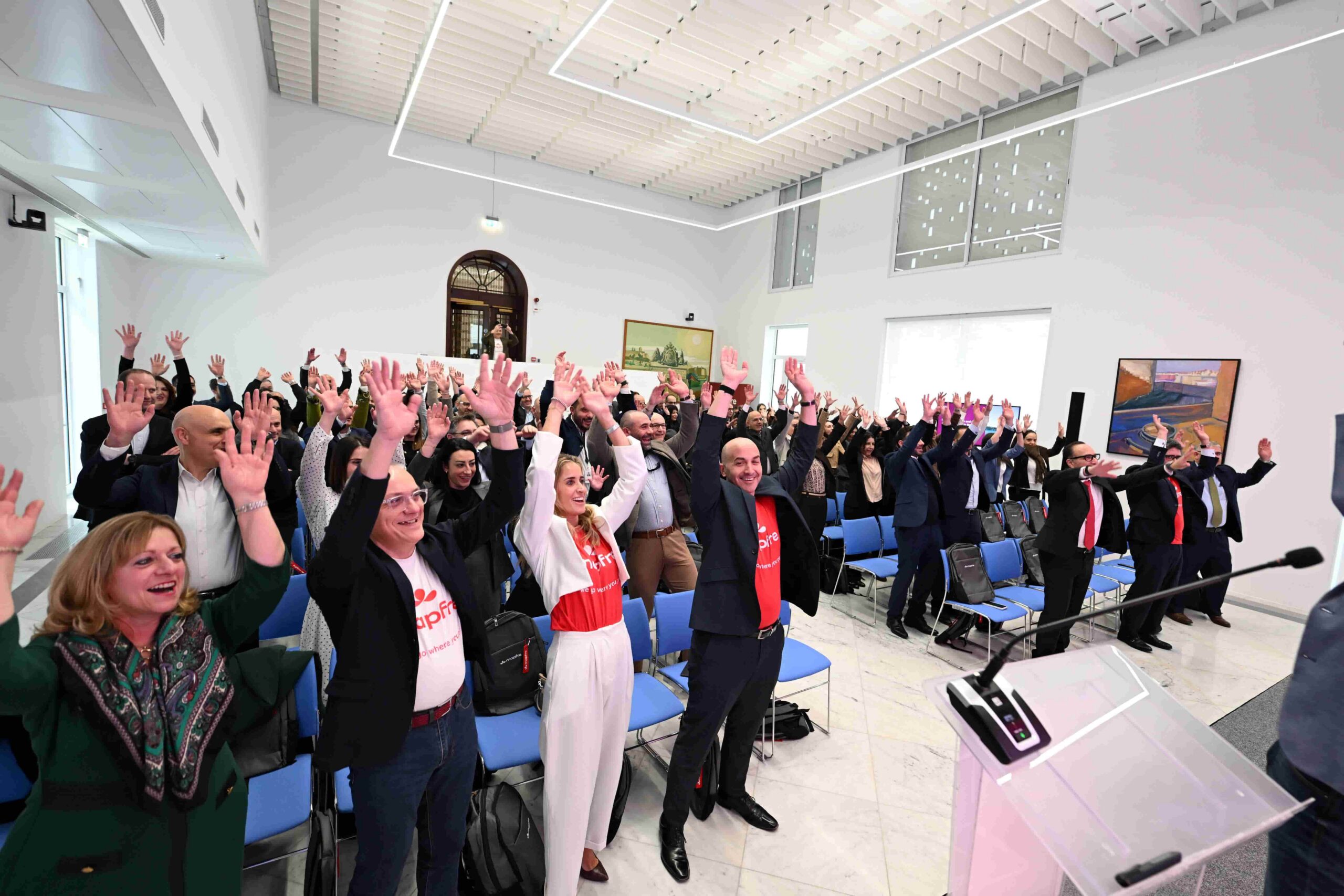
Mapfre Middlesea, Mapfre MSV Life, and Bank of Valletta (BOV) have brought together their joint distribution network for a strategic session designed to set a unified, customer-centric direction for 2026. This reinforced their shared commitment to help customers plan, protect, and build financial resilience. The event, held at Trident Park in Mriehel, convened regional and branch leadership, Investment Centre teams, and private banking professionals to align priorities, sharpen execution, and strengthen conversations around customers and their needs.

Opening the session, BOV Chief Executive Officer Kenneth Farrugia underscored the importance of seamless collaboration across all channels. “Our customers expect clarity, consistency, and confidence. That starts with a united commercial front. 2026 will be a year of stronger alignment, deeper capability, and sharper execution, all aimed at delivering financial guidance people can genuinely trust.”

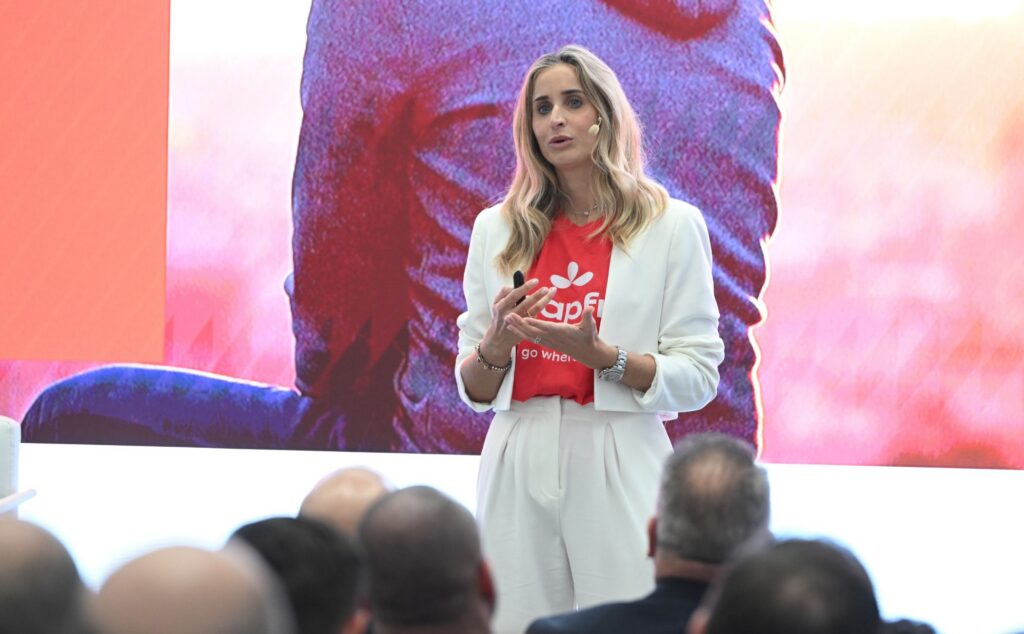
Mapfre Middlesea CEO Etienne Sciberras and Mapfre MSV Life CEO Elvira Lopez de La Merida presented Mapfre’s rebranding strategy, which reflects both companies’ commitment to innovation, clarity, and customer trust. “Our refreshed brand identity is more than a visual transformation; it is a renewed promise to place customers at the centre of every interaction.”  Etienne Sciberras noted. Elvira Lopez de La Merida added, “As we move into 2026, our focus is on deepening relationships, simplifying our offerings, and ensuring our clients feel supported at each stage of their financial journey.”

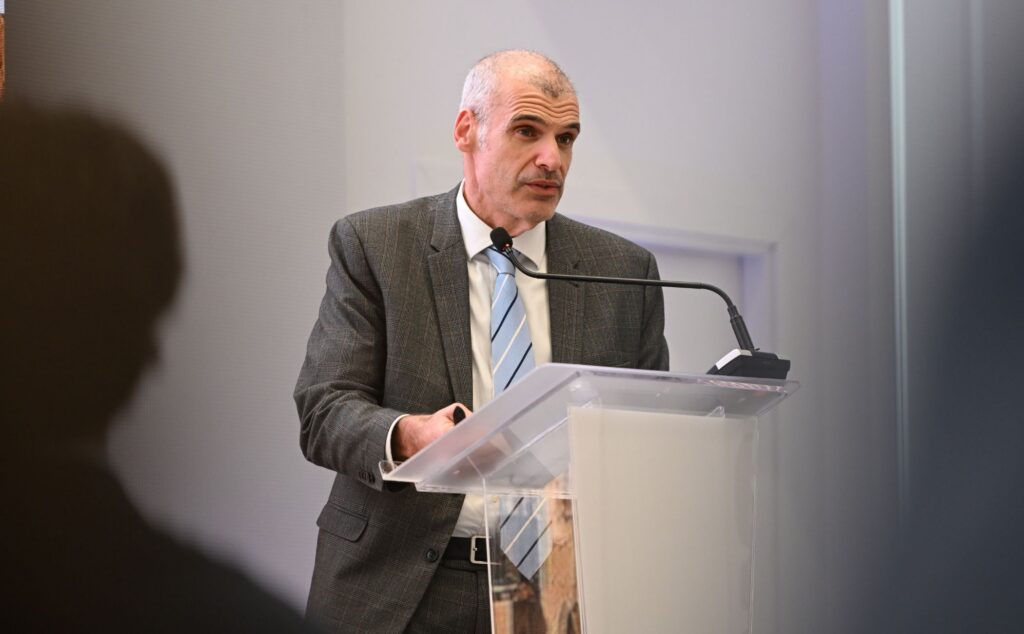
BOV Chief Personal & Wealth Officer Simon Azzopardi highlighted the next phase of this partnership and the momentum required to elevate advisory standards. “Our goal for 2026 is simple. We aim to deliver advice that is consistent, human, and genuinely meaningful. When we show up with insight, empathy, and clarity, we empower customers to take decisions that shape their long‑term well-being.”

In an economic outlook segment, BOV economist Kurt Davison spoke about the demographic and financial forces reshaping retirement planning in Malta, underlining the growing importance of early preparation and long-term savings behaviour. 

Alex Bezzina, Head Insurance and Pensions introduced the teams to new tools and growth enablers, including AI-driven coaching tools to enhance needs-based conversations and continuous development for frontliners. Roberta Bellizzi, Head of BOV’s Prestige Client Network, outlined ways in which front-liners may support customers facing important life events, like home buying, career transitions, and retirement preparation.  “Our people will help customers turn customer intent into relevant financial solutions.”

Mapfre presented the strategic outlook for the year, focusing on Customer centricity and Innovation, followed by presentations from both companies covering the Economic and financial outlook for 2026, Commercial and operational implications for the distribution network, Introduction of AI-driven customer engagement tools, Lead generation enhancements aligned with customer expectations and the Importance of long-term relationship building and needs-based financial solutions.

Speakers emphasised how data, technology, and advisory excellence will play a central role in delivering a more personalised experience across all customer segments.

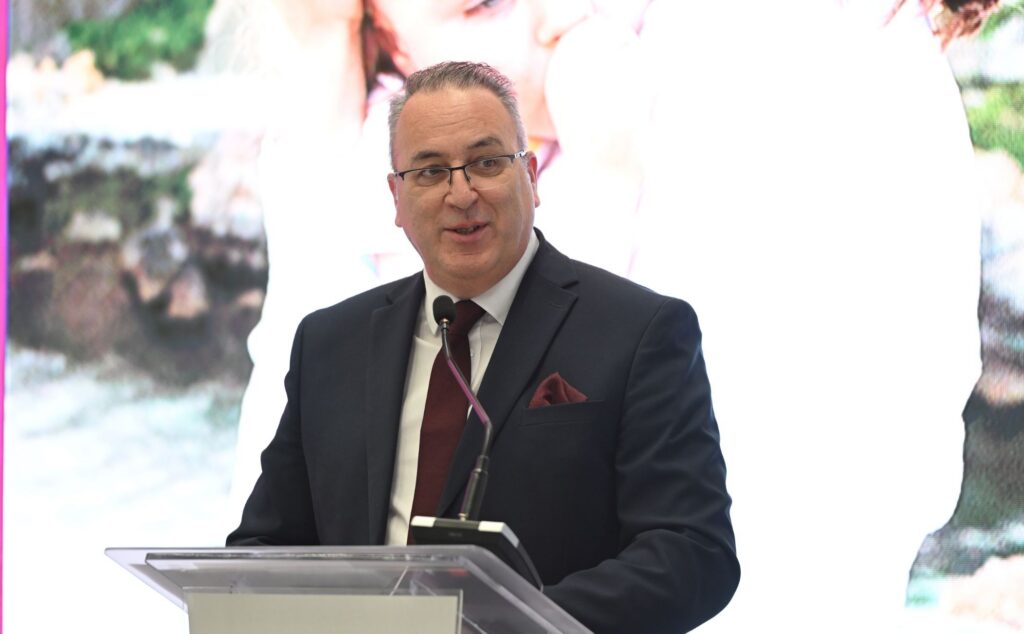
The event concluded with remarks from BOV Chairman Dr Gordon Cordina, who reflected on the evolving financing realities facing Maltese households. “Today’s families face increasingly complex financial choices. Through this partnership, we are in a strong position to guide households from short-term decisions to long-term financial security,” said Dr Cordina.