HSBC Malta welcomes DwarnaBio for an on-site sample collection

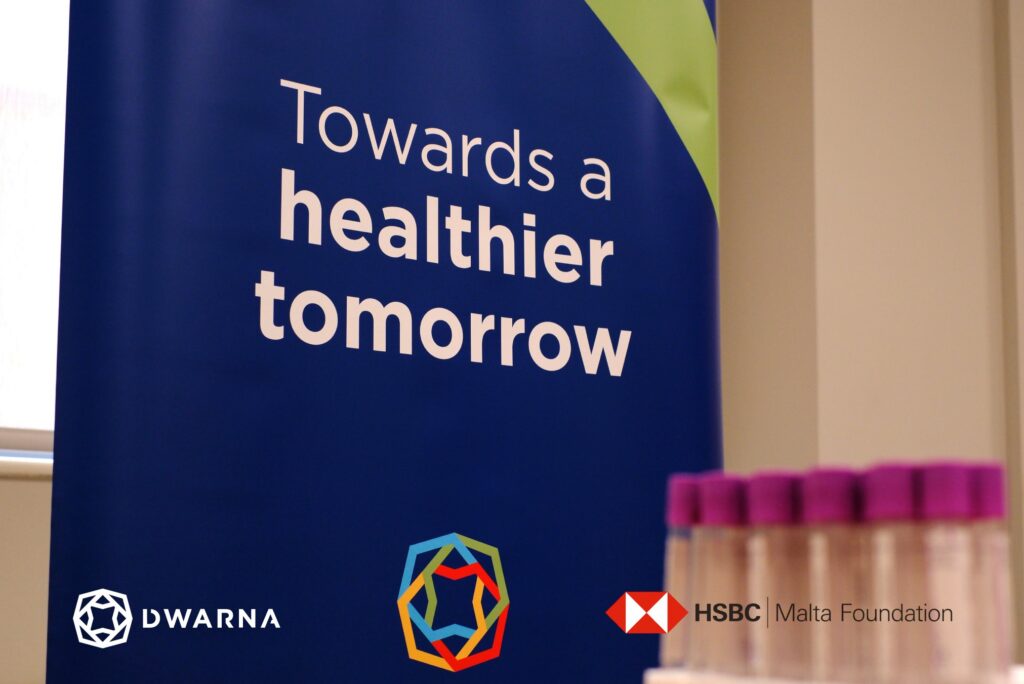
HSBC Malta recently welcomed the Dwarna team to its offices at HSBC Hub in Qormi to carry out an on-site sample collection session as part of DwarnaBio’s ongoing recruitment efforts.

Dwarna (dwarna.mt) is Malta’s national population-based biobank, which aims to serve as a resource for genomic research in the Maltese population. The initiative supports long-term research that aims to improve understanding of health and disease, with a strong focus on direct public engagement in research.

During the visit to HSBC Hub, the DwarnaBio team collected blood and saliva samples from HSBC Malta employees who generously volunteered to contribute to this research effort. Their participation helps expand the growing resource and reinforces DwarnaBio’s aim to prioritise direct public engagement in research. It also reflects a move away from the traditional concept of research subjects as passive sample donors, towards a more proactive and collaborative approach that considers the general public as active research participants.

The session at HSBC Hub in Qormi was organised to make participation simple and convenient for the bank employees. Dwarna set up a temporary collection station on site, where participants were guided through the process by trained staff. Each volunteer provided informed consent and had the opportunity to learn more about how their contribution supports long-term research. The initiative was supported by the HSBC Malta Foundation, whose involvement helped make the on-site session possible.

Rita Scicluna, Operations Programme Integration Manager at HSBC Malta, who was instrumental in making the on-site DwarnaBio session happen, said: “We’re proud to support collaborations like DwarnaBio that strengthen Malta’s research and innovation ecosystem. By bringing the sample collection on site, we made it simpler for colleagues to take part and contribute to research that can improve health outcomes for the wider community. I’m also grateful to the HSBC Malta Foundation for its support in helping make this initiative possible.”

Prof Nikolai P. Pace from Dwarna, said, “On behalf of DwarnaBio, I’d like to extend our heartfelt thanks to HSBC Malta for the invitation and for the support provided in organising and delivering the on-site session. It was an incredibly fruitful opportunity that will help Dwarna’s mission going forward, and we’re grateful to the bank employees who volunteered so generously.”

Dwarna is an active member of the pan-European Biobanking and BioMolecular resources Research Infrastructure (BBMRI) and a research partner in the 1 Million Genomes of Europe initiative.

BOV graduates celebrate a milestone year in learning and development

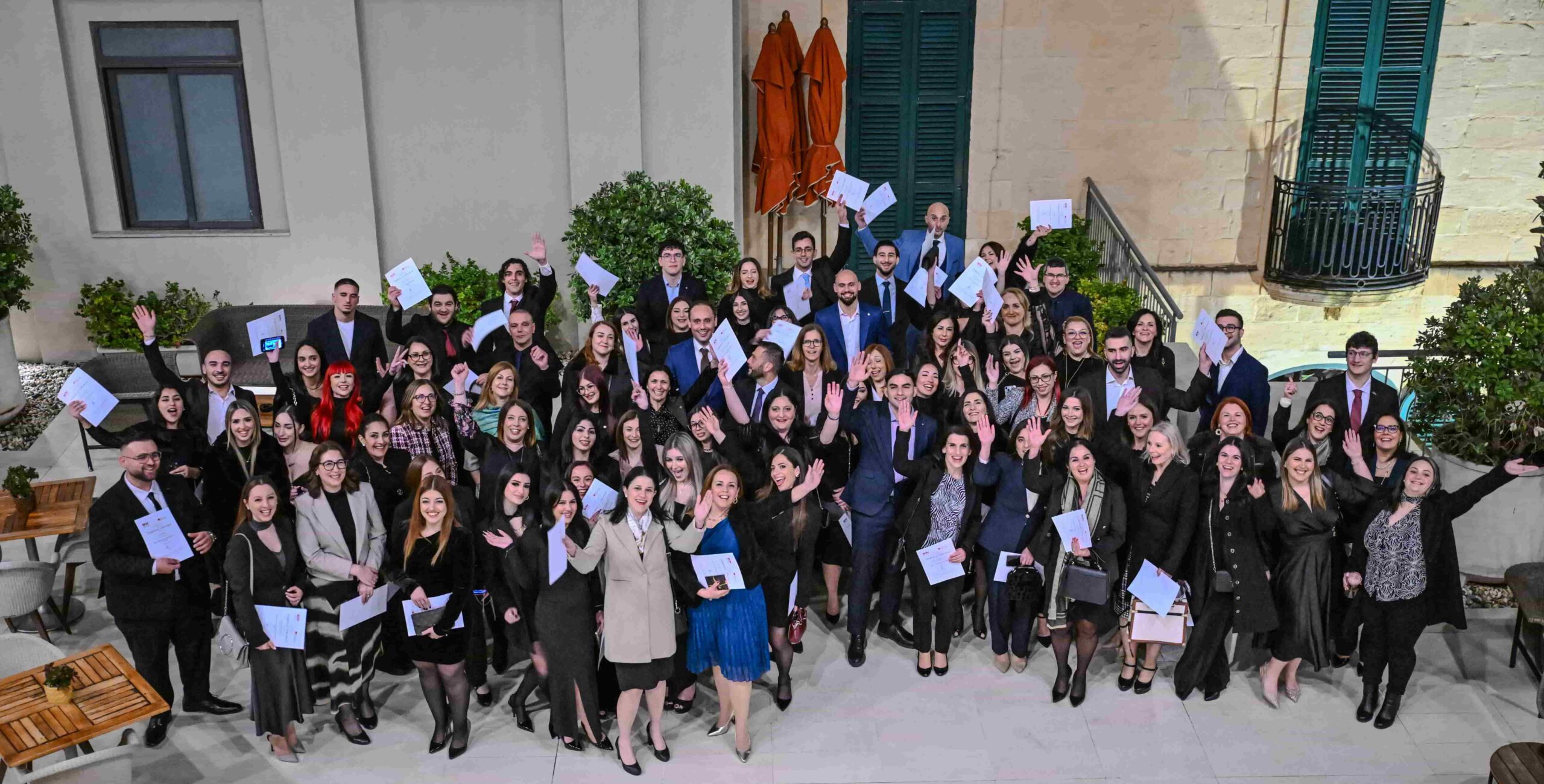
Bank of Valletta celebrated the achievements of 139 employees during the annual graduation ceremony, recognising colleagues who successfully completed programmes in areas including credit, investments, data, leadership and personal development. The event reflected the Bank’s continued investment in people development and in building a skilled, agile and future-focused workforce. As a Further and Higher Education Institute licensed by the MFHEA (License No: 2018-003), the Bank continues to strengthen its role in delivering accredited learning pathways for its people.

Addressing those present, Dr Gordon Cordina, BOV Chairperson set the tone for the event, saying, “Graduation Night is a reminder of what gives strength and purpose to our Bank. Our people’s commitment to lead, nurture and promote learning and development is one of the Bank’s core strengths. Tonight, we see BOV at its best.”

The ceremony also highlighted a standout year for learning and development at Bank of Valletta. During the year, the Bank delivered 610 courses, amounting to 101,152 learning hours and 62,644 participants, through a mix of external courses, e-learning modules, and classroom sessions. These figures reflect both the scale of the Bank’s investment in development and the strong engagement of employees in taking ownership of their growth. This year’s cohort also reflected the strong representation of female employees in learning at BOV, with 76% of graduates being female.

A key moment during the evening was the first-ever recognition of graduates from two newly introduced accredited programmes: the Award in Data for Banking (MQF Level 5) and the Award in Applied Business Banking (MQF Level 4). These joined other accredited programmes, all at MQF Level 5, including the Award in Customer Champions, Award in AFC, Award in Regulatory Compliance, expanding the Bank’s learning portfolio in line with evolving business and regulatory priorities. The Bank also offered the Award in ESG this year, through IFS and the University of Malta.

Ray Debattista, Chief People & Culture Officer stressed the importance of recognising colleagues and celebrating achievements across the Bank’s wide range of programmes. These achievements demonstration the kind of learning culture that the Bank is building. This also reflects the Bank’s objective to keep moving forward by growing skills, capability and confidence,” he said.

Kenneth Farrugia, BOV CEO, concluded by saying that “Tonight is not the end of a journey. It’s a starting point. Take what you’ve learned, apply it boldly, and keep building on it. Continuous learning is one of the strongest drivers of BOV’s future, and your progress is part of that story,” he said.

With participation continuing to increase year after year and new programmes being introduced on an ongoing basis, the momentum behind learning and capability-building at Bank of Valletta is expected to continue throughout 2026 and beyond.

The Malta Chamber and EMCS Sign Silver Collaboration Agreement

The Malta Chamber of Commerce, Enterprise and Industry and EMCS have officially entered into a Silver Collaboration Agreement aimed at reinforcing cooperation on key economic and business initiatives.
Through this agreement, both parties will work closely to strengthen policy formation from an economic perspective, contributing informed insights that support sustainable growth and competitiveness within Malta’s business landscape.

A central pillar of the collaboration will focus on the development and execution of market and business surveys. These initiatives will provide valuable data and analysis to better understand emerging trends, challenges, and opportunities faced by enterprises across various sectors.

In addition, The Malta Chamber and EMCS will jointly organise a Family Business Conference, designed to address the unique dynamics, challenges, and opportunities faced by family-run enterprises, which remain a cornerstone of Malta’s economy.


Commenting on the agreement, William Spiteri Bailey, President of The Malta Chamber, stated that “this collaboration with EMCS reflects our continued commitment to supporting evidence-based policy development and strengthening the voice of the business community. By working together on research initiatives and targeted events such as the Family Business Conference, we are ensuring that businesses, particularly family enterprises, are better equipped to navigate today’s evolving economic landscape.”

“EMCS has enjoyed a long-standing relationship with The Malta Chamber, and we are proud to now formalise this partnership through this agreement. The Malta Chamber is the country’s leading business organisation, representing all key sectors of the Maltese economy, and is therefore a natural partner for EMCS. For over 40 years, we have been committed to supporting the Maltese business community, and this collaboration will allow us to strengthen that contribution even further. Over the next three years, we look forward to providing the Chamber with our economic and business analysis, as well as our expertise in public policy, EU funding, market research and training. On a personal level, having started my professional career with The Malta Chamber and later serving as its President, signing this agreement marks an important milestone in my long and meaningful relationship with the organisation,” noted Stefano Mallia, Partner, EMCS.

This partnership underscores both organisations’ shared vision of fostering a resilient and forward-looking business environment in Malta through collaboration, research, and dialogue.

BMIT Launches Round-the-Clock Security Operations Centre (SOC)

BMIT Technologies has launched a fully staffed, 24/7 Security Operations Centre (SOC), bringing human-led cyber threat monitoring and response to businesses across Malta and the region.

Unlike automated alert systems that flag incidents for review the following morning, or tools that act on AI-generated responses alone, BMIT’s SOC places qualified security analysts at the centre of the operation around the clock. Advanced technology, AI and automation provide the detection layer, but every alert of significance is reviewed, assessed, and acted upon by a human expert, including at 2am on a Sunday.

“Most organisations have invested heavily in security tools, but the volume of alerts these generate can be overwhelming,” said Christian Bajada, Head of Information Security at BMIT. “When a team is processing thousands of notifications, real threats can go undetected. Continuous human oversight, applied at the right moment, is what makes the difference between catching an attack and cleaning up after one.”

The SOC forms part of BMIT’s Managed Detection and Response (MDR) service, which combines broad monitoring across the entire digital environment with deep forensic investigation of specific systems when suspicious activity is identified. Analysts work across client environments continuously, not just during business hours, which is precisely when many attacks are timed to occur.

What distinguishes BMIT’s approach is that cybersecurity is not treated as a standalone product. The SOC sits within a broader business technology resilience framework that includes Malta-hosted infrastructure, geographically redundant data centres and cloud platforms, supported by a virtual CISO service, vulnerability and threat management, and a governance, risk and compliance (GRC) portfolio. This gives businesses a single, locally anchored partner for protection, recovery and compliance, rather than a patchwork of unconnected providers.

For businesses with data governance and regulatory obligations, including GDPR, DORA and NIS2, as well as sector-specific requirements such as those applying to financial and health services, BMIT offers local data processing and data sovereignty by design, keeping sensitive information within Maltese jurisdiction and fully aligned with applicable compliance frameworks.

The service is designed to scale with the business, making enterprise-grade security accessible to organisations of all sizes without the cost of building and staffing an in-house team.

“Cyber threats are not slowing down, and neither are the regulatory expectations placed on business leaders,” said Christian Sammut, Chief Executive Officer of BMIT Technologies plc. “This investment reflects our commitment to giving Maltese businesses the same level of protection that was previously only available to large enterprises, backed by infrastructure, expertise, and people who are genuinely here, on the ground, around the clock.”

“Cyber resilience has become a boardroom conversation,” added Bajada. “The question is no longer whether your business will face a threat. It is whether someone will be watching when it happens.”

For more information, click here.

Board Effectiveness in 2026

Boards have long carried the responsibility of guiding organisations towards long-term sustainability. This creates a timeless dual mandate: setting and overseeing strategy, while building strong governance structures.

Boards are expected to manage risk while enabling agility, ensure compliance while fostering innovation, and safeguard continuity while driving transformation. In today’s environment, this balancing act is increasingly complex, shaped by volatility, uncertainty, and rapid opportunity creation.

While the fundamentals of board effectiveness remain unchanged, emerging shifts require more deliberate and reflective responses. When “business as usual” is no longer sufficient, the most effective Boards will be those willing to look inward, challenge their own assumptions, and continuously adapt to the pace of external change.

Timeless effectiveness

Many characteristics of a high-functioning Board remain evergreen. They reflect both what Boards must prioritise and how they must operate, grounded in self-awareness and disciplined governance.

  • Strategic direction: Boards must set and steward long-term direction, ensuring clarity of purpose and alignment with evolving market realities.
  • Oversight and stewardship: Boards act as custodians of accountability, overseeing risk, financial integrity, and ethical conduct.
  • Composition and independence: Effective Boards bring together diverse perspectives, relevant expertise, and the independence to challenge constructively.
  • Board dynamics and culture: The quality of debate, trust between members, and the relationship with management directly influence performance. Interaction norms can either constrain or enhance effectiveness.
  • Decision-making and information flow: High-performing Boards ensure decisions are timely, evidence-based, and supported by high-quality information.

These fundamentals form the bedrock of board effectiveness. However, treating them as routine would underestimate the challenge of consistently embedding them in practice. Any gap in these areas limits a Board’s ability to realise its full potential.

Boards also have a disproportionate impact on organisational performance. Relative to other human capital investments, improving board effectiveness typically delivers outsized returns that cascade through the organisation and shape culture.

What’s different in 2026?

These core principles have not changed, but the environment in which they operate has become significantly more demanding.

1 – Strategic agility in a polycrisis era

    The “polycrisis” reflects overlapping disruptions—from climate volatility and geopolitical instability to technological acceleration and economic fragmentation.

    This reality requires a shift from episodic strategy to continuous strategic sensing. Boards must help organisations remain situationally aware, regularly challenge assumptions, and adapt at pace.

    Businesses are no longer only competing in the market; they are also competing with their own ability to evolve. The status quo must be actively challenged, and the horizon continuously scanned for disruption and opportunity.

    The question is no longer whether disruption will occur, but whether organisations will proactively disrupt themselves or be overtaken by others.

    2 – Regulatory complexity and governance maturity

    Across Europe, regulatory expectations continue to rise. In Malta, the MFSA’s Corporate Governance Code has elevated expectations around Board composition, oversight structures, and governance quality.

    For Boards, this means embedding governance maturity into the organisation’s operating DNA.

    This is particularly challenging for SMEs, where resources are often constrained and governance functions remain lean. Proportionality is therefore essential: Boards must focus on what matters most, prioritise oversight effectively, and seek external support where necessary.

    At the same time, Boards must ensure governance frameworks do not hinder agility. The most effective structures are those that strengthen both compliance and responsiveness.

    3 – Accelerating technological disruption

    Artificial intelligence, cybersecurity, and digital transformation are now central to competitiveness and organisational resilience.

    Boards are not expected to become technical experts, but they must develop sufficient fluency to ask the right questions, understand key risks, and guide strategic investment decisions.

    This may also require a reassessment of Board composition. Do current members bring the digital literacy required for a technology-driven future? Are there gaps in oversight capability that could limit strategic clarity? Is the organisation constrained by legacy business or operating models?

    4 – Culture and behaviour as strategic levers

    Culture is either an enabler of transformation or a barrier to it.

    Effective Boards play an active role in shaping culture by fostering psychological safety, encouraging constructive challenge, and modelling organisational values.

    Just as important is how Board members interact with one another. The quality of engagement, openness to dissenting views, and ability to balance challenge with support often reveal the true health of a Board.

    These behavioural dynamics are not soft considerations—they are strategic drivers of effectiveness.

    The self-aware organisation

    In an environment defined by uncertainty, past experience is no longer a reliable predictor of future success.

    Self-aware organisations are those best positioned to adapt, endure, and thrive.

    While most organisational roles are focused on operational delivery, the Board, working closely with executive leadership, is uniquely positioned to take a broader, more strategic view. This requires discipline, perspective, and a willingness to continuously question established thinking.

    As the organisation’s most senior forum, the Board must lead this discipline: identifying risks early, recognising opportunities quickly, and ensuring the organisation remains capable of adapting.

    Ultimately, organisational agility and effectiveness are not accidental. They are capabilities that must be deliberately cultivated, and they begin in the Boardroom.

    The most effective Boards of 2026 will not be those that simply govern well, but those that are willing to continuously reflect, adapt, and evolve.

    For Boards seeking a clearer view of their effectiveness, governance maturity, and strategic oversight, RSM Malta provides practical, context‑driven advisory support.

    ———————————————-

    Article written by Yashar Dominic Klipp – RSM Malta Consultant, Organisational and People Advisory


    BOV supports RetireSmart planning tool

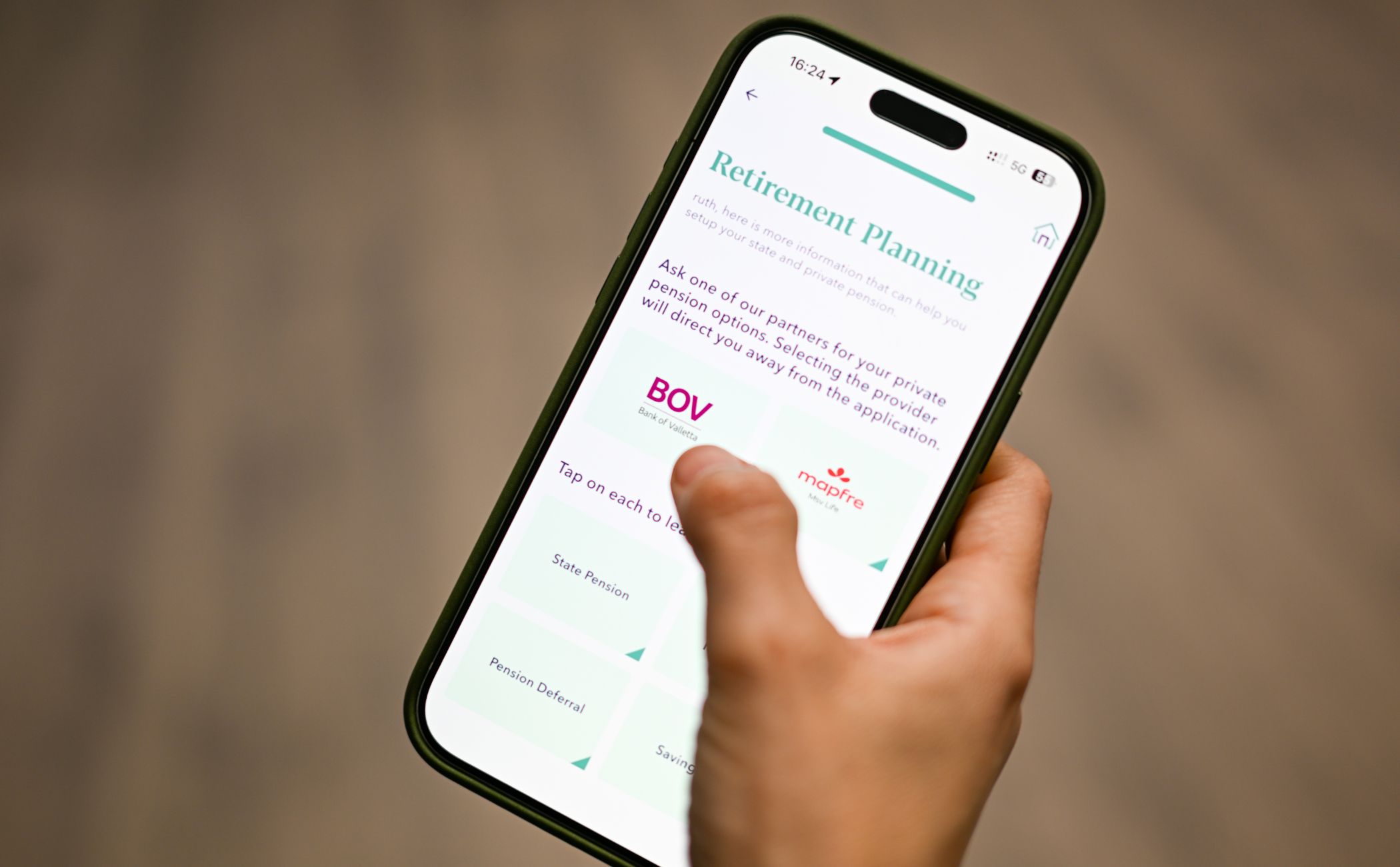
    Bank of Valletta is proud to have supported Ġemma in developing the RetireSmart App, which was recently launched by the Ministry for Social Policy and Children’s Rights. This new retirement planning tool helps people calculate their potential state pension and address the income gap at retirement.

    Speaking on this initiative, which is also supported by Mapfre Msv Life, Dr Gordon Cordina, as Chairperson of both BOV and Mapfre Msv Life, highlighted the importance of proactive financial planning in Malta, particularly as the general population ages. He remarked that the sustainability of the Maltese pension system for future generations depends on anticipating the challenges that the country currently faces and will be facing in the years to come, so that proactive action can be taken to ensure adequate compensation during the crucial time of retirement.

    Dr Cordina noted, “RetireSmart is an important tool for planning and action, helping people be better informed and make timely decisions needed for their long-term financial well-being. The launch of the RetireSmart App is a crucial first step, as we see the potential for further development, providing other services to empower people to be better equipped for the future, thereby enhancing the Maltese pension system.”

    Simon Azzopardi, BOV Chief Personal and Wealth Officer, emphasised the importance of well-being and the need to start planning early. “At Bank of Valletta, we believe that financial literacy is crucial to long-term well-being.  Saving for a pension is one of the most important investments that people can make, and through initiatives like this partnership with Ġemma and other collaborators, we are committed to providing people with the knowledge and tools they need to make informed financial decisions regarding long-term savings, pensions, and insurance solutions”.

    This event aligns with the Bank’s efforts to improve financial literacy in Malta. Various initiatives being undertaken by the Bank include educational campaigns, community partnerships, and launching tools such as the RetireSmart App, which are all designed to help people achieve greater financial flexibility. The Bank’s Financial Well-Being Centres in Floriana and Ta’ Sannat, as well as its 5 Investment Centres across Malta and Gozo, also provide crucial support to bank customers wishing to discuss and invest in their financial future.

    Bank of Valletta and Planning Authority sign MOU on property compliance framework

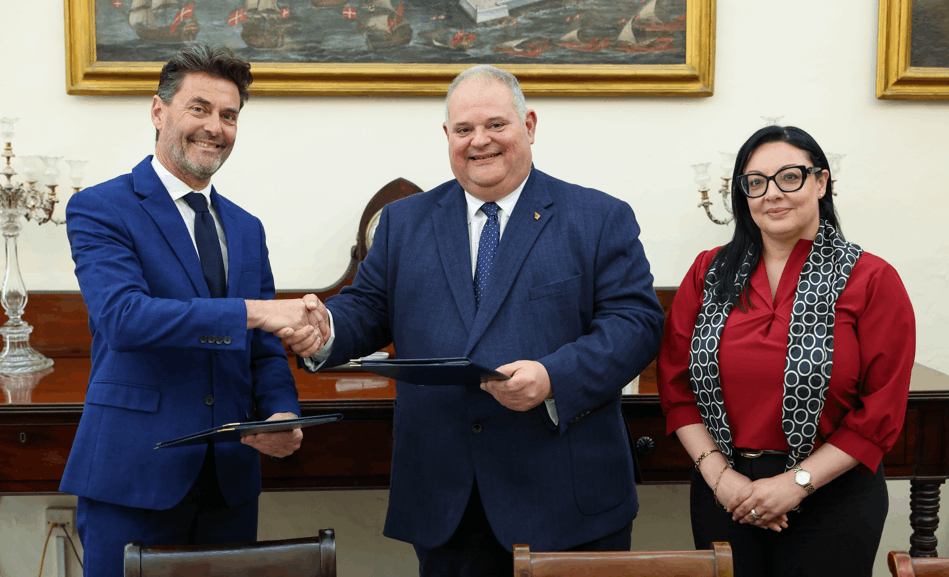
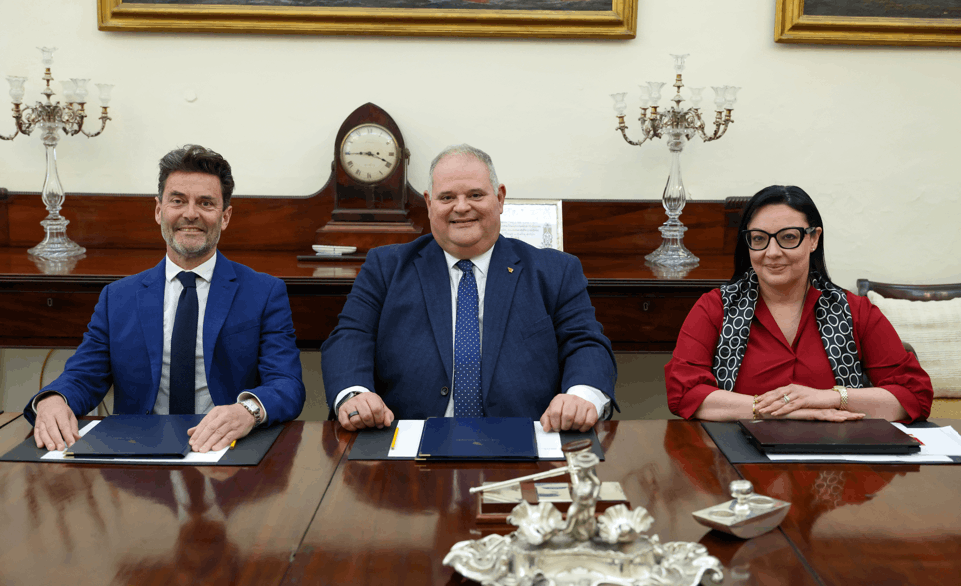
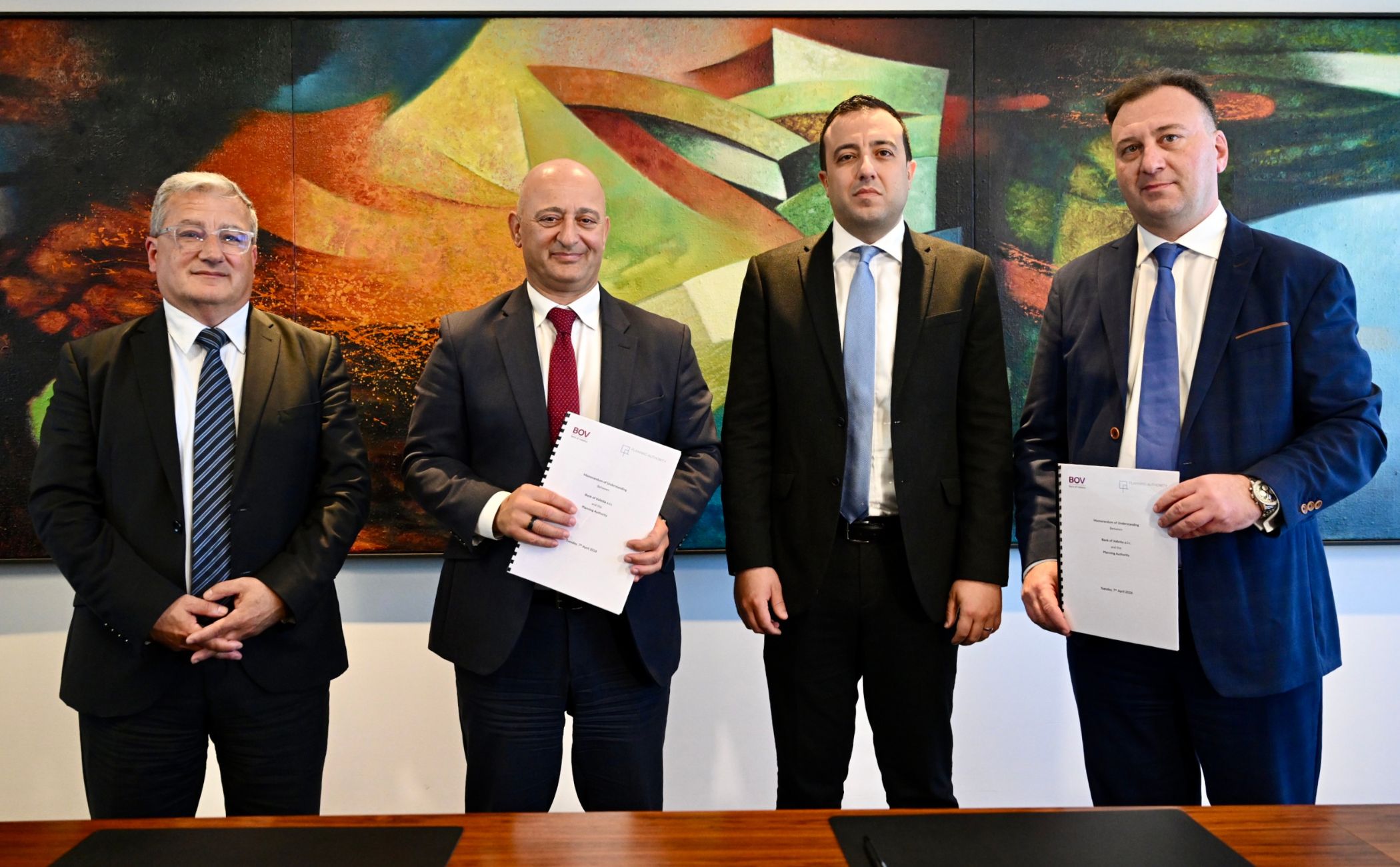
    The Planning Authority and Bank of Valletta have today formalised a new Memorandum of Understanding that strengthens collaboration and enhances efficiency in verifying planning compliance during property due‑diligence and credit assessment processes.

    The agreement sets out a clear operational framework guiding how Compliance Certificates issued by the Planning Authority under Article 102 of the Development Planning Act (Chapter 552) will be recognised and used by Bank of Valletta.

    Under this MOU, BOV may fully rely on PA‑issued Compliance Certificates that are not more than three months old, ensuring clarity for clients and reducing the need to provide supplementary planning documentation unless required by law. A valid Compliance Certificate confirms that the property is structurally completed and in accordance with the approved development permission and drawings, subject to any declared exemptions or concessions.

    To support the smooth implementation of this framework, the Planning Authority will provide BOV with written clarifications when required, and will grant the Bank secure digital access to view Compliance Certificates and attached documents online. This measure eliminates the need for customers to produce physical copies of certificates and ensures greater consistency and transparency.

    “Today’s agreement marks another important step in strengthening the planning and property ecosystem in Malta. By enhancing collaboration between the Planning Authority and Bank of Valletta, we are ensuring that processes become clearer, more efficient, and more accessible for the public. This Memorandum of Understanding reflects our commitment to improving administrative practices and delivering a more streamlined experience for anyone seeking to invest in or develop property. Ultimately, this is a practical reform that benefits families, professionals, and the wider economy,” Clint Camilleri, Minister for Gozo and Planning said.

    Kenneth Farrugia, BOV Chief Executive Officer, noted that this agreement establishes a clear framework for collaboration between Bank of Valletta and the Planning Authority. “Through this MOU, our clients will benefit from a much simpler and more efficient process. Similar to other agreements we have recently signed with other institutions, this MOU forms part of a broader vision in which the Bank promotes a model of collaboration where stakeholders work together rather than in isolation, ultimately ensuring a clearer and more efficient service for the public,” said Mr Farrugia.


    BOV Chief Operations Officer, Ernest Agius, highlighted the digital dimension of the MOU, explaining that the Bank will have online digital access to view Compliance Certificates and related documents through a dedicated portal provided by the Planning Authority. “This initiative is fully aligned with the Bank’s digital strategy, where digital services are central to our operations. By reducing paper use and streamlining access to information, we are not only enhancing efficiency but also reinforcing our commitment to sustainability,” Mr Agius noted.

    Finally, Johann Buttigieg, Executive Chairman of the Planning Authority added that “this MOU represents a significant advancement in how planning compliance information is shared and utilised. By granting the Bank direct access to our digital systems and establishing consistent protocols, we are reducing unnecessary obstacles for clients while ensuring that planning standards are upheld. Our objective is to strengthen transparency and trust across the sector, and this collaboration with Bank of Valletta demonstrates our focus on practical, solutions‑driven improvements that serve both institutions and the community. We look forward to seeing other banks follow suit and embrace similar collaborative frameworks, ensuring a more coherent and efficient property process across the entire financial sector.”

    The agreement signed today does not amend any statutory obligations of either party but introduces a practical structure that benefits customers, professionals, and the wider property sector.

    The new MOU underscores the importance of cooperation between national institutions and the financial sector in ensuring a smoother and more reliable property process. The Planning Authority and Bank of Valletta look forward to implementing the agreement and reinforcing their shared goal of improving service quality for clients and practitioners across the industry.

    HSBC Hub in Qormi awarded LEED Gold certification

    HSBC Malta announced that its headquarters in Qormi, HSBC Hub, has been awarded LEED ID+C Gold certification. The certification recognises the project’s sustainability performance and the measures implemented to support a more efficient and high-quality indoor working environment.

    LEED, which stands for Leadership in Energy and Environmental Design, is one of the world’s most recognised green building certification programmes. Achieving Gold reflects the standards the bank met across areas such as energy and water efficiency, materials, indoor environmental quality and overall sustainability performance.

    This is a genuine team achievement, made possible through close collaboration between HSBC employees and the bank’s project partners.

    Jonathan Taylor, Country Head of Corporate Services at HSBC Malta said: “LEED Gold is a brilliant outcome for HSBC Hub and a real credit to the colleagues and partners who kept quality and sustainability front and centre throughout. It’s a practical step forward in creating a workplace that performs better for people and the environment.”

    HSBC Malta’s CEO, Geoffrey Fichte, commented: “This certification shows what we can deliver when we work as one team with a clear goal. It strengthens our commitment to operating responsibly in Malta and creating spaces that support colleagues, customers and our communities.”

    HSBC Hub also offers practical day-to-day benefits for both customers and employees, with ample free on-site parking spaces and free electric vehicle charging points, with plans to double the charging points during the coming months as part of ongoing enhancements.

    The branch located within HSBC Hub also provides added convenience for both retail and commercialcustomers, with longer opening hours than other branches and Saturday operations.

    An official hard-copy LEED certificate has been received, and the bank plans to mark this achievement with the installation of a LEED Gold plaque at its HSBC Hub premises in Qormi.

    Employers’ Associations criticise deal connecting cannabis authority to children’s football

    Employers’ Associations within MCESD – the Malta Employers, The Malta Chamber, the Malta Hotels and Restaurants Association, and the Malta Chamber of SMEs – call for immediate withdrawal of ARUC sponsorship of children’s football programme.

    The employers’ associations within MCESD strongly condemn the decision to associate a children’s football programme with the Authority for the Responsible Use of Cannabis. This is a serious error of judgment. Children’s sport must represent discipline, health, self-control, ambition and clean living. It must never, under any circumstances, be linked to cannabis or to any authority associated with its use. Whether direct or indirect, the message is wrong, confusing and unacceptable.

    No social objective can justify blurring the line between youth development and substances that should never be normalized in the minds of children. Sport must inspire young people to choose healthy lifestyles, not create associations that risk weakening that message. For years, society worked hard to remove cigarettes and alcohol from sport because the principle was clear: harmful substances have no place in an environment meant to shape children’s values and aspirations. The same principle must apply here. There can be no double standards.

    Cannabis is not a symbol of health, discipline or performance. Football is. The two should never be placed in the same space, especially where children are involved. This sponsorship should be dismantled immediately and replaced by support from entities that reflect the true values of youth sport and responsible social leadership. Children deserve better. Parents deserve clarity. Sport deserves to remain clean.