18 September, 2026
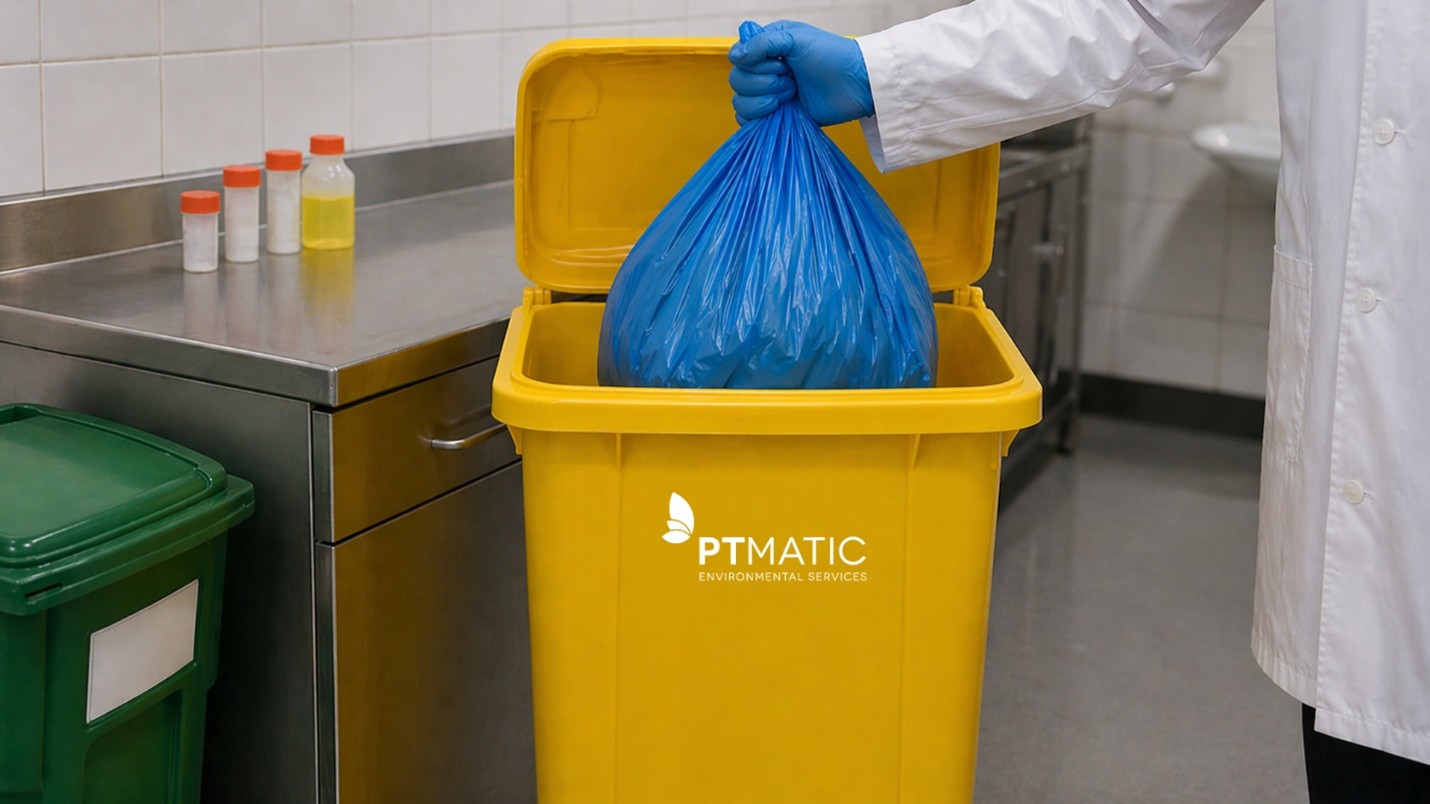
In healthcare, laboratory and pharmaceutical environments, waste handling is often treated as a downstream function — something that begins once the material is ready to leave the site. In reality, that is where many problems begin.
In regulated environments, waste is not simply a matter of removal. It is part of a wider operational and compliance framework that depends on correct segregation, traceability, safe handling and proper documentation from the outset. When this is misunderstood, the risks go far beyond poor housekeeping.
Too often, organisations focus on collection without giving enough attention to what happens before collection takes place. Waste streams may be mixed incorrectly, hazardous materials may not be separated at source, containers may be labelled inconsistently, or documentation may be treated as a formality rather than a control measure. In some cases, confidential materials and data-bearing devices are also overlooked, creating a separate layer of information security risk.
This matters because healthcare, laboratory and pharmaceutical settings do not generate one uniform type of waste. They deal with multiple streams, each with different requirements, sensitivities and implications. Clinical waste, chemical residues, solvents, laboratory by-products, contaminated packaging, expired materials and confidential records all demand different handling approaches. Treating them as though they fall into one general process is where operational weakness begins.
Segregation is one of the clearest examples. When waste is not properly sorted at source, the consequences can multiply quickly. Non-hazardous waste can become contaminated. Hazardous waste volumes can increase unnecessarily. Storage becomes harder to manage. Downstream handling becomes more complex. The result is not only inefficiency, but a greater likelihood of non-compliance, avoidable cost and exposure to health and safety concerns.
Traceability is another area that is frequently underestimated. In regulated environments, it is not enough to say that waste has been removed. There must be confidence in what the waste was, how it was classified, how it was handled and where responsibility sat at each stage. Clear identification, correct coding, labelling and supporting paperwork are not administrative extras. They are part of the discipline that keeps regulated operations under control.

Then there is the issue of hazardous streams. Liquids, solvents, chemicals and contaminated materials require handling processes that are specific to their nature and risk profile. If these streams are treated too casually, or grouped for convenience, the result can be operational disruption, safety concerns and a breakdown in control. In highly regulated environments, that is not a minor oversight. It is a failure of process.
Confidential destruction also deserves greater attention than it often receives. Healthcare and laboratory environments frequently handle records, labels, devices and data-bearing materials that cannot simply be discarded through routine channels. Waste handling in these sectors is not only about environmental responsibility. It can also intersect with privacy, sensitivity and organisational risk.
This is where specialist service providers such as PT Matic become relevant. In regulated environments, the value lies not only in removing waste, but in supporting the broader structure around it — from segregation and handling to traceability, specialist streams, confidential destruction and compliant follow-through. That wider support helps organisations maintain control rather than simply clear material off site.
What regulated environments need, therefore, is not a basic collection service but a more structured approach to environmental support. One that recognises waste as part of a broader operational reality — connected to hygiene, safety, compliance, internal discipline and responsible execution.
The role of specialist providers such as PT Matic
At PT Matic, this is understood as an end-to-end responsibility rather than a single-stage task. The focus is on helping regulated environments manage complex waste streams properly, with the structure and technical discipline these sectors require.
Because in healthcare, laboratory and pharmaceutical operations, poor handling does not remain confined to the bin area. It affects compliance, control and the wider integrity of the environment itself.
...
...
...
...
...

...


...