02 October, 2026
In hospitality, standards are often judged by what guests see first: clean surroundings, polished service and spaces that feel well managed. But the strength of a hospitality operation depends just as much on what happens behind the scenes.
Waste control, hygiene management, cleaning of service areas, water-related risks and specialist disposal rarely feature in guest-facing narratives. Yet they play a direct role in protecting operational flow, presentation standards and the overall experience a property delivers. When these areas are managed well, they go unnoticed. When they are not, the impact can surface quickly.
That is because hospitality environments are under constant pressure. Hotels, residences, leisure facilities and guest-focused spaces are high-traffic settings where cleanliness, reliability and continuity are expected every day. The challenge is not only to maintain standards once, but to do so consistently across both front-of-house and back-of-house functions.
Waste handling is one of the most overlooked parts of that equation. In many hospitality environments, the assumption is that waste collection is straightforward. In reality, the mix can be broader and more operationally sensitive than expected. General waste, oils, expired products, chemicals, cleaning-related residues and other specialist streams all require proper separation and handling. Without that structure, issues build quietly in the background and eventually affect efficiency, hygiene or environmental control.
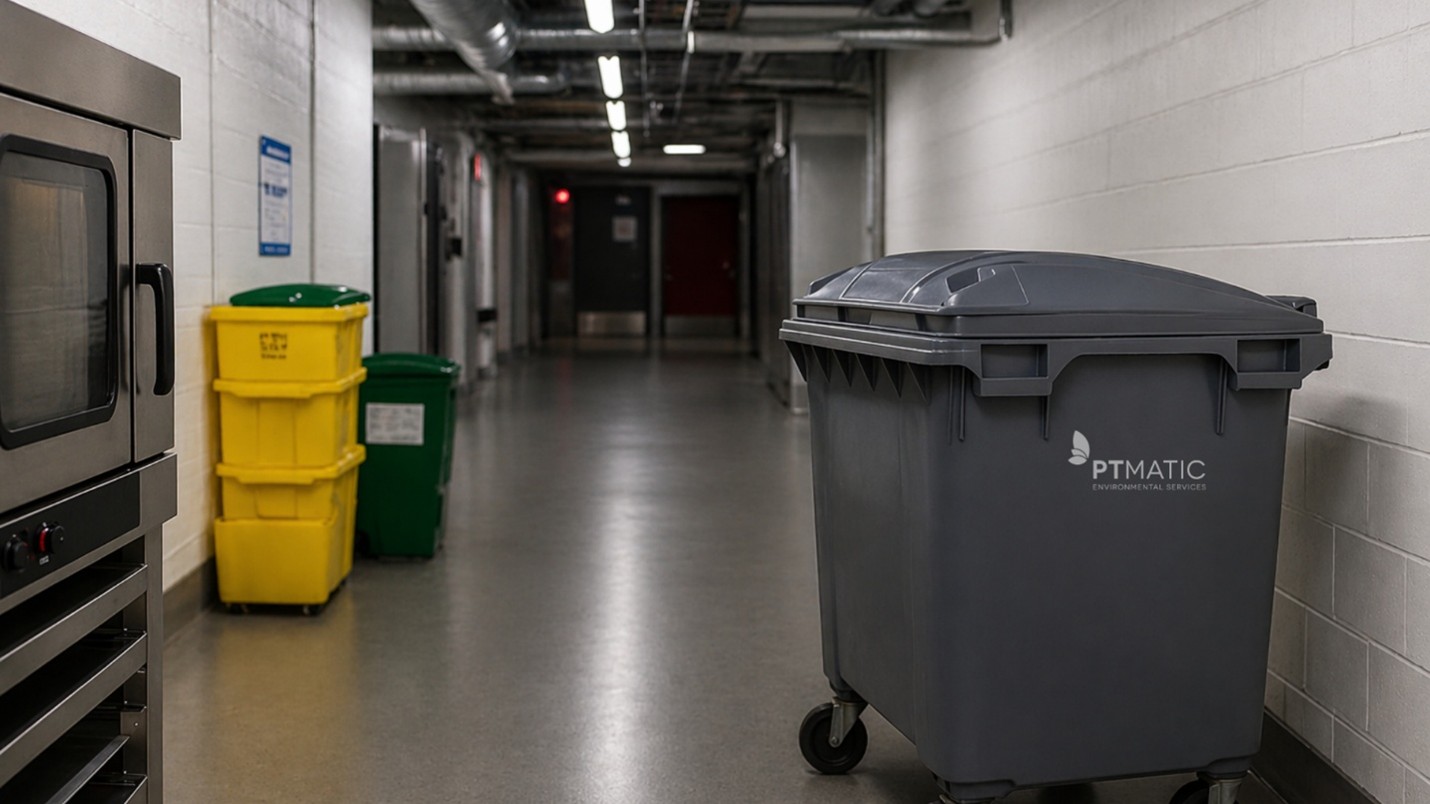
Back-of-house cleaning is another area that deserves more strategic attention. Guests may never see a service corridor, storage zone, plant area or technical space, but the condition of these environments influences the wider operation. When back-of-house areas are poorly maintained, pressure tends to spread outward. It affects teams, slows workflows and creates vulnerabilities in environments that rely on consistency.
Then there are legionella-related considerations and broader water-related responsibilities. For hospitality operators, these are not abstract compliance topics. They sit within the core responsibility of maintaining safe, fit-for-purpose environments for guests, staff and visitors. Water systems, testing and related environmental controls must be managed with the same seriousness as any other operational standard. In a sector built on trust and experience, this cannot be treated lightly.
Specialist disposal is also more relevant to hospitality than many assume. Properties often deal with materials that fall outside routine waste streams, and these require the right handling, the right separation and the right support. A broad-brush approach may appear convenient, but it rarely reflects the operational demands of a hospitality environment properly.
This is where an environmental service provider such as PT Matic adds value. Hospitality operators often need more than scheduled collection. They need support that helps protect hygiene, manage specialist waste streams, address testing requirements and maintain cleaner, better-controlled back-of-house environments without disrupting daily operations.
At PT Matic, environmental services for hospitality are approached as part of operational quality, not as an isolated background task. That means supporting hotels, residences, fitness centres and similar environments with structured services that contribute to cleanliness, continuity and control behind the scenes.
Guest experience is supported by systems that guests never see. Environmental services are part of that support structure. They help protect hygiene, maintain control, reduce disruption and support the smooth running of spaces that are expected to perform continuously.
For hospitality operators, this means environmental services should not be viewed as a background vendor function alone. They should be seen as part of operational quality. Not because they are visible, but because their absence is felt when standards begin to slip.
The strongest hospitality environments are rarely held together by presentation alone. They are supported by disciplined behind-the-scenes operations that keep everything clean, controlled and functioning as it should.
And that includes the environmental services too often left out of the conversation.
...
...

...
...
...


...