

The Malta Chamber of Commerce, Enterprise and Industry is pleased to announce the appointment of Mr Daniel Galea as the new Chairperson of TradeMalta. Mr Galea, who forms part of the Council of The Malta Chamber of Commerce, Enterprise and Industry, brings with him extensive experience and a clear vision that will support the organisation’s continued growth and engagement with the international business community. He currently serves as Managing Director of easyJet Engineering Malta.
The Malta Chamber also extends its heartfelt appreciation to outgoing Chairperson Mr David Matrenza for his dedicated service and valuable contribution to TradeMalta’s strategic development.
TradeMalta is a public-private partnership between the Government of Malta, currently under the remit of the Ministry for Foreign and European Affairs and Trade, and The Malta Chamber of Commerce, Enterprise and Industry. TradeMalta is dedicated to helping Malta-based businesses go international.
Month: November 2025
BOV bond issue oversubscribed with strong investor response
Bank of Valletta has announced the successful closure of the first series and tranche under the €325 million Unsecured Euro Medium Term Bond Programme. This included an initial issuance of €100 million 5% unsecured subordinated bonds maturing in 2030-2035, with the Bank exercising the Over-Allotment Option in full, and subsequently increasing the allocation to €125 million in response to substantial demand. The Bond Issue was fully subscribed within days of its launch to the market on 5th November 2025, reflecting the confidence in the Bank’s stability and strategic direction.
Speaking on the closure of the Bond Issue, Dr Gordon Cordina, Chairperson of BOV, together with CEO Kenneth Farrugia, expressed their appreciation for the strong investor response, noting it as a testament to the Bank’s solid reputation, performance and market trust.
Dr Gordon Cordina stated that “This successful closure highlights the strength of the Bank, which holds a balance sheet representing a significant share of the Maltese economy. We are committed to continuing to deliver long-term value to our shareholders, investors and stakeholders, and this issue is yet another initiative in support of this strategic thrust.”
Kenneth Farrugia said, “The strong investor response confirms our strategy and financial performance. With consistent results quarter on quarter, we are well-positioned to pursue our growth ambitions while maintaining a solid capital base. I am grateful to our investors for their continued confidence, and the dedication of the Bank’s employees who remain focused on delivering value to all the communities we serve.”
The Malta Chamber and AIS Environment conference addresses Malta’s spatial and sustainability challenges
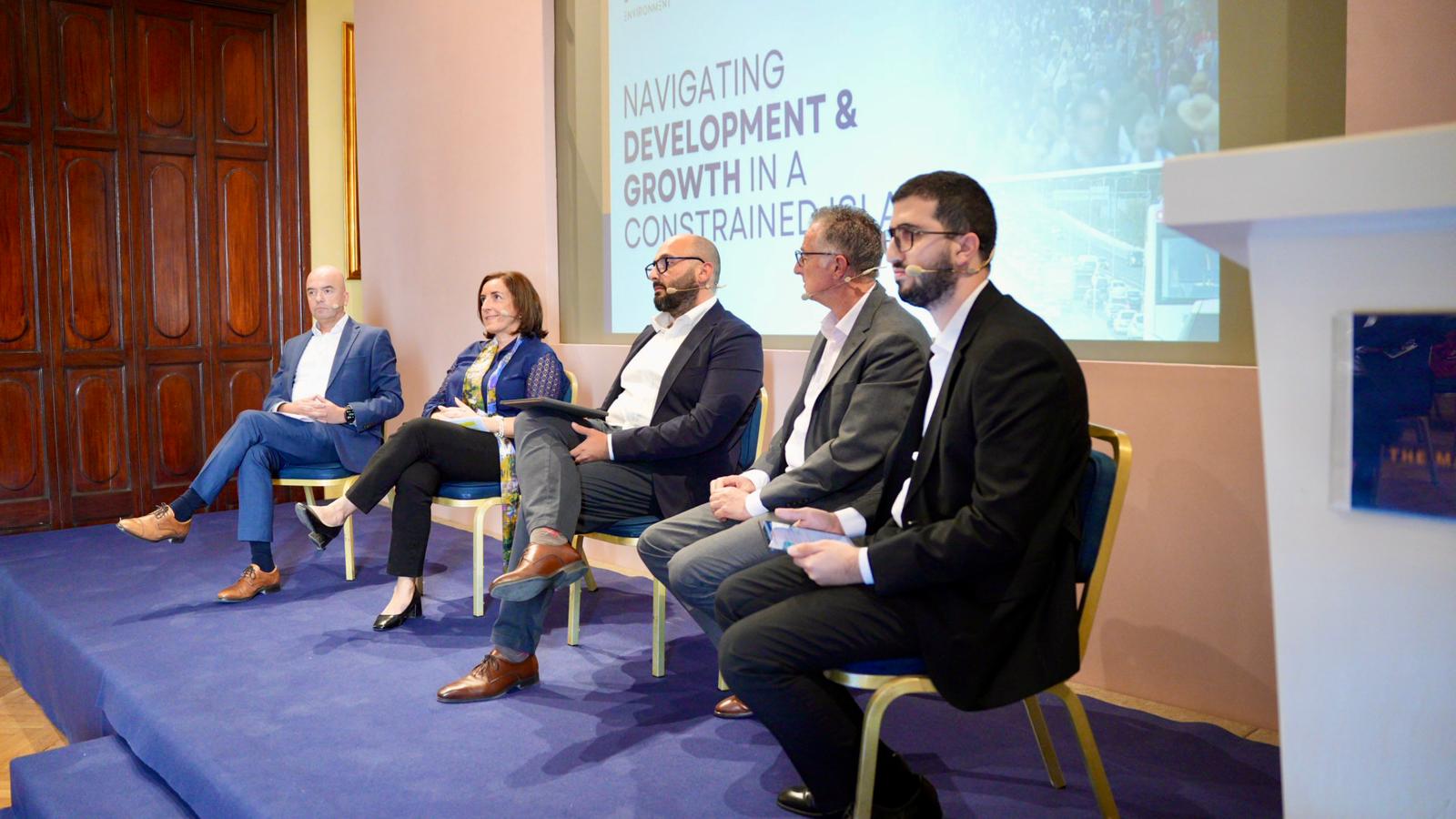
Malta stands at a crossroads. With little land, a growing population, fast urban growth, and more pressure on the environment, businesses are struggling to work in one of Europe’s most crowded places. Traffic jams and overloaded roads and services are making daily life harder—and raising serious concerns about Malta’s future success and ability to stay green.
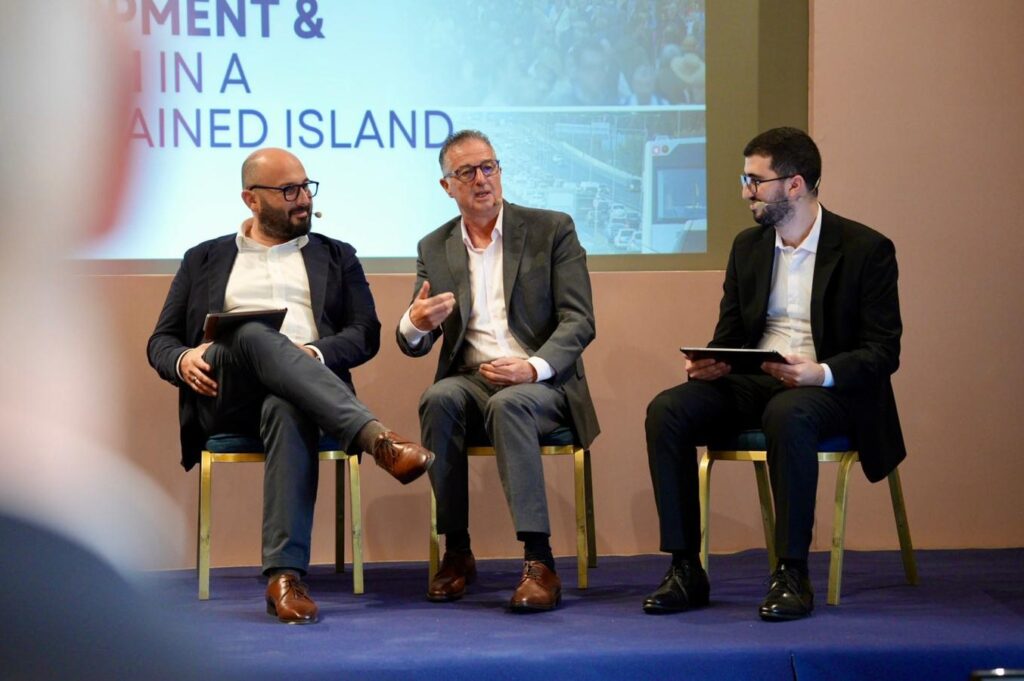
In response to these growing challenges, The Malta Chamber of Commerce, Enterprise and Industry, in collaboration with AIS Environment, organised the ‘Navigating Development and Growth in a Constrained Island’ conference. The event brought together business leaders, industry experts, policymakers and government authorities to assess Malta’s current trajectory and explore strategies that foster sustainable economic growth while safeguarding environmental and social well-being.
Speaking on behalf of The Malta Chamber, David Felice underscored that the discussion introduces several fundamental themes, including land use, mobility, infrastructure capacity, air and noise quality, and public health. “Equally important are the contradictions and complexities that emerge when these themes intersect, and how precariously they balance the pursuit of economic growth with the safeguarding of our environmental and social well-being,” he noted. Felice further remarked that the conference programme suggests Malta stands at a crossroads, and we have been for a while.
In his opening address, Mario Schembri, Founder of AIS Group, highlighted that Malta’s economic boom, fuelled by attracting foreign workers to fill jobs, has not only led to record population numbers, but also raised concerns about societal strain and the sustainability of growth on a small island. “The focus should shift from fears of cultural dilution to managing the pressures of rapid development on infrastructure, communities, and long-term resilience,” he noted. He also queried “How many more people, infrastructure, buildings, roads can we add on this constrained island to maintain a wealthy and healthy nation? Without understanding these new pressures on our communities, who knows which proverbial straw is going to break our economy’s back.”
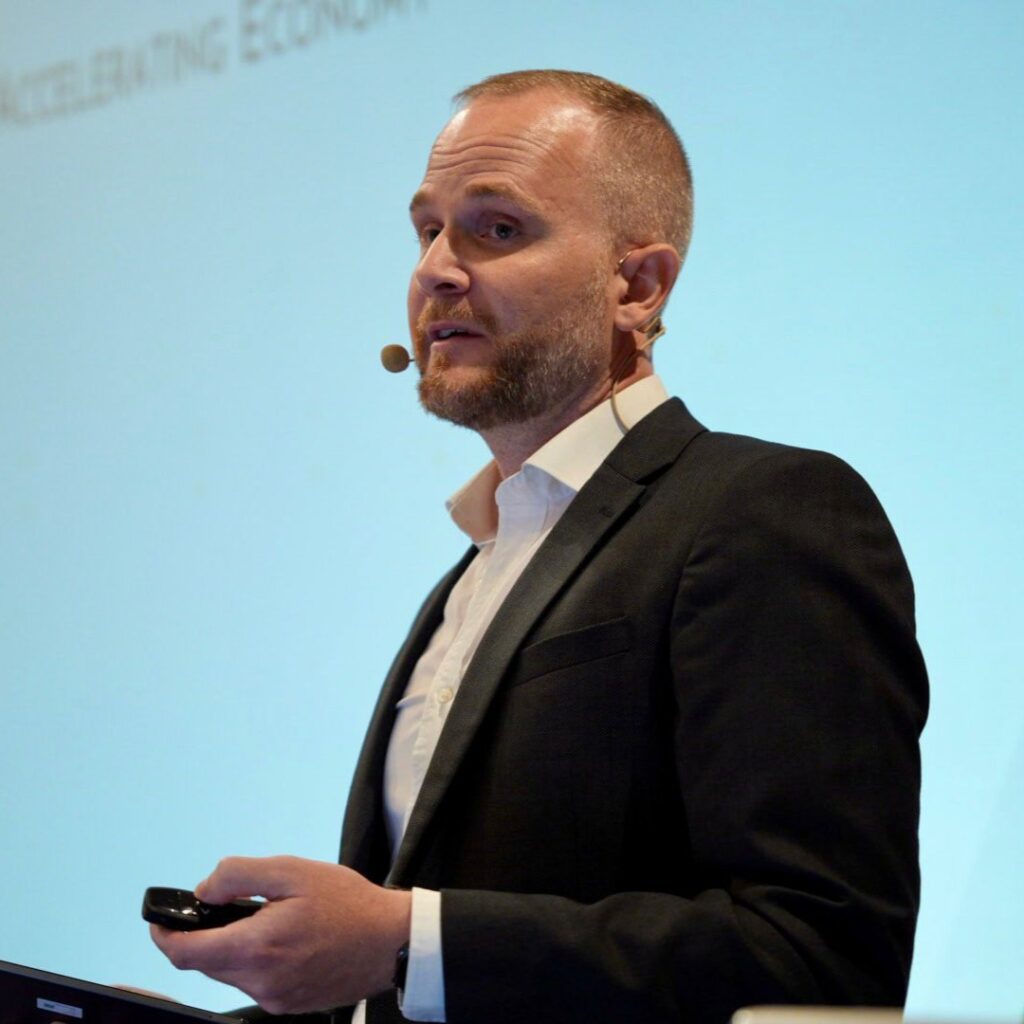
The consultants at AIS Environment performed a detailed study on the status quo of the Maltese Islands. Through a combination of data collection, interviews with key experts, and surveys amongst the members of the Chamber, they examined Malta’s current situation in terms of population, tourism, land use, waste, transport, noise, mental health, air quality and others. Sacha Dunlop, Head of Operations at AIS Environment, presented the results of this assessment and highlighted the sectors under critical pressure. He stated that “Our growing population and rising tourism numbers are placing enormous strain on our infrastructure, communities, and environment. These pressures include worsening traffic, inadequate air quality, chronic noise pollution, and declining mental wellbeing, among other impacts. Malta’s long-term economic success hinges on placing wellbeing and quality of life at the centre of national decision-making. This requires aligning our migration, education, environmental, and social policies, and by demonstrating the determination to implement and enforce them when necessary. It is not enough to slow the pace of change or the intensification of current pressures. Policymakers must confront our capacity limits head-on, tackle the issues affecting Malta today, and set out a clear, resilient, and sustainable path for our country’s future.”
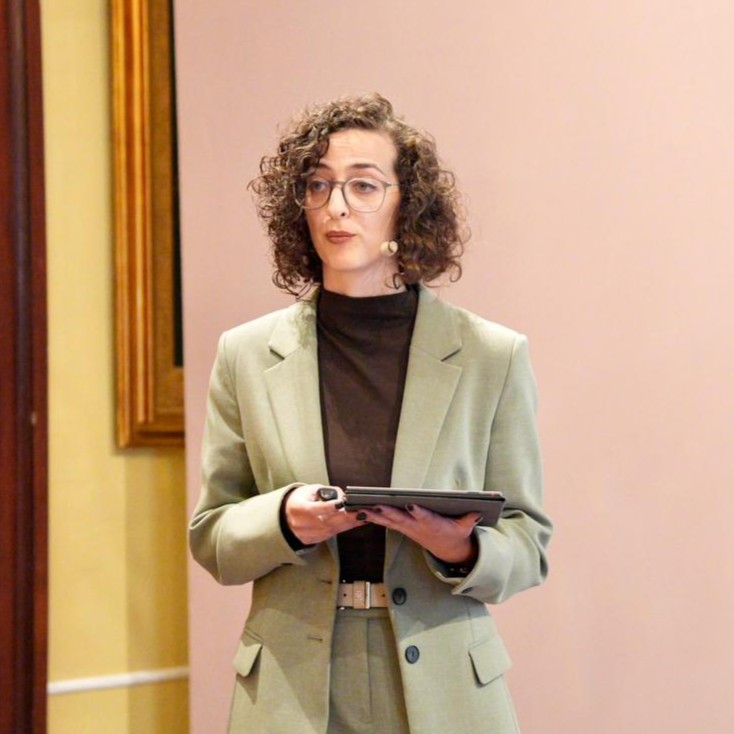
By extrapolating future trajectories based on current trends, the investigative team studied where our current paths, without mitigation, would lead. The results were concerning. One such finding, presented by Ms Yasmin Schembri, was that based on current rate of growth in our vehicle stock, Malta could see about 730,000 registered vehicles in Malta by 2050. Parking all these vehicles side by side would take up the entire area of Attard, or 8% of Malta’s entire built-up area. Considering that 68% of the interviewed Malta Chamber members agreed that their business is being impacted by Malta’s current and worsening traffic problems, she raised the alarm on how our chronic addiction to cars will continue to impact our economy. Yasmin closed off her presentation by putting forward several recommendations for how to mitigate the impacts our growing economy is having on our wellbeing and environment. She emphasised that “Malta should focus on building an economy that is both prosperous and viable in the long-term — one that thrives, without compromising environmental integrity or social wellbeing. This can be achieved by changing our mindset from quantity to quality, achieving higher returns from less human and material resources.”
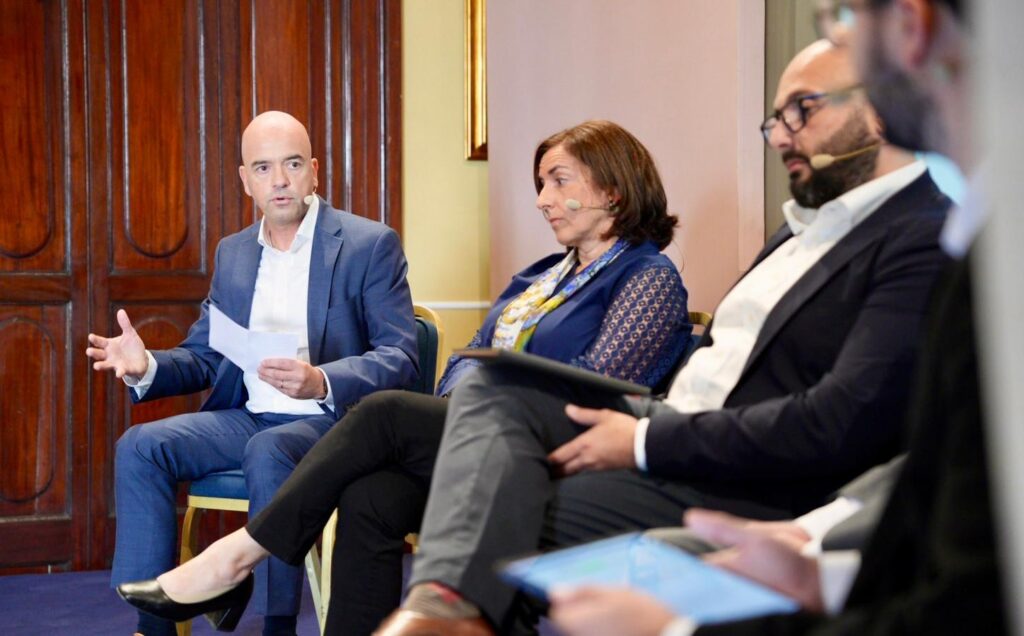
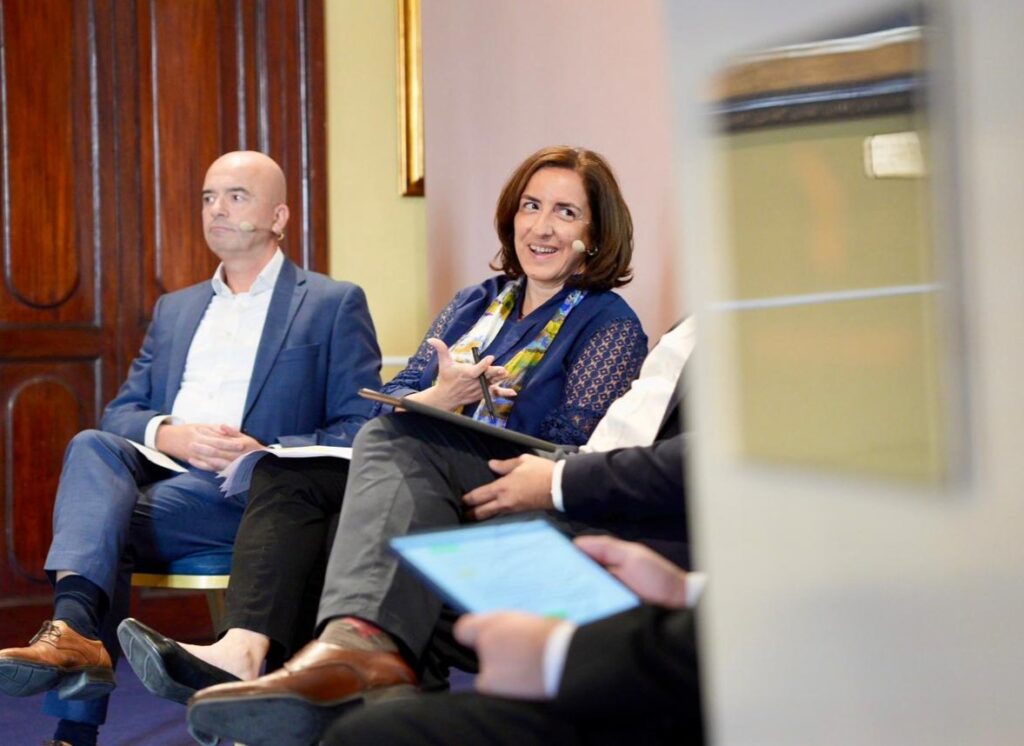
A panel discussion, moderated by Alistair Grima, Policy Executive (Sustainability), The Malta Chamber focused on the theme of ‘Adapting for Tomorrow: Turning Constraints into Opportunities’.
Asked why Malta is apparently struggling to adopt sustainable planning and construction practices, Simone Vella Lenicker, Partner at AP Valletta, stated that the only answer is a lack of will. “Malta has ample legislation and policies in place to ensure sustainability in this sector, yet we persistently seem to ignore them,” she stated.
She referred to a quote by Quentin Hughes, former Dean of the Faculty of Architecture, who stated in an interview carried out by the Architectural Review had stated that “the greatest problem the Maltese have to face concerns how their island … is going to accommodate all the activities that authorities have suggested should be undertaken on it … Inevitably these will involve a modification of Malta’s natural qualities – of her uniqueness as a place which, over the centuries, has developed in a particular way to fight the sheer inhospitability of the terrain. This is where planning has to be authoritarian. If we are to preserve areas of natural beauty, controls are essential … If Malta accepts laissez-faire development, the whole island will be obliterated by buildings. And this will take very little time. It will happen unless the planners, architects and the legislators take action very soon.”
“This quote is from 1969. For 55 years we have not heeded this warning. Is it now too late? Maybe not, but if we continue to ignore the writing on the wall there will come a time when there will be no turning back,” stated Lenicker.
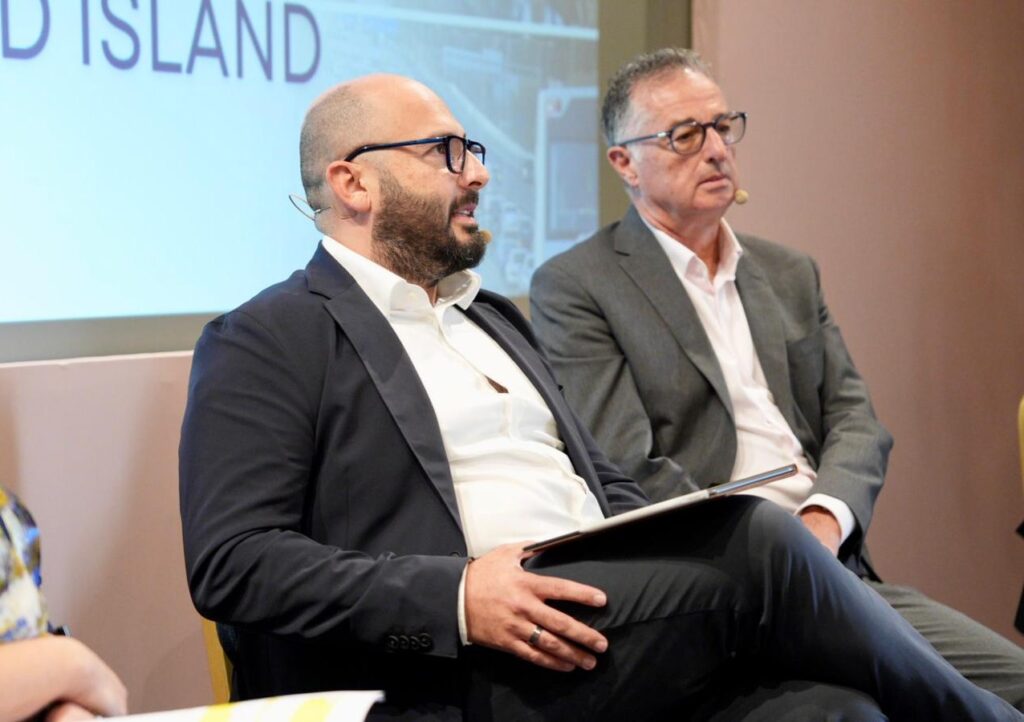
During the panel, Kevin Rapinett, member within The Malta Chamber’s Board of Management, emphasised the importance of predictable long-term regulatory frameworks, stronger enforcement, and performance-based incentives to support cleaner investment and circular innovation. He highlighted the need for Vision 2050 to be implemented with consistency and anchored to measurable KPIs that turn ambition into accountability. Bridging the gap between Malta’s ambitions and realities demands integrated planning, transparency, and disciplined implementation that match the scale of Malta’s challenges.
Matthew Bartolo, Chair of The Malta Chamber’s Health and Wellness Committee, emphasised that “progress matters, but I often remind the companies I coach that growth must be healthy. I hope that Malta is growing big, not growing fat. When we rely on importing more and more workers to keep the economy going, it begins to feel like we are building a fat economy rather than a strong one.”
As Malta strives to balance economic ambition with our physical and environmental constraints, AIS and the Malta Chamber reaffirm their commitment to helping the country shape a future that is resilient, responsible, and grounded in evidence. By leading with data and advocating for long-term thinking, AIS and the Malta Chamber will continue to empower Malta’s business and policy sectors to act decisively and sustainably.
The Malta Chamber calls for clear separation between political direction and executive responsibility

The Malta Chamber reiterates the urgent need for governance overhaul in public procurement processes.
The Malta Chamber of Commerce, Enterprise and Industry notes the latest developments concerning Malita Investments plc and reiterates its call for Public Procurement Reform. Such situations, whether they effectively happened or not, once again highlight the urgent need for a robust, transparent and accountable public procurement framework in Malta which The Malta Chamber has been advocating for since 2021. This is needed to eliminate the possibility of raising any doubt on any public procurement process. Every euro of public expenditure must be governed by clear rules, effective oversight and ethical conduct to safeguard the public interest and ensure value for taxpayers’ money whilst also ensuring a level-playing field for all.
The Malta Chamber also underlines that a clear demarcation between political decisions taken at ministerial level and the administrative/executive responsibility of the civil service is essential and a robust and transparent process is needed to have such demarcation seen more effectivelyThere should not be any attempt to blur the different and distinct responsibilities. For instance, deciding whether to privatise or not is a political decision, but once that decision is taken, the running of competitive processes and the selection of contractors is entirely a matter of executive competence that must be carried out in a professionally, impartially and independently.
Public procurement represents a substantial share of total government spending and has a direct impact on economic competitiveness, public services and overall quality of life. If public procurement is not conducted transparently, efficiently and fairly, it undermines trust in institutions, distorts competition, discourages reputable operators and can result in significant waste or misuse of public funds.
Key reforms The Malta Chamber is once again urging for
The Malta Chamber once more calls for the swift implementation of its key recommendations, including:
• A clear governance framework that separates policy direction from operational decision making in public procurement, with ministers defining vision and setting goals, but not influencing who wins contracts.
• Publication of a publicly-shared procurement outlook, at least 6 months in advance and covering all Government entities and departments, so that economic operators can prepare and compete fairly.
• Systematic preliminary market consultation and the use of genuinely independent experts in drafting tender documents to improve quality, clarity and value for money.
• A shift away from the narrow “cheapest compliant bid” mindset towards quality and performance-based evaluation that ensures the best long-term return on investment.
• Stronger scrutiny of direct orders and contract variations, with full documentation and justification, as well as effective remedies against abusive practices.
A comprehensive, user-friendly public Contracts Register that transparently shows all tenders issued (including direct orders), which, apart from the current public information, would also include milestones and deliverables to be reached and whether they have been reached, payments (when due, how much, when made), disputes, variations and modifications. The Malta Chamber calls on the Government, Parliament, oversight institutions and all contracting authorities to treat public procurement reform as an immediate national priority, not a long term aspiration. Ethical, transparent and professionally managed procurement, underpinned by a clear separation between political decision making and executive administration, is essential to safeguard public finances, support reputable businesses and restore citizens’ trust in how public projects are awarded and managed.
The Malta Chamber and IFSP Sign Memorandum of Understanding to Strengthen Malta’s Financial Services Industry

The Malta Chamber of Commerce, Enterprise and Industry and the Institute of Financial Services Practitioners (IFSP) have today signed a Memorandum of Understanding (MOU) formalising a strengthened collaboration aimed at supporting the prudent and professional growth of Malta’s financial services industry. Both organisations recognise the sector’s strategic importance to Malta’s economy and are united in their intention to foster a competitive, innovative, and high-standard financial services environment.
The MOU commits both parties to cooperate on national economic matters of mutual interest by sharing insights to support the industry’s growth, jointly engaging with policymakers, strengthening the sector’s quality and competitiveness, promoting robust enforcement and professional standards, and undertaking initiatives that gather business feedback and enhance education within the business community and the wider public.
William Spiteri Bailey, President of The Malta Chamber, welcomed the agreement, stating: “This MOU reflects our shared commitment to safeguarding and elevating Malta’s financial services sector. By working together more closely, we can ensure that the industry remains competitive, well-regulated, and responsive to the needs of both practitioners and the wider economy.”
“This is an important step for IFSP. We collaborate closely with all regulators and stakeholders when it comes to the financial services sector. I believe the synergy this MoU creates will be of great benefit to both our cohort of members but more importantly, to the benefit of financial services practitioners in Malta”, said Mr Nick Captur, President of the IFSP.
The MOU was signed by William Spiteri Bailey and Dr Marthese Portelli, President and CEO of The Malta Chamber respectively, and Nick Captur and Ivan Grech, President and CEO of IFSP respectively.
The EU Single Market for Malta: full market access, or a market difficult to access?
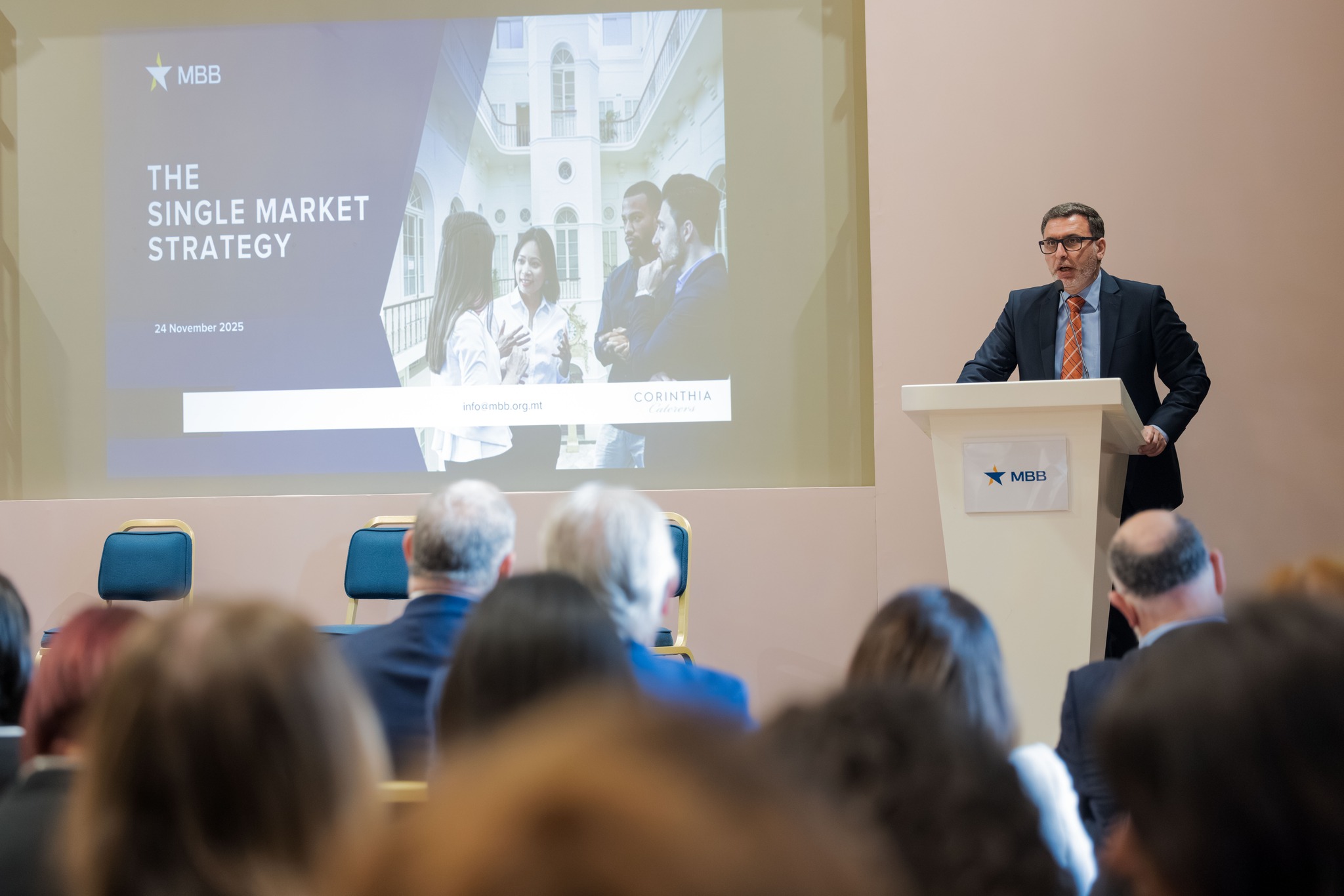
At Monday’s Malta Business Bureau (MBB) conference, the message was clear: while the EU Single Market is the best thing to come out of the EU and still offers immense potential, it is evident that not all Member States are created equal. A ‘one-size-fits-all’ approach, with mainland EU in mind, creates disproportionate challenges for an island economy like ours. To secure Malta’s competitiveness, we must tackle the lingering barriers – from high transport costs to complex regulation – that businesses still face after twenty years.
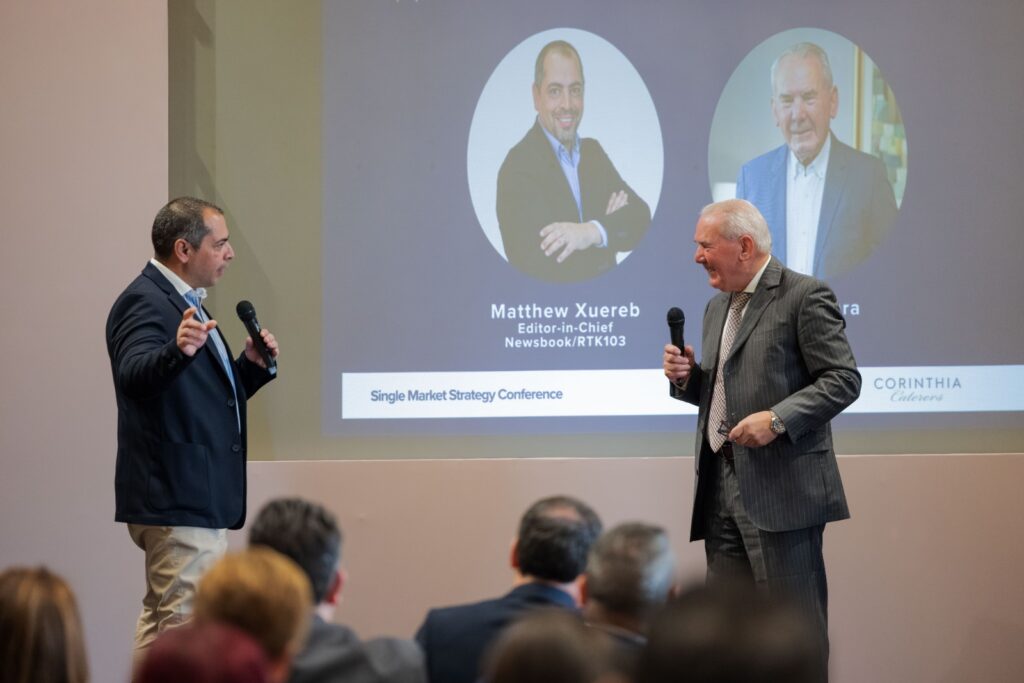
Mario Xuereb, MBB’s CEO opened the conference by emphasising that Europe’s Single Market “shouldn’t be a bureaucratic hurdle; it must be a ‘power tool’ for growth.” Where the Single Market must take “into consideration member state diversity adequately.”
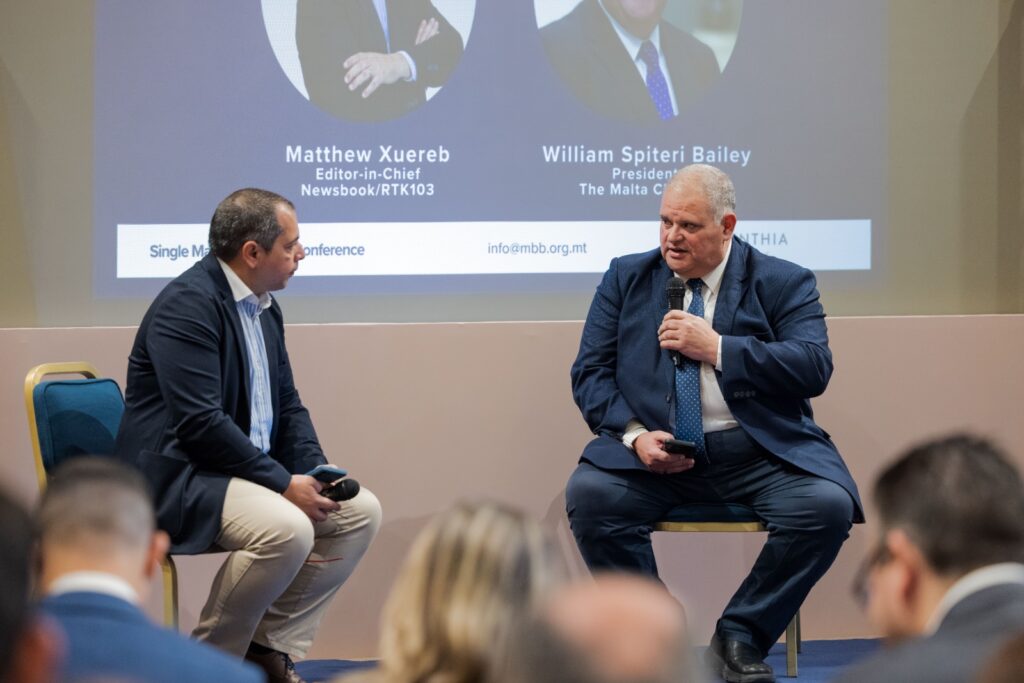
William Spiteri Bailey, The Malta Chamber’s President, remarked that, “we want the EU to start thinking small.” He urged European counterparts to remain receptive to issues arising from permanent structural barriers Maltese businesses will aways face. On a similar tone, Tony Zahra, the MHRA President, asserted that, “the single market helped in no small way the significant development of the tourism industry in Malta, but the EU should remain cautious of introducing excessive regulatory burdens which hinders further growth”.
The Single Market remains a net positive for Malta’s recent economic model, offering access to 450 million consumers, €17.1 trillion of GDP and enabling the free movement of goods, services, capital, and people. However, Maltese businesses continue to face structural challenges linked to our geographical location, high transport costs not faced by mainland Europe, regulatory fragmentation, and the disproportionate cost of compliance relative to larger Member States.
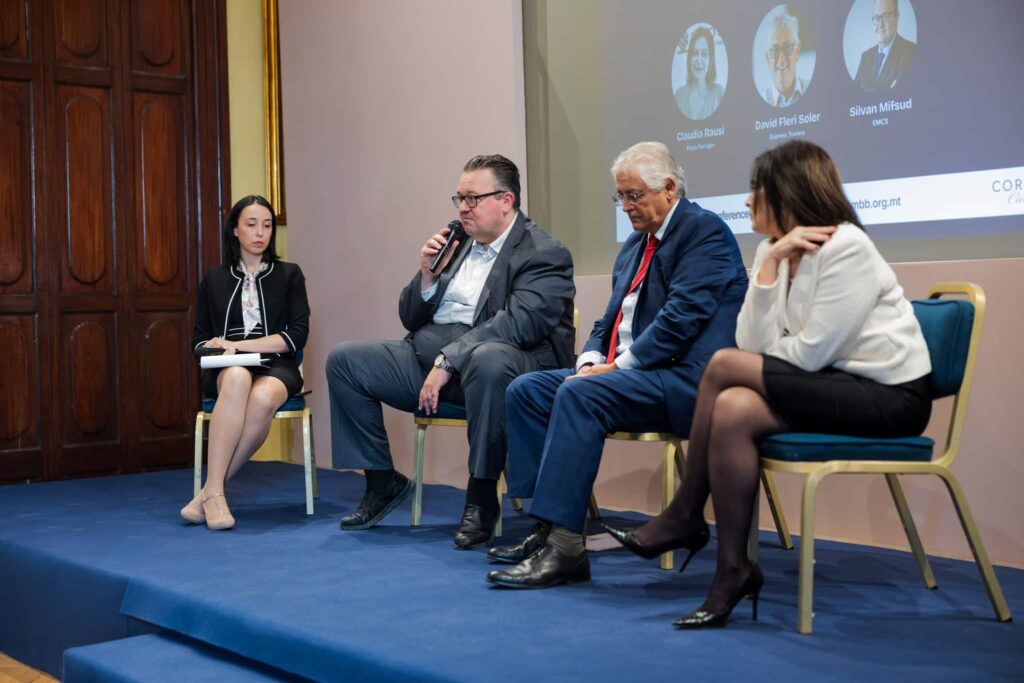
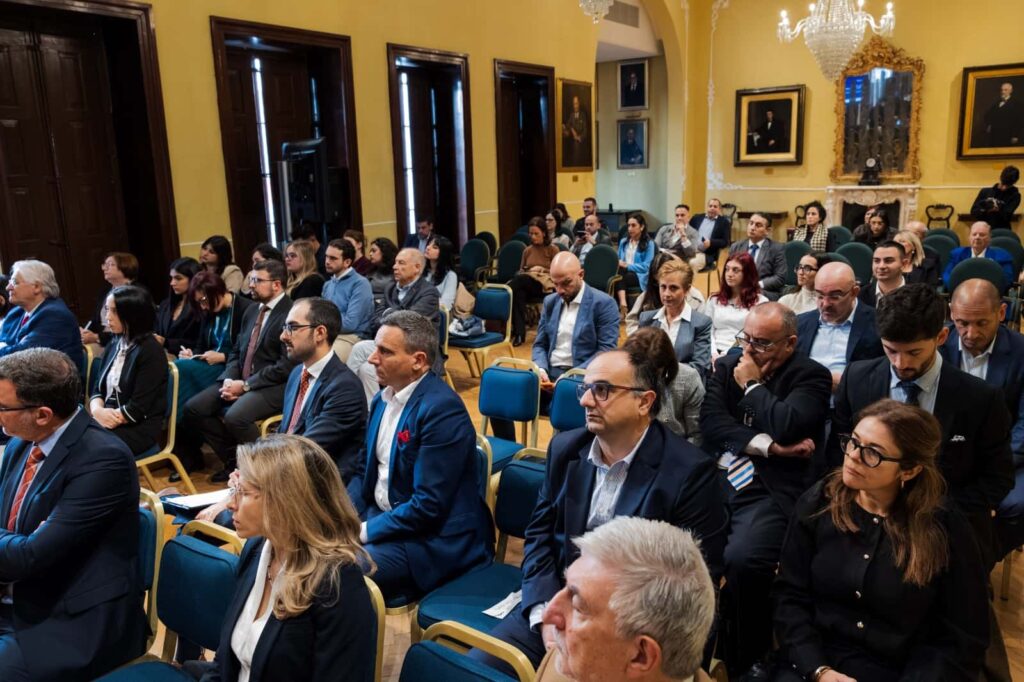
The Conference on the European Union’s Single Market brought together senior figures from the European Commission, European Parliament, Maltese Government, Opposition, and private sector to discuss the EU’s published Single Market Strategy[1] and its implications for Malta’s small island open economy.
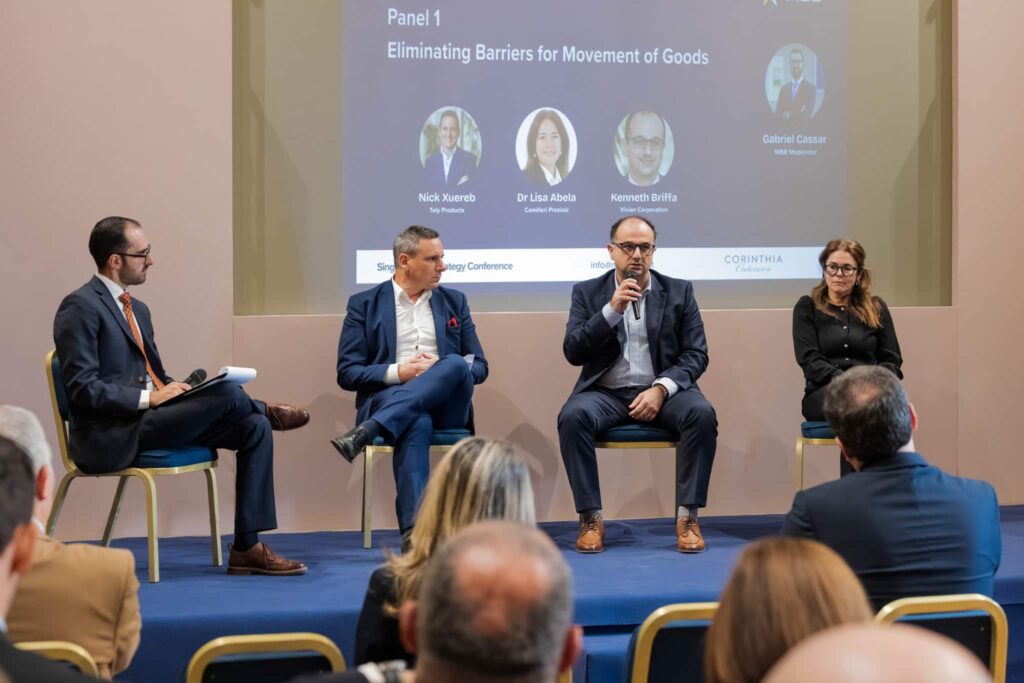
During the first panel on ‘Eliminating Barriers for Movement of Goods’ speakers from the manufacturing, pharma, and legal sectors pointed to the labyrinth of rules, over-regulation, and territorial supply constraints leading to rising costs of upstream goods. The panel lauded the Commission for the recognition of barriers within the single market as a good start, especially as these barriers do not exist in other economic powerhouses, such as the USA and China. More can be done to help Maltese businesses navigate the Single Market, such as incentivising the maritime transport industry to decarbonise rather than penalise it with the ETS, to invest in digitalisation to bridge innovation gaps and to exhaust all possible use of EU and national funding to minimise structural island barriers.
The second panel on ‘Expanding Cross-Border Service Provision’ brought up points on most of the economic growth in the EU is coming from the services industry, whilst itself is facing the largest barriers in the single market. Following a more existential tone, the panel reaffirmed the urgency to eliminate all barriers in the single market, to drive economic growth, as this is vital for the EU to maintain politically relevance on a global stage. Closing off with a strong mandate for advocacy for Maltese business interests in Brussels: it is critical to have the adequate resources to engage with EU legislation even before they are proposed.
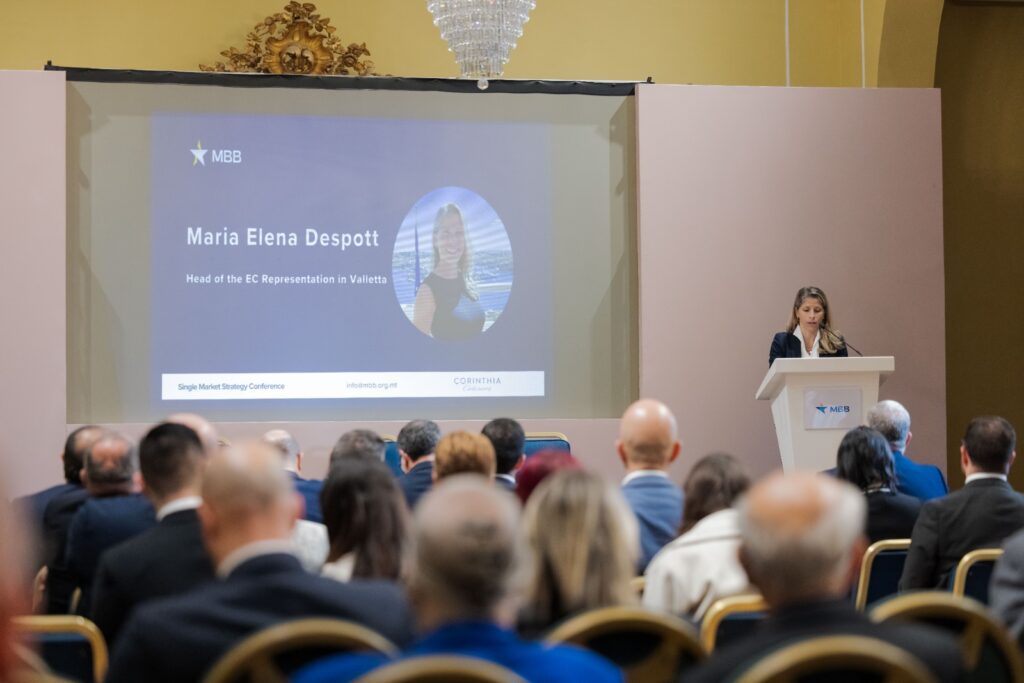
The conference was also addressed by Economy Minister Silvio Schembri, EU Funds Minister Stefan Zrinzo Azzopardi, the Shadow Minister for the Economy Jerome Caruana Cilia, the head of the EC Representation in Malta Dr Maria Elena Despott and MEP Peter Agius. Closing the event, MBB reaffirmed its commitment to representing Maltese business interests at an EU level, especially in an ever-busier EU-policy landscape. After setting the ball rolling for a local discussion on the single market, MBB will continue to monitor the development of the Single Market Strategy and ensure that the realities of small island economies are included in its implementation.
[1] The Single Market Strategy: https://single-market-economy.ec.europa.eu/single-market/strategy_en
Moving with the wind, like waves

Bank of Valletta and curator Elyse Tonna are pleased to announce the opening of Moving with the Wind, Like Waves on Sunday 30th November (18:00-21:00hrs), a site-specific contemporary art project unfolding through an exhibition, public programme and publication at the Inquisitor’s Palace, in Birgu. The opening programme will include performances and readings presented by exhibiting artists and other invited contributors.
The project invites visitors to engage with the site through forms of memory, movement and interpretation that often fall outside official narratives. Rather than centring dominant accounts, it directs attention to what is usually overlooked or unrecorded: subtle impressions, micro-histories, sensory encounters and everyday practices that shape how the building is felt and understood. Developed and curated by Elyse Tonna, the exhibition brings together nine artists responding directly to the Palace’s layered histories, while the wider project extends through a public programme involving additional artists, performers and creative practitioners.
Following an open call that received 49 submissions, nine artists were selected from a final group of fifteen. Victor Agius, Laura Besançon, Ryan Falzon, Wioletta Kulewska Akyel, Julian Micallef, Jacob Saliba, Sheldon Saliba, Matthew Schembri and Tom Van Malderen developed new works shaped through ongoing dialogue with the curator and with the support of the Inquisitor’s Palace curatorial team, who contributed historical insight and research.
Curator Elyse Tonna said, “Adopting a research-led, process-based and collaborative approach, each work has been developed specifically for this project and for the Inquisitor’s Palace itself. Rather than illustrating the site’s history, we focus on what often goes unseen or undocumented. My aim has been to create conditions in which these quieter layers of the Palace can become perceptible to those who move through it today.”
In parallel with the exhibition, a public programme will run from 3rd December to 27th December, offering free workshops, performances, readings, artist-led events and activator sessions connected to the project’s curatorial chapters. Events take place on Wednesday evenings and Saturday mornings, with curatorial tours available on request.
The project is commissioned and supported by the Bank of Valletta Foundation and presented in collaboration with Heritage Malta, which is hosting and supporting its realisation at the Inquisitor’s Palace.
For more information, follow @movingwiththewind_likewaves on Instagram/Facebook or contact the team at mwwlw.exhibition@gmail.com.
TradeMalta Announces CEO Transition
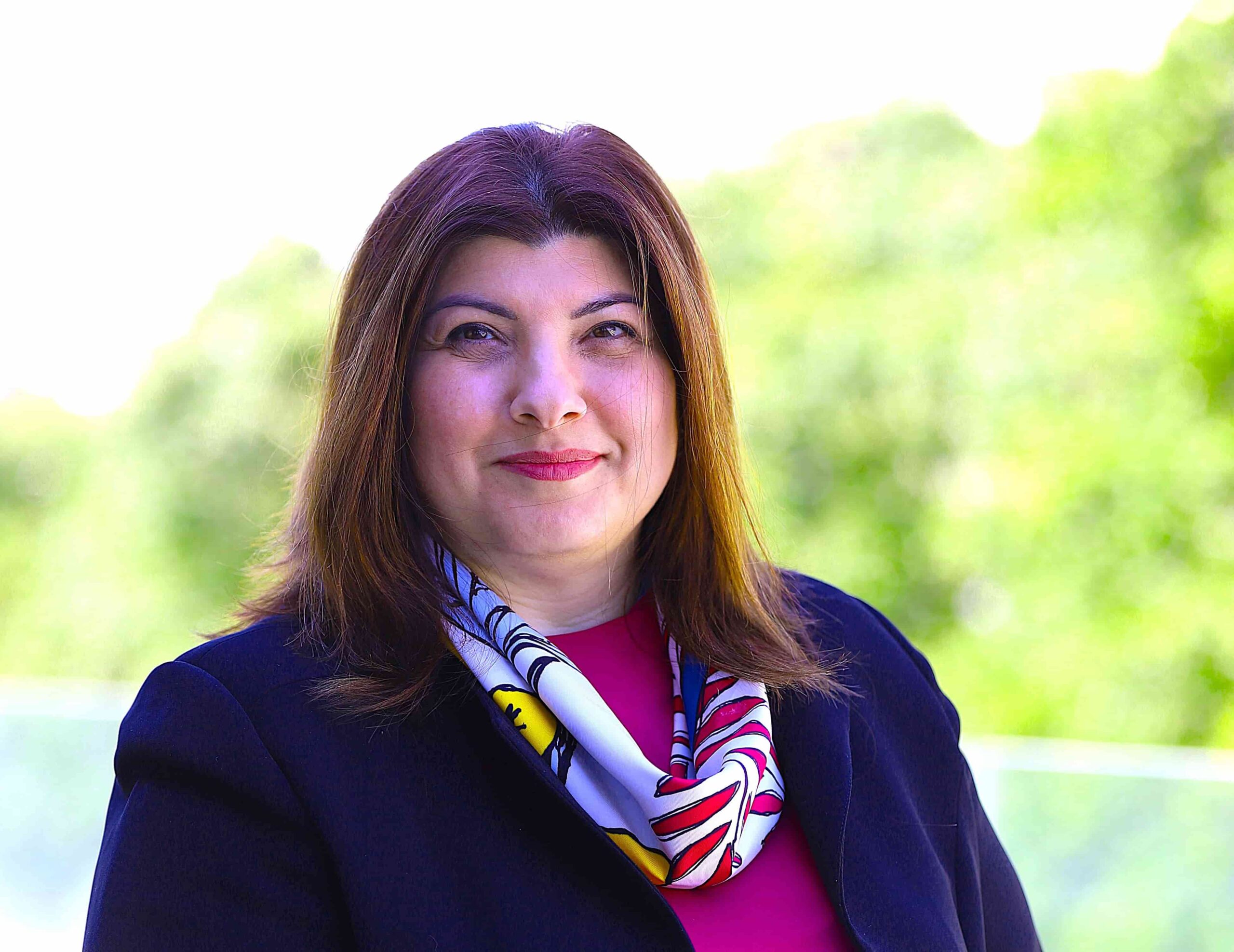
TradeMalta announces that Mr. Anton Buttigieg has stepped down from the position of Chief Executive Officer with effect from 30th September, following ten years of distinguished service at the helm of the organisation. The Board of Directors acknowledges the significant achievements made during Mr. Buttigieg’s tenure and extends its sincere appreciation for his leadership and contribution. The Board also conveys its best wishes to Mr. Buttigieg in his future endeavors.
The Board further announces that, following a rigorous and comprehensive selection process which attracted a strong and diverse pool of applicants, the Selection Board, composed of representatives from the organisation’s shareholders, has appointed Ms. Tania Brown as Chief Executive Officer, with effect from January 2026.
Ms. Brown brings to the role extensive experience in leadership, strategic development, and policy formulation across both the private and public sectors. The Board is confident that her appointment will further strengthen the organisation’s strategic direction and support the continued advancement and diversification of TradeMalta’s priorities.
Colour, energy and community spirit at this year’s Clour My Run
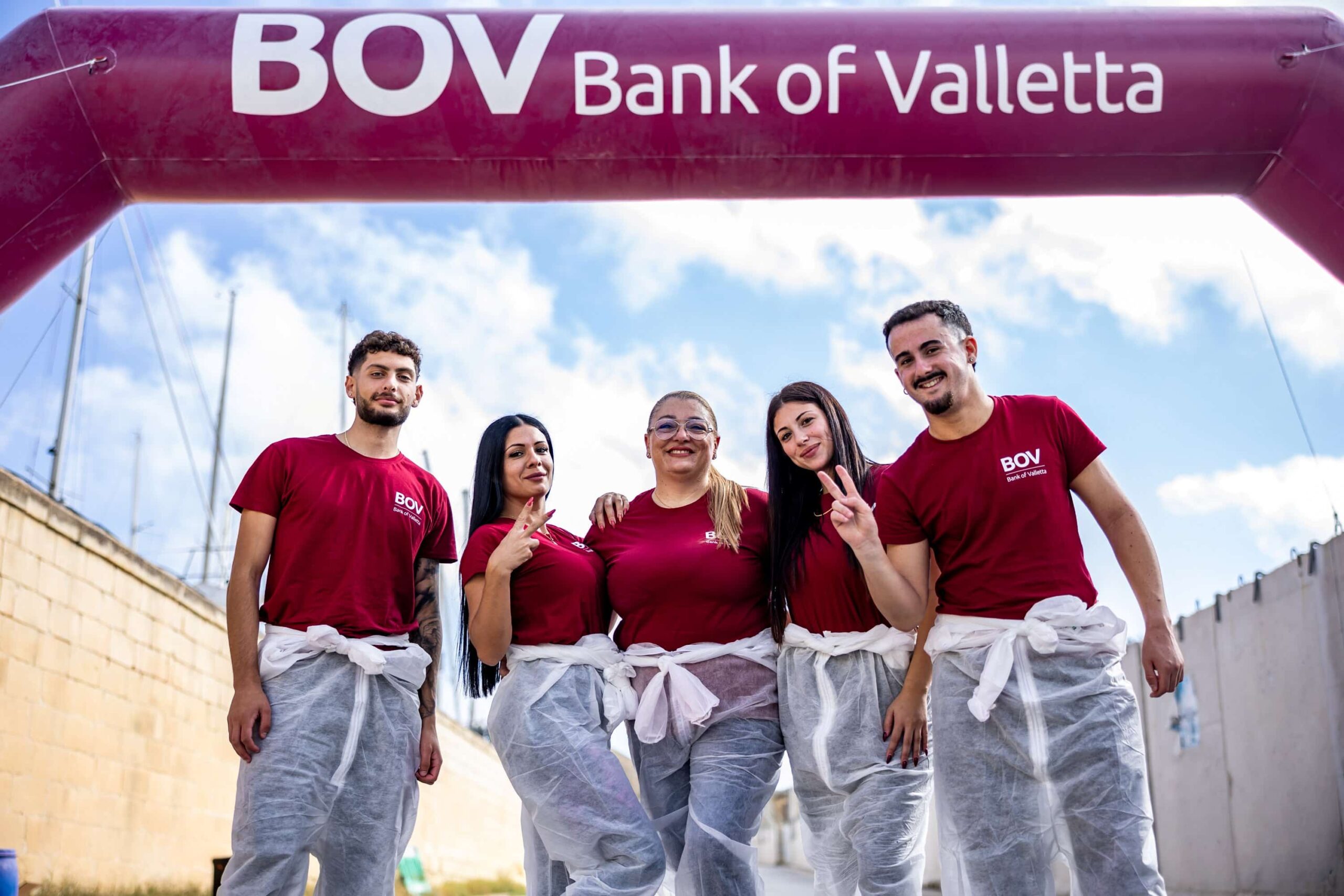
Bank of Valletta proudly supported this year’s Colour My Run, which brought together families, colleagues and friends for a vibrant morning dedicated to movement and fun. Held on Sunday 2nd November in the morning, the event welcomed around 1,500 participants for a 5km fun run between Fort Manoel and Gżira.
Through his opening address, Kenneth Farrugia, BOV CEO, set the tone for a morning focused on well-being, togetherness and positivity. Sharing his appreciation for everyone who contributed towards making this event happen, Mr Farrugia stated, “Our role sees us investing in the well-being and knowledge of our communities. Colour My Run gave us the perfect platform to support a morning of health and joy while also introducing BOV Astro Saver and our work in financial education. We remain committed to giving families the tools they need to thrive.”
“We are grateful to all the participants who chose to spend their Sunday morning at the marvellous Fort Manoel with us. We hope our team of volunteers and crew managed to sprinkle some Colour and happiness into their lives, at least for a moment. Mental health is a key value we believe is nurtured through healthy lifestyles, laughter and social gatherings, so this drives our commitment to organise these events. We are grateful to all our sponsors, authorities and partners for their continuous enthusiastic support!” reiterated Nathan Farrugia.
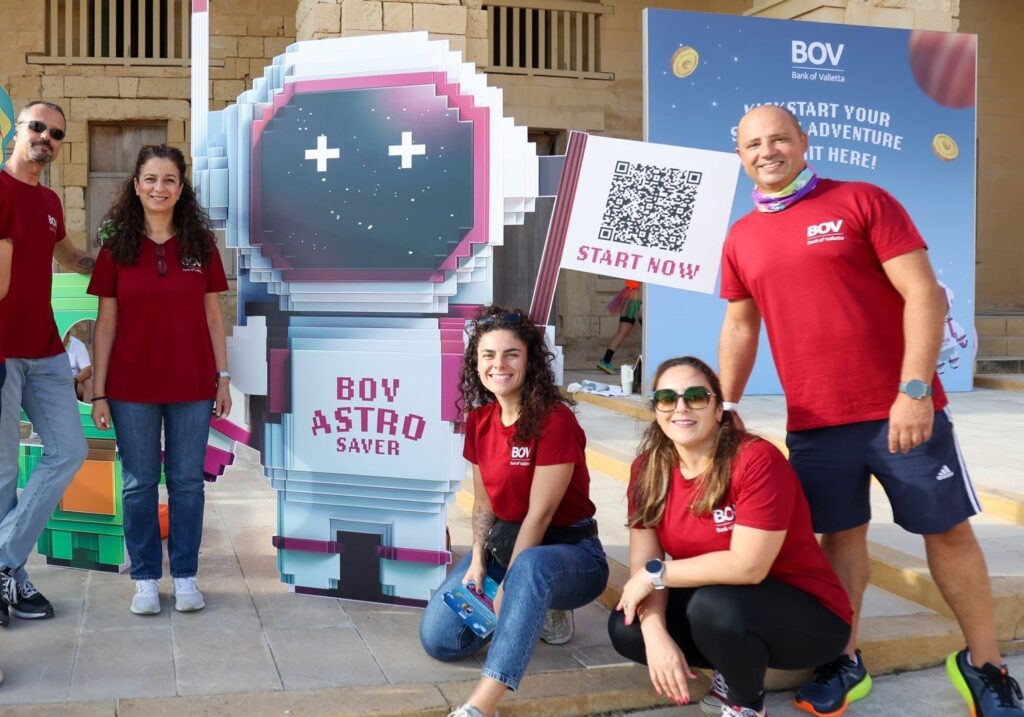
A lively warm-up session got everyone moving before participants made their way to the fort’s exit to kick off the run. The 5km route offered beautiful views and plenty of cheerful moments, with colour throws, music, and smiling volunteers creating a friendly and uplifting atmosphere for all ages.
One of the highlights of the morning was the SkolaSajf competition announcement, where Bank of Valletta unveiled its new financial literacy mascot, BOV Astro Saver. Over summer, the competition invited children to design a mascot that helps other kids understand basic financial concepts in a simple, fun and visual way. The winning design came from 9-year-old Lucas Mamo from Birgu Primary, who received a €100 One4All voucher. Lucas’ creation, BOV Astro Saver, now forms part of the Bank’s Smart Savers campaign, supporting children and adolescents as they learn the importance of saving and budgeting.
Children and families also enjoyed taking photos with a life-size Astro Saver cutout, with the BOV team capturing and printing the photos on the spot, a small keepsake from a colourful day out.
BOV organised several touchpoints and activities throughout the morning. A colourful 3x3m photo wall that proved incredibly popular with families, colleagues and running groups. Members of the BOV team showcased the Spot the Scam quiz, helping to raise awareness about online fraud and digital safety. The first three participants with correct answers received €60 One4All vouchers, awarded instantly on the spot. There was also a QR Code competition, where participants scanned the Digital Team’s t-shirts for the chance to enter an online prize draw to win MacBooks.
These activations brought together fun, learning, and engagement, reinforcing the Bank’s commitment to empowering the community through both financial literacy and digital awareness.
Reflecting on the Bank’s involvement in this event, Daniel Magrin, Head Marketing & Product Lifecycle Management at BOV said, “Colour My Run is a wonderful example of how sport, community and education can come together in one joyful morning. As a main supporter, we were proud to help create an experience that was not only fun, but also meaningful, from financial literacy through Astro Saver to digital safety with our Spot the Scam initiative. Our goal is always to be present for our communities in ways that enrich their lives, inspire good habits, and bring people together.”
Bank of Valletta extends its thanks to Nathan Farrugia, all the volunteers, partners, authorities and participants who contributed to yet another memorable edition of Colour My Run.