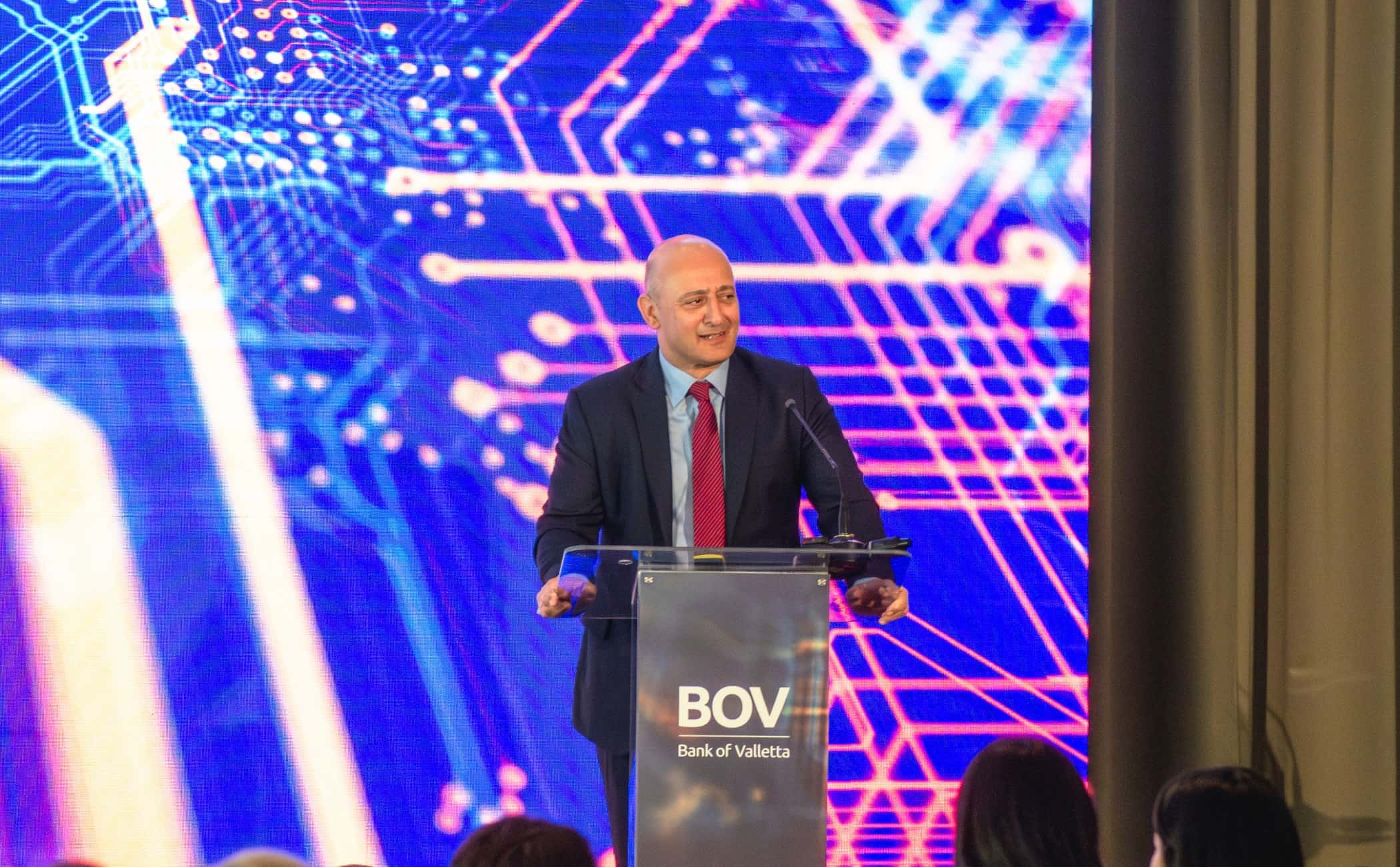
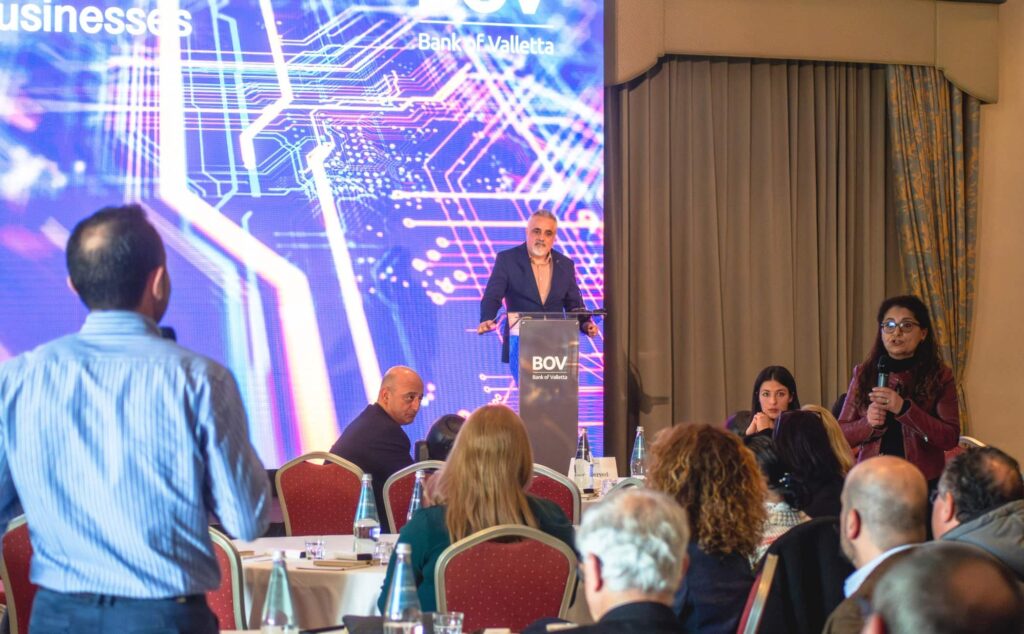
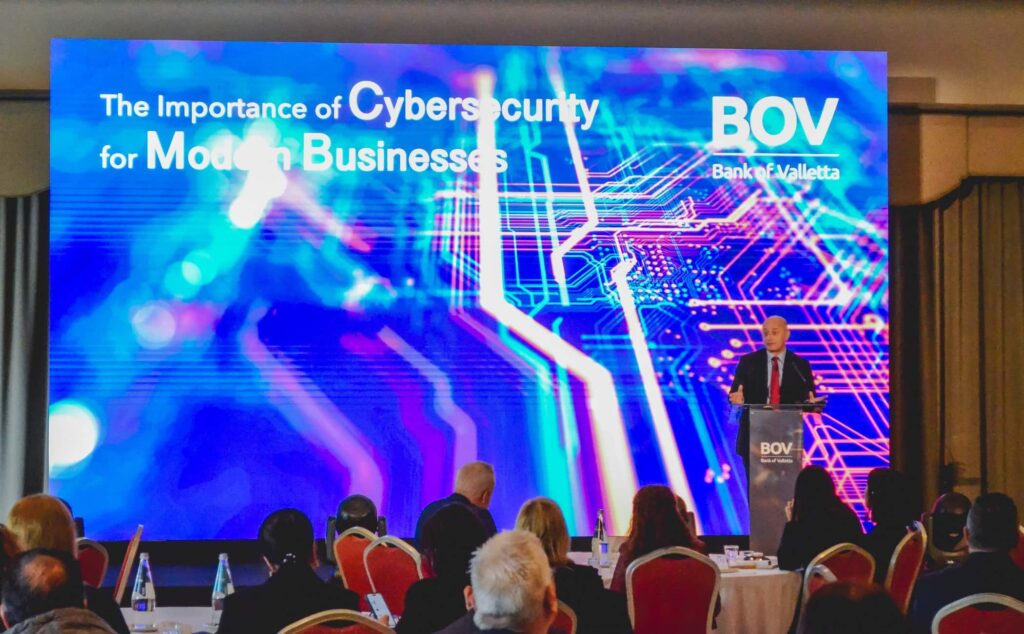
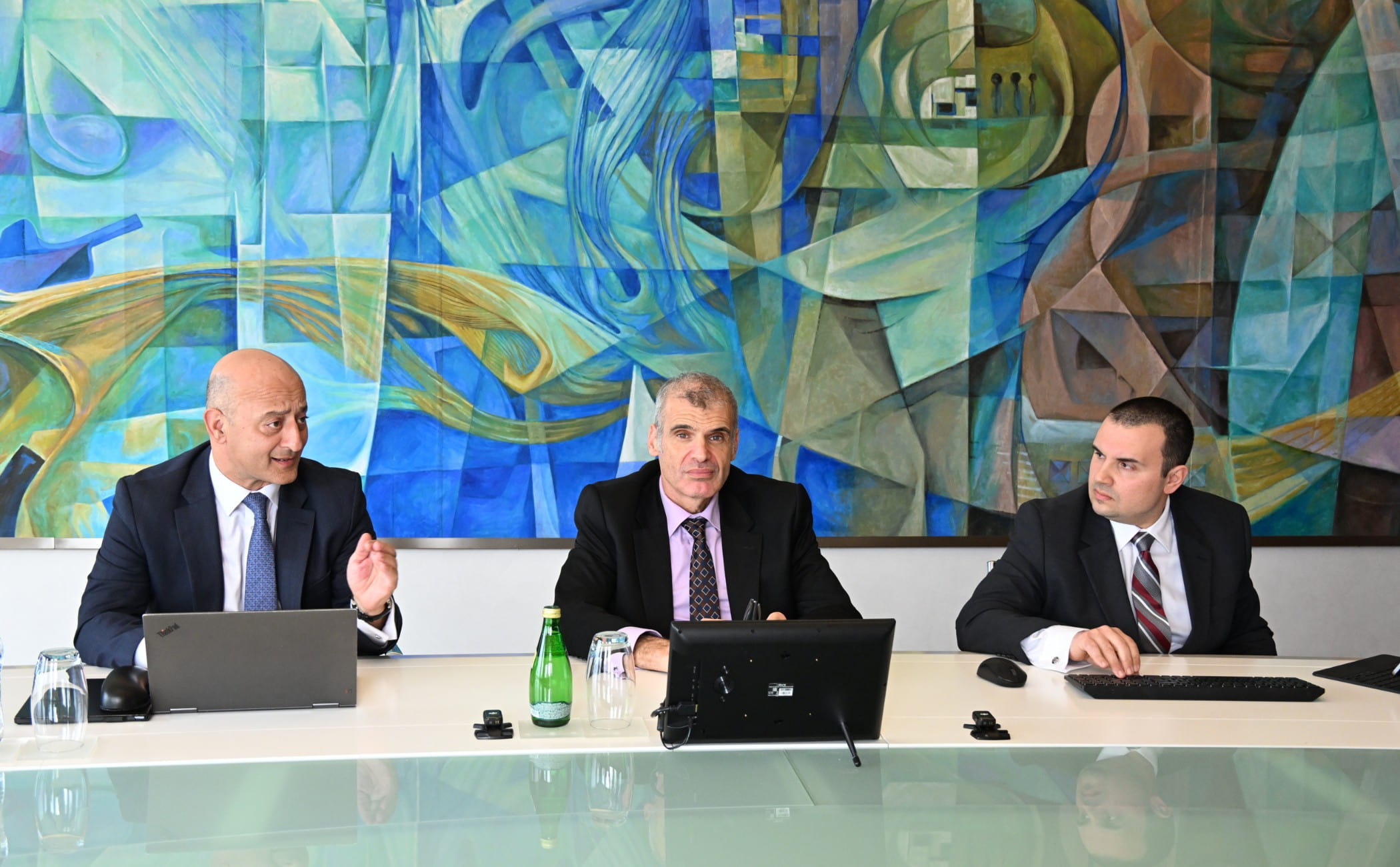
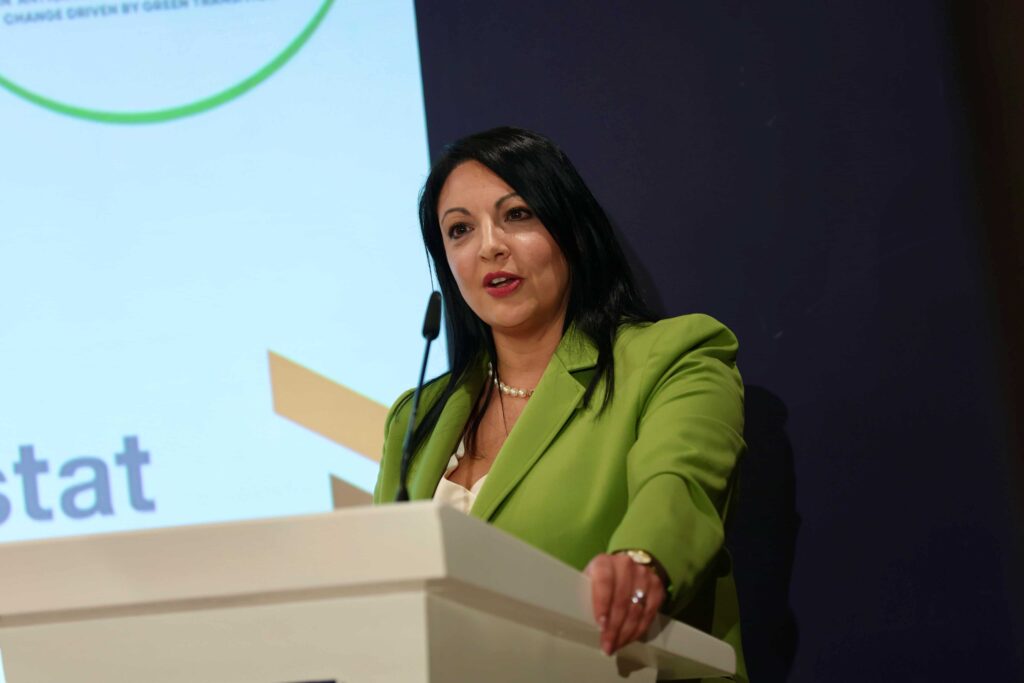
Bank of Valletta recently hosted a very well-attended seminar for business representatives, focusing on one of today’s most pressing concerns – cybersecurity. This event was designed to equip business leaders with essential knowledge and tools to protect their operations from the growing risks of fraud, scams and digital attacks.
In his opening remarks, BOV CEO Kenneth Farrugia described the event as the first of its kind for Bank of Valletta, underscoring the Bank’s commitment to supporting the business community beyond the provision of financial services. “Cybersecurity is no longer just an IT concern. It is a business risk that demands attention across all sectors,” he said. “The evolution of technology has changed the way companies operate, but it has also enabled cybercriminals to become more sophisticated, exploiting advancements in artificial intelligence and machine learning.”
Mr Farrugia stressed the role of education and awareness in building a strong first line of defence. “Cybersecurity is one of BOV’s key initiatives. We are committed to safeguarding our systems, our people, and most importantly, our customers.”
Organised by the Bank’s Business Development and Customer Value Unit, the seminar covered real-life examples of cyber incidents – from phishing emails to AI-driven fraud. BOV specialists in Payments, Cards, and Information Security delved into several critical areas. The speakers offered practical strategies to strengthen information security and defend against fraud. Attendees were also given tips on how to identify common scam tactics and implement safeguards to protect outgoing payments.
With the rise in digital transactions, businesses face increasing threats, including bank impersonation scams. These often involve criminals posing as bank employees to deceive victims into disclosing sensitive financial information. The seminar highlighted the importance of recognising red flags, adopting strong security protocols, and fostering a culture of cyber awareness within teams. The event concluded with an interactive Q&A session, giving attendees time to raise real concerns and get expert advice on shielding their businesses from cyber threats.
Bank of Valletta urges anyone who suspects that they may have fallen for a scam to report it by calling +356 2131 2020.
HSBC Bank Malta will once again join other HSBC Group sites worldwide in marking Earth Hour, demonstrating its ongoing commitment to environmental sustainability. Organised by the World Wildlife Fund (WWF), Earth Hour is a global initiative encouraging individuals and organisations to switch off lights as a symbolic act to raise awareness about climate change and energy conservation.
This year, Earth Hour took place on Saturday, 22nd March 2025, from 20:30 to 21:30. HSBC Malta participated by turning off all external lighting at its landmark offices in Valletta and Qormi in alignment with the global initiative. The Ministry for the Environment, Energy & Public Cleanliness (MEEC) coordinated Malta’s participation, with a central event scheduled at St. George’s Square between 18:00 and 21:45. The event featured informational stalls, entertainment, and the lighting of a large ‘60’ logo with candles which represents the one hour during which lights are switched off to highlight the importance of sustainability.
HSBC Malta has actively supported Earth Hour since its inception in 2009, recognising the importance of fostering long-term environmental awareness. The initiative serves as a reminder that sustainable practices should extend beyond just one hour and become part of daily life.
Glenn Bugeja on behalf of the HSBC Malta, commented: “As a responsible corporate entity, HSBC Malta remains dedicated to promoting sustainability and reducing environmental impact. By taking part in Earth Hour, we reaffirm our commitment to tackling climate change and inspiring positive action within our communities.”
Beyond turning off lights at its buildings, HSBC Malta encouraged its people and the public to participate by switching off non-essential lighting and engaging in activities that contribute to a greener future. Whether it’s reducing energy consumption at home, participating in clean-up initiatives, or adopting more sustainable lifestyle choices, every action counts.
Following the Annual General Meeting of The Malta Chamber of Commerce, Enterprise and Industry held on the 25th of March, the newly elected Council met today and elected William Spiteri Bailey as the 73rd President of The Malta Chamber.
William Spiteri Bailey, a seasoned accountant and auditor with extensive leadership expertise, has been elected the 73rd President of The Malta Chamber. Having served as Vice President for the past two years, he now steps into this role, stating that during his 2025–2027 term, The Malta Chamber will prioritise supporting Maltese companies, entrepreneurs, and businesses in their journey to transform, automate, and digitalise.
“The Malta Chamber is an institution that humbles me to serve as its President. Our aim is to help enterprises become more efficient, sustainable, and competitive—ensuring they are future-ready, modernised businesses,” said Spiteri Bailey.
The new President emphasised a vision for a resilient, innovative, and inclusive economy driven by entrepreneurial culture. The Malta Chamber also aims to continue to strengthen a meaningful engagement with members to further improve our advocacy with policymakers. Spiteri Bailey also expressed his sincere gratitude to the outgoing President Chris Vassallo Cesareo for his dedication and contributions.
William Spiteri Bailey is married to Karen nee’ Borg Cardona and father of three children, Jeremy, Martina and Mikela.
The Malta Chamber would like to thank outgoing President Chris Vassallo Cesareo and congratulates President William Spiteri Bailey and the newly elected Council Members. Vassallo Cesareo will be serving on Council as outgoing President for the next 2 years.
The Malta Business Bureau has announced the launch of the Al4GreenSME training course, an innovative e-learning platform designed to help businesses integrate artificial intelligence (AI) solutions for improved sustainability and efficiency.
The course aims to provide Al training to SMEs to promote the transition toward the circular economy and can be accessed here.
Key benefits include:
General understanding of Artificial Intelligence and its applications
Understanding how Al can enhance circular economy and efficient resource management
Learning practical strategies to reduce operational waste and costs
Understanding Policy & Regulatory Considerations
Commenting on the launch MBB CEO Mario Xuereb, said:
“This project provides SMEs with the tools they need to integrate Al into the Circular Economy, promoting sustainable practices. We’re fostering a culture of continuous learning and ethical Al use, which is key to preparing businesses for the challenges of tomorrow. Going forward, this initiative is essential for empowering SMEs to lead the way in sustainable growth and collaboration.”
Al4GreenSME is an Erasmus+-funded initiative dedicated to promoting the use of Al to enhance sustainability across industries. The project provides businesses with training opportunities and further guidance to integrate Al into their operations.
The course was launched on March 28th at an event hosted by the MBB, featuring a panel of speakers who led an engaging discussion on the role of Al in advancing sustainable business practices. The speakers provided valuable insights into various applications of Al in sustainability, including its impact on education, entrepreneurship, and the role of government in fostering further development. The event was addressed by Professor Alexiei Dingli from the University of Malta, Mr. Mark Bajada from Bajada Lyons Group, and Mr. Neil Micallef from the Malta Digital Innovation Authority.
The Al4GreenSME project is led by a consortium of partners from across Europe. The consortium includes the Chamber of Commerce and Industry Vratsa Sdruzhenie from Bulgaria, Markeut Skills Sociedad Limitada from Spain, Malta Business Foundation and B&P Emerging Technologies Consultancy Lab Ltd from Malta, Epistimi Gia Sena Astiki Mi Kerdoskopiki Etairia from Greece, and Strategic Omnia Research and Technology Development Ltd from Cyprus.
Project Number: 2Q25-I-ES0I-KA220-\/ET-00015094! Funded by the European Union. \/’iews and opinions expressed are however those of the author(s) only and do not necessarily reflect those of the EuropeanUnion or the European Education and Culture Executive Agency (EACEA). Neither the European Union nor EACEA can be held responsible for them.
The Malta Business Bureau is the EU business advisory organisation of The Malta Chamber and the Malta Hotels and Restaurants Association (MHRA). It is also a partner of the Enterprise Europe Network.
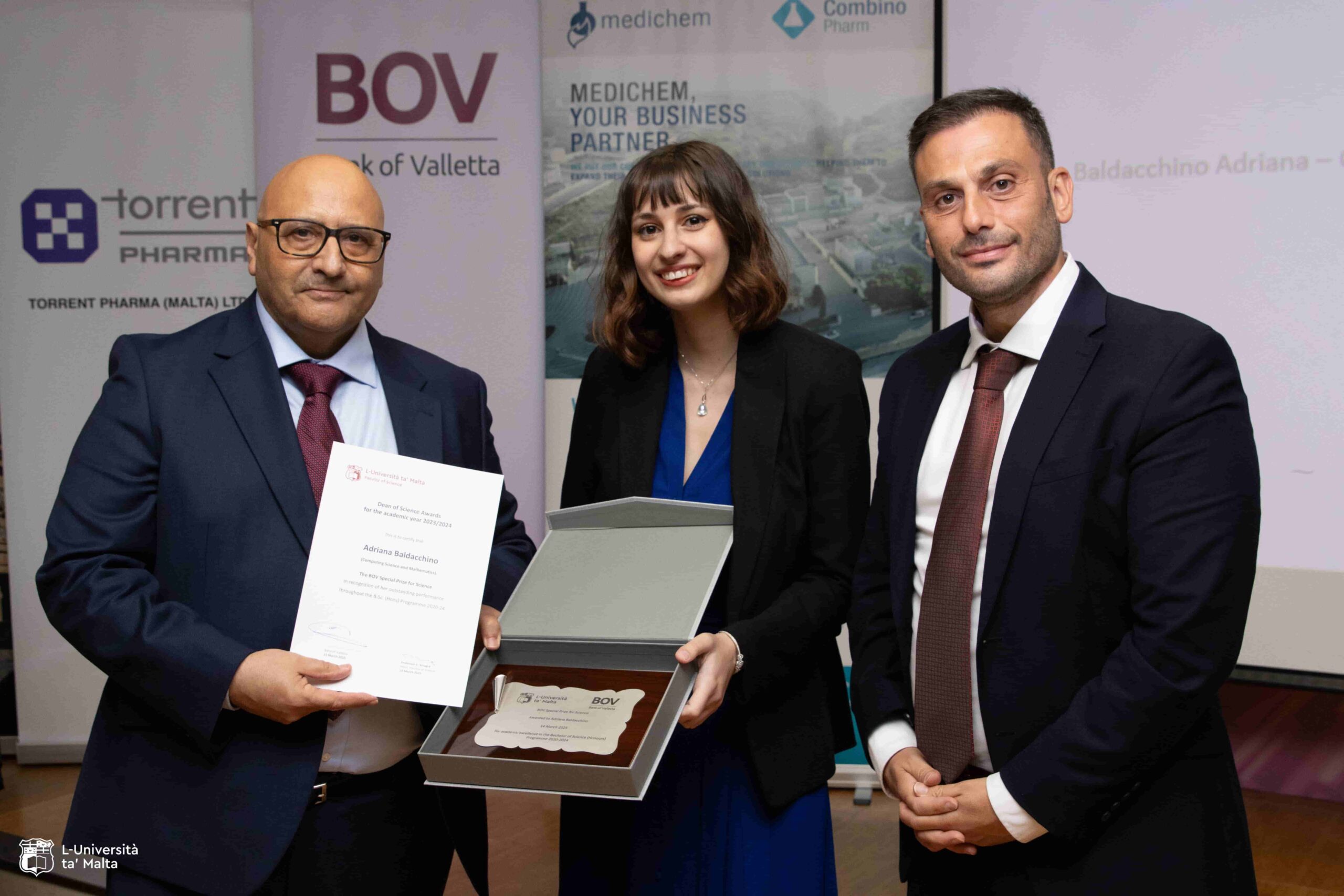
Ms. Adriana Baldacchino has been honored with the BOV Special Prize in Science for her exceptional academic performance throughout the BSc(Hons) program from 2020 to 2024. This prestigious award recognizes her achieving the highest overall mark in her cohort, highlighting her dedication, hard work, and passion for science.
Adriana’s journey through the BSc(Hons) program has been marked by consistent excellence. Her ability to grasp complex scientific concepts and apply them effectively has set her apart from her peers. Her commitment to her studies and her unwavering pursuit of knowledge have earned her this well-deserved accolade.
Ms Baldacchino was presented with her prize by Prof. Emmanuel Sinagra, Dean of the Faculty of Science at the University of Malta and Silvio Cassar, Manager Business Generation at Bank of Valletta.
“Ms Baldacchino has demonstrated exceptional skill and commitment in her studies, consistently achieving top marks across all subjects,” said Prof. Sinagra. “Her hard work and passion for science have set a remarkable example for her peers and the academic community. We take this opportunity to congratulate her on her well-deserved achievement and will continue to follow her successes in the field of science.”
“The BOV Special Prize in Science is a collaboration between BOV and the University of Malta with the aim of encouraging academic excellence, promoting scientific research while fostering a culture of achievement and celebrating the hard work of top students,” said Mr Cassar. “This prestigious prize highlights academic excellence and dedication and is definitely a prestigious addition to Ms Baldacchino’s resume and will definitely be an asset to motivate her to continue striving for excellence.”
Fitch Ratings has upgraded Bank of Valletta’s Long-Term Issuer Default Rating (IDR) to ‘BBB’ from ‘BBB-‘ and the Viability Rating (VR) to ‘BBB’ from ‘BBB-‘. The Outlook on the Long-Term IDR is Stable. Fitch has also assigned BOV a long-term deposit rating of ‘BBB+’ and short-term deposit rating of ‘F2’.
This upgrade was announced by Fitch on Tuesday 25th March, in a statement that acknowledged “BOV’s dominant domestic franchise, which has allowed the Bank to consistently capture the profitable business opportunities offered by Malta’s benign operating environment, while maintaining adequate asset quality and capitalisation”.
Both BOV Chairman Dr Gordon Cordina and CEO Kenneth Farrugia expressed their extreme satisfaction on this announcement. Dr Cordina stated, “This upgrade by Fitch is another acknowledgement of the transformation journey that we’ve been on for the past years and is a testament to our dedication to sustain the Bank’s positive performance. This announcement enables us to look to the future with confidence and continue in our efforts to positively impact our stakeholders, shareholders and the wider community.”
CEO Kenneth Farrugia echoed the Chairman’s statement and commented, “This upgrade by Fitch Ratings is a substantial milestone for Bank of Valletta, reflecting our robust financial position and strategic vision. It follows a series of prestigious accolades we received in 2024, including an upgrade of our credit rating by Standard & Poor’s, the esteemed FHRD HR Quality Mark, two awards at the Malta Business Awards, and being named Company of the Year 2024 by the Malta Stock Exchange. These recognitions, culminating in Fitch’s upgrade, validate our sustained efforts and dedication to maintaining the Bank’s positive performance and supporting the growth of our business for the years to come.”
In the official statement, Fitch continued by saying that BOV’s ratings reflect its leading domestic franchise, which contributes to the bank’s sound earnings generation despite limited business diversification, but also its small scale and concentrated operations in a small economy. BOV’s lending standards and investment guidelines are in line with global industry practices, and its risk framework has strengthened in line with regulatory expectations.
The full report on Bank of Valletta’s upgrade can be viewed here.
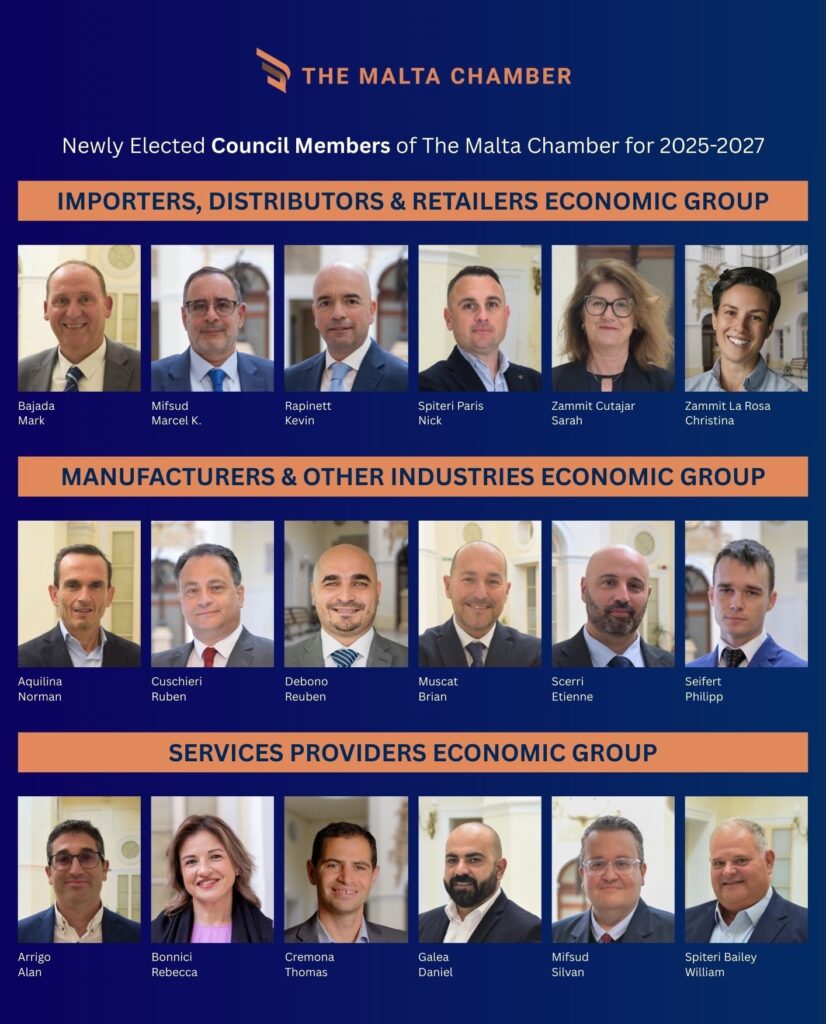
Following last Tuesday’s Annual General Meeting and subsequent voting process, The Malta Chamber of Commerce, Enterprise and Industry Members elected a new council for 2025-2027.
The elected members, who also form the Economic Group executive boards are as follows:
Profit Before Tax of €302.4 million and Gross Dividend Payout of €130.7 million
Bank of Valletta achieved a record performance for financial year 2024, with profit before tax of €302.4 million, representing a growth of 20.2% when compared to FY2023. This was announced during a press conference hosted by BOV Chairperson Dr Gordon Cordina, CEO Kenneth Farrugia and CFO Kevin Cardona. The main highlights can be summarised in the following points:
Profit before Tax: Profit before tax for FY2024 amounted to €302.4 million, up from €251.6 million in 2023, reflecting a 10.1% increase in operating revenues and contained cost growth.
Dividend: The Board of Directors will be recommending a final gross dividend of €0.1314 per share, bringing the total dividend for FY2024 to €0.2238 per share, up by 92.5% from the 2023 level; this equates to a distribution of €76.7 million from H2 profits (€49.9 million net). Combined with the interim distribution, the total gross dividend payout amounts to €130.7 million (€84.9 million net).
Bonus Issue: The Board will also recommend a bonus share issue of one (1) share for every ten (10) shares held. This is subject to regulatory approval.
Share Buy-Back: The Board will be proposing a share-buyback initiative to increase the liquidity of the Bank’s equity instrument in the market, without cancelling shares. This is subject to regulatory approval.
Bond Issue: The Board will also be considering a further issuance of Bonds (Tranche 2) out of the Euro Medium Term Bond (EMTB) programme of up to €250 million.
Balance Sheet Growth: The Bank’s balance sheet expanded to €15 billion (67.1% of GDP, and 107% that of all other domestically oriented institutions taken together), while credit grew by €700 million during the year, with the Bank’s interest rates remaining among the lowest in the euro area.
FY 2024
FY 2023
Change
Profit Before Tax
€ 302.4 m
€ 251.6 m
+ € 50.8 m
Proposed Gross Dividend
€ 130.7 m
€ 67.8 m
+ € 62.9 m
Proposed Gross Dividend per Share
€ 0.2238
€ 0.1162
+ € 0.1076
Proposed Payout Ratio
42.6%
26.3%
+ 16.3%
Performance Highlights
The BOV Group’s performance was driven by a strategic focus on both revenue and cost management. Total operating income for FY2024 amounted to €485.8 million, marking a 10% increase from the previous year. This was driven by the expansion of loan portfolios, improved net fee and commission income, and a sustained treasury activity to continue investing in high quality financial instruments.
Net Interest Income: This increased by 9.6%, reaching €385.9 million, with the Bank expanding its lending activities and proprietary investments and benefitting from improved deposit rates on cash reserves. The growth in Net Interest Income was spearheaded by a dynamic balance sheet optimisation approach undertaken during the last years, where liquid assets were diverted into interest bearing investments with a view of stabilising income over a longer period and reducing volatility.
Net Fee and Commission Income: The BOV Group equally managed to register a 4.3% year on year growth over 2024, as this rose to €81.4 million.
Associates: The Group’s share of profit from insurance associates resulted in a profit of €9.5 million (€11.0 million in 2023).
Costs: Total Costs for the year amounted to €216.7 million which is 2.8% above the previous year. Personnel costs remained the primary cost driver, where the Bank continues to invest in talent followed by technology-related expenses where the Bank continues to invest as part of its strategic drive for digitalisation. The Bank has set out a cost management framework, encompassing a procurement excellence methodology, to ensure that cost levels are optimised over the medium to longer term both on the operational front, and on human resources, where a capacity planning exercise is currently underway.
Expected Credit Losses: The movement on Expected Credit Losses (‘ECL’) for the year amounted to a net release of €23.8 million (2023: €10.5 million net release), which was influenced by an improvement in both the non-performing and under-performing ratios as well as strengthened collateral position on a number of key non-performing assets. The Group’s unwavering commitment to improve the quality of the portfolio resulted in the non-performing loans ratio to continue heading downwards and closing at 2.68% which is equivalent to a 0.38% below the 3.06% outstanding as at December 2023.
Customer Deposits: BOV Group deposits increased by €651.7 million to €12.8 billion, driven both by non-personal and personal deposits. This was productively deployed in long-term interest-bearing assets with the credit portfolio increasing by more than €700 million and the investments portfolio up by €983.2 million.
Loans and Advances to Customers: Net loans and advances increased by 11.6% to €6.9 billion at end 2024, with the credit portfolio showing consistent growth primarily due to sustained business across all segments including business, home and personal loans, whilst also maintaining a strong focus on credit quality. As a result, the Gross Loan-to-Deposit ratio increased by nearly 3% by year end to 54.5%, and the Group’s liquidity remains well-above the minimum regulatory requirements.
Key Financial and Regulatory Ratios
FY 2024
FY 2023
Change
Return on average equity ratio
22.6%
21.1%
+ 1.5%
Earnings per share
34.2 euro cents
28.8 euro cents
+ 5.4 euro cents
Net asset value per share
€2.41 per share
€2.17 per share
+ €0.24 per share
CET 1 Ratio
22.31%
22.66%
– 0.35%
Total capital ratios
27.13%
25.94%
+ 1.19%
BOV’s impressive results are the fruit of years of transformation – Dr Gordon Cordina
Dr Gordon Cordina reflected on the results achieved by the BOV Group in 2024 as it celebrated 50 years of service to the community and the Maltese economy. “Bank of Valletta’s impressive results are the fruit of years of transformation that saw the Bank resolve legacy challenges and exploit new opportunities amid complex external dynamics on the regulatory, financial, economic and technological fronts. We continue to focus our efforts on delivering shareholder value, driven by prudent capital management as well as strategic and sustainable initiatives. The dividend we are announcing today, which is by far one of the strongest dividend payouts ever, as well as the bonus share issue, which is subject to regulatory approval, are a just reward to our trusted shareholders and reflects our dedication to maintaining a secure and profitable institution.
In the coming months, the Bank will also continue to focus on community and environmental issues. We have already made important strides in this regard, both in the way we operate by significantly reducing our carbon emissions, and by being more demanding on our customers to drive the green agenda. Our ESG and CSR initiatives will become even more pronounced in 2025 and will lead us on the sustainable path we have embarked upon.”
2024 was yet another outstanding year for the Bank – CEO Kenneth Farrugia
CEO Kenneth Farrugia echoed Dr Cordina’s comments on the BOV Group’s robust financial performance. “Building on the record performance achieved in 2023, I am pleased to announce that 2024 was yet another outstanding year of strategic growth and accolades for the Bank as we continue taking forward various key strategic initiatives carried in our Strategic Plan for 2024-2026. Our elevated customer focus, drive to deliver operational efficiency and the dynamic management of risks associated with our operations have all led to improvements in profitability across key business and operational segments. Notable growth was registered in the core credit financing and investments lines of business. The Bank will be pursuing further growth through new opportunities in bancassurance and voluntary occupational schemes, leveraging on the strong partnership with MAPFRE.
This year we continued to invest in our human capital and have implemented various initiatives to support the wellbeing of our employees. These actions have contributed to support our business and operational projects which centred on modernising our service channels, simplifying processes for better efficiency and strengthening risk controls. Over the course of this year, we also continued to strengthen our customer service experience as evidenced by the surveys carried out every month and also launched innovative products and services to our esteemed personal and business customers.
Standard & Poor’s Global Ratings recognised the Bank’s various initiatives and results achieved so far by raising the Bank’s credit rating to BBB. Another notable achievement in 2024 was the launch of the €100 million 5% unsecured subordinated bond, which was significantly oversubscribed on the first day of its launch, reflecting the trust and confidence placed in the Bank by the public and local and foreign institutions. At the end of 2024, the Bank was also awarded ‘Company of the Year’ by the Malta Stock Exchange as a reflection of the Bank’s achievements, and BOV Fund Services was voted as Best Fund Administrator in Malta 2024 by Capital Finance International reflecting our focus on service excellence.”
Corporate Social Responsibility and ESG
Mr Farrugia went on to say that “Sustainability remains firmly embedded in both our business and operational model. During this year, the Bank launched the BOV Foundation, reflecting the importance that we attribute to the Bank’s deep roots in many aspects of Maltese society where the communities that we operate in remain important stakeholders for us.
Our drive in this area culminated with the launch of the Rebbiegħa CSR Initiative, which secured Gold under the Project Green category during the Malta Business Awards. This initiative highlights BOV’s leadership as an active citizen in promoting sustainability. Our activities in support of our communities continued unabated and were equally recognised with the Silver Social Impact Award during the Awards event following the launch of BOV’s Volunteering Initiative. Since its launch, Bank employees supported various NGOs by participating in tree planting, clean-ups, and activities supporting vulnerable groups, including assisting children in care and animal shelters. On the ESG front, the Bank launched an innovative ‘green’ credit financing product for SMEs to support the country’s transition to a more sustainable future.”
Both the Chairperson and CEO underscored the paramount importance of the Bank’s dedicated employees in achieving these record financial results. They praised the unwavering commitment, exceptional talent, and relentless efforts of the entire team, which has been instrumental in driving the Bank’s success. The Board of Directors’ ongoing guidance and support, combined with the strong loyalty and trust of the Bank’s esteemed customers, were also recognised as pivotal factors in this remarkable performance.
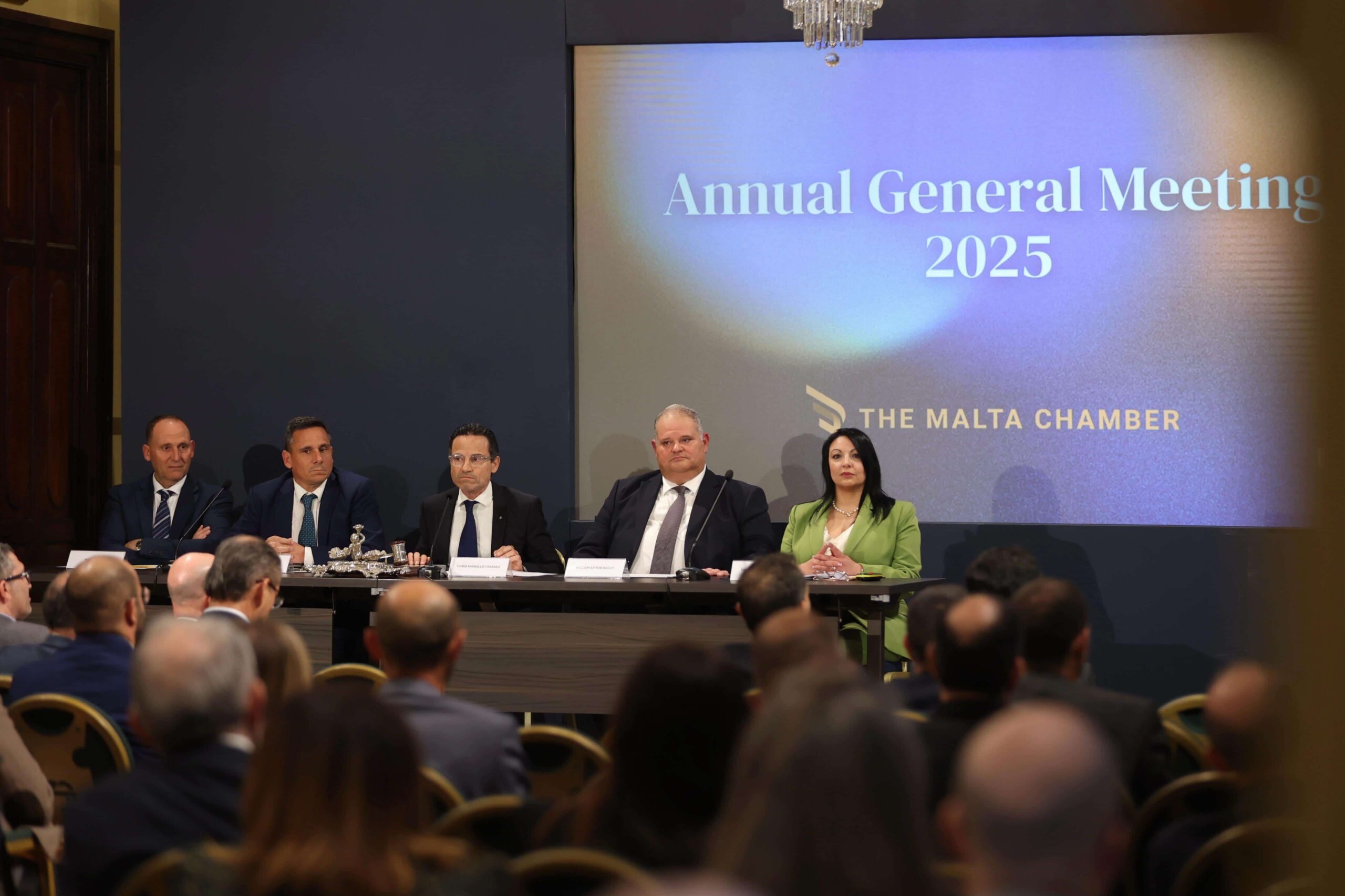
The Malta Chamber of Commerce, Enterprise and Industry held its Annual General Meeting (AGM) on Tuesday 25th March 2025. This AGM saw the end of a two-year term of office of President Chris Vassallo Cesareo while initiating The Malta Chamber Council elections to elect the Council members that will serve for the 2025-2027 term.
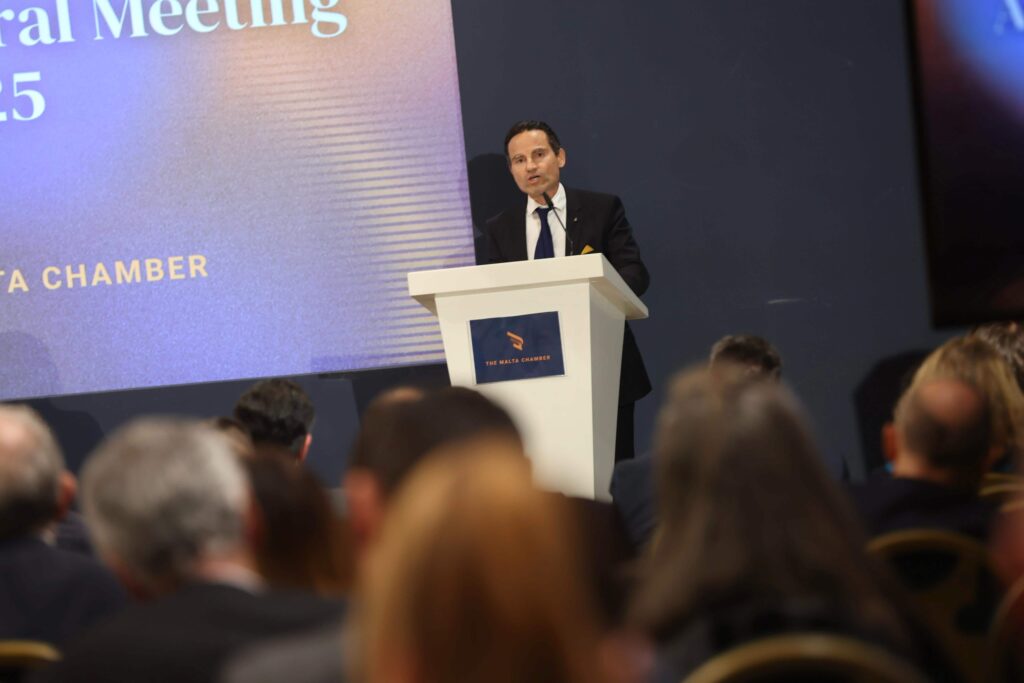
“Throughout my tenure, The Malta Chamber has maintained consistent engagement with key stakeholders, government entities, authorities, agencies and other experts whose decisions impact businesses. We have also constantly engaged with other employer bodies and social partners, as well other associations to streamline policy efforts. Our aim is to ensure that our policy positions are clearly understood and considered and are placed on the national agenda. It is imperative that we continue striving for political consensus that prioritises quality over quantity, works towards higher productivity levels, increased transparency and better governance in the day-to-day running of the country,” noted outgoing President of The Malta Chamber, Chris Vassallo Cesareo.
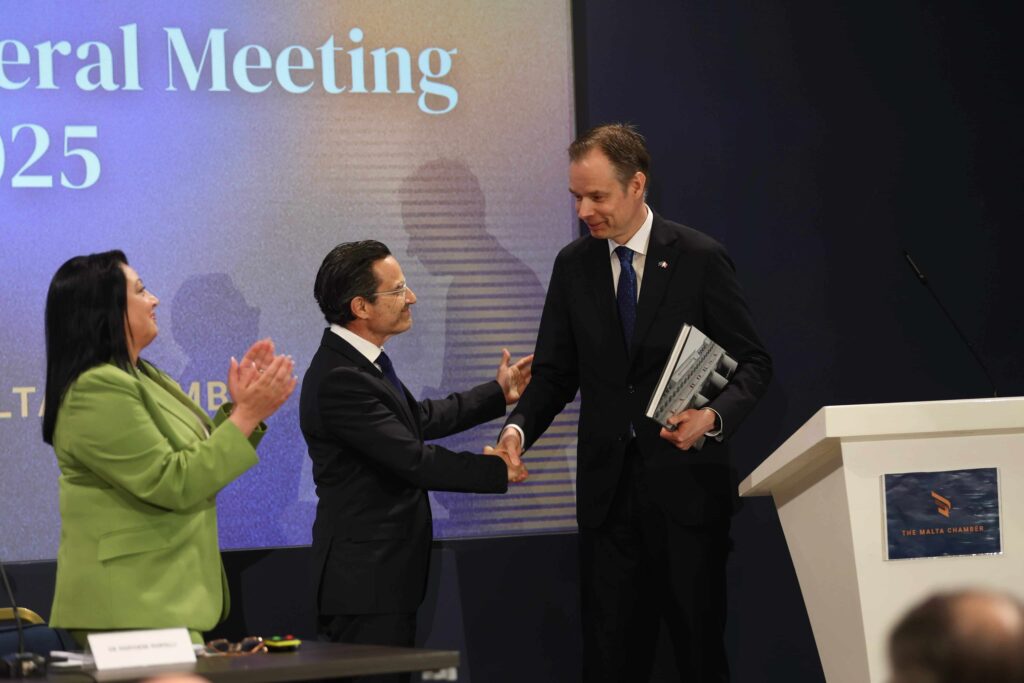
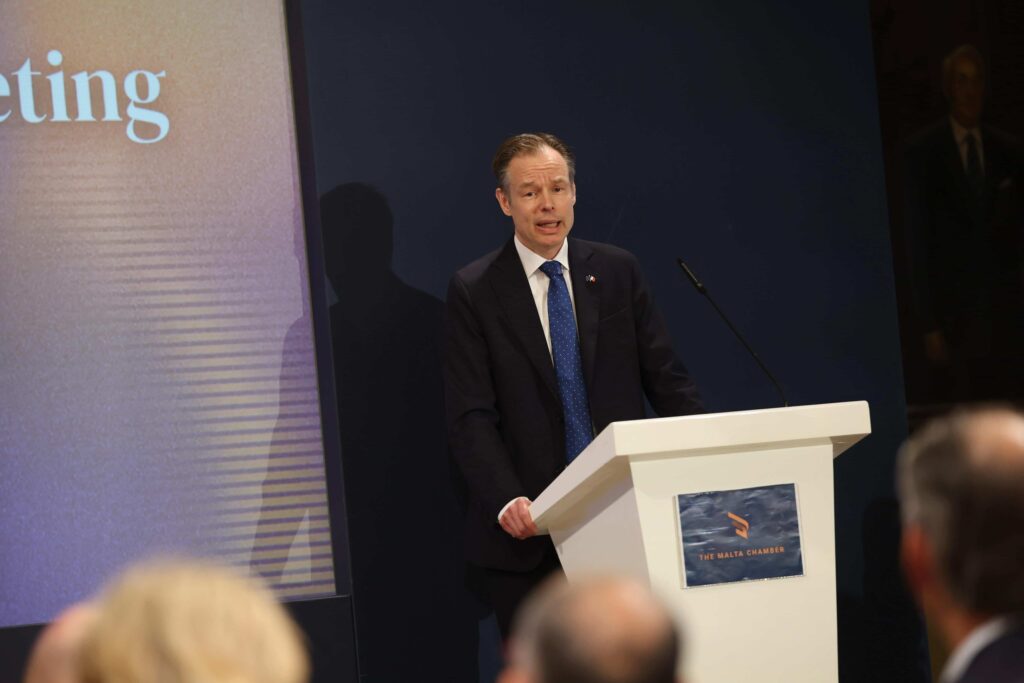
Before the AGM, Fredrik Persson, President of BusinessEurope, addressed the attendees. “If you have the right people, commitment, and leadership, you can pitch effectively and create a meaningful impact in Brussels. The challenges of insularity foster creativity and agility, and you can be confident that the work of The Malta Chamber is making a significant difference, shaping European policy, and driving real change,” he emphasised.
Dr Marthese Portelli, CEO of The Malta Chamber, reflected on the achievements of the past year, outlining key policy initiatives, projects, communication efforts, and events. She also highlighted upcoming plans and priorities. “In the year ahead, our focus will be to continue enhancing quality and delivering greater value to our members. This will be supported by continued policy advocacy with government entities and strengthened collaboration with European and international partners,” stated Dr Portelli.
As the AGM drew to a close, Donald Schembri, Partner at RSM Malta, delivered the financial reports for the fiscal year 2024.