14 October, 2025

Boards have long carried the responsibility of guiding organisations towards long-term sustainability. This creates a timeless dual mandate: setting and overseeing strategy, while building strong governance structures.
Boards are expected to manage risk while enabling agility, ensure compliance while fostering innovation, and safeguard continuity while driving transformation. In today’s environment, this balancing act is increasingly complex, shaped by volatility, uncertainty, and rapid opportunity creation.
While the fundamentals of board effectiveness remain unchanged, emerging shifts require more deliberate and reflective responses. When “business as usual” is no longer sufficient, the most effective Boards will be those willing to look inward, challenge their own assumptions, and continuously adapt to the pace of external change.
Timeless effectiveness
Many characteristics of a high-functioning Board remain evergreen. They reflect both what Boards must prioritise and how they must operate, grounded in self-awareness and disciplined governance.
These fundamentals form the bedrock of board effectiveness. However, treating them as routine would underestimate the challenge of consistently embedding them in practice. Any gap in these areas limits a Board’s ability to realise its full potential.
Boards also have a disproportionate impact on organisational performance. Relative to other human capital investments, improving board effectiveness typically delivers outsized returns that cascade through the organisation and shape culture.
What’s different in 2026?
These core principles have not changed, but the environment in which they operate has become significantly more demanding.
1 – Strategic agility in a polycrisis era
The “polycrisis” reflects overlapping disruptions—from climate volatility and geopolitical instability to technological acceleration and economic fragmentation.
This reality requires a shift from episodic strategy to continuous strategic sensing. Boards must help organisations remain situationally aware, regularly challenge assumptions, and adapt at pace.
Businesses are no longer only competing in the market; they are also competing with their own ability to evolve. The status quo must be actively challenged, and the horizon continuously scanned for disruption and opportunity.
The question is no longer whether disruption will occur, but whether organisations will proactively disrupt themselves or be overtaken by others.
2 – Regulatory complexity and governance maturity
Across Europe, regulatory expectations continue to rise. In Malta, the MFSA’s Corporate Governance Code has elevated expectations around Board composition, oversight structures, and governance quality.
For Boards, this means embedding governance maturity into the organisation’s operating DNA.
This is particularly challenging for SMEs, where resources are often constrained and governance functions remain lean. Proportionality is therefore essential: Boards must focus on what matters most, prioritise oversight effectively, and seek external support where necessary.
At the same time, Boards must ensure governance frameworks do not hinder agility. The most effective structures are those that strengthen both compliance and responsiveness.
3 – Accelerating technological disruption
Artificial intelligence, cybersecurity, and digital transformation are now central to competitiveness and organisational resilience.
Boards are not expected to become technical experts, but they must develop sufficient fluency to ask the right questions, understand key risks, and guide strategic investment decisions.
This may also require a reassessment of Board composition. Do current members bring the digital literacy required for a technology-driven future? Are there gaps in oversight capability that could limit strategic clarity? Is the organisation constrained by legacy business or operating models?
4 – Culture and behaviour as strategic levers
Culture is either an enabler of transformation or a barrier to it.
Effective Boards play an active role in shaping culture by fostering psychological safety, encouraging constructive challenge, and modelling organisational values.
Just as important is how Board members interact with one another. The quality of engagement, openness to dissenting views, and ability to balance challenge with support often reveal the true health of a Board.
These behavioural dynamics are not soft considerations—they are strategic drivers of effectiveness.
The self-aware organisation
In an environment defined by uncertainty, past experience is no longer a reliable predictor of future success.
Self-aware organisations are those best positioned to adapt, endure, and thrive.
While most organisational roles are focused on operational delivery, the Board, working closely with executive leadership, is uniquely positioned to take a broader, more strategic view. This requires discipline, perspective, and a willingness to continuously question established thinking.
As the organisation’s most senior forum, the Board must lead this discipline: identifying risks early, recognising opportunities quickly, and ensuring the organisation remains capable of adapting.
Ultimately, organisational agility and effectiveness are not accidental. They are capabilities that must be deliberately cultivated, and they begin in the Boardroom.
The most effective Boards of 2026 will not be those that simply govern well, but those that are willing to continuously reflect, adapt, and evolve.
For Boards seeking a clearer view of their effectiveness, governance maturity, and strategic oversight, RSM Malta provides practical, context‑driven advisory support.
———————————————-
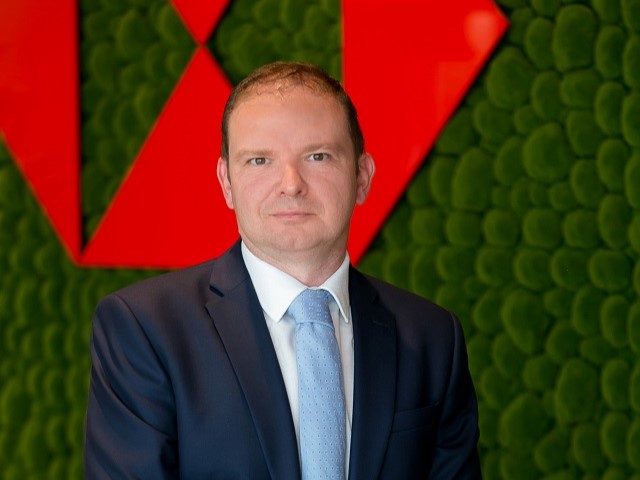
Article written by Yashar Dominic Klipp – RSM Malta Consultant, Organisational and People Advisory
...
...
...